Dump Trailer Types Explained

Most hauling arguments on an excavation job are really arguments about how the load comes out of the trailer. An end dump, a belly dump, and a side dump all move the same dirt in the same direction, and then they diverge completely at the dump site. Pick by the unload method and the trailer makes money. Pick by sticker price or habit and the crew fights the load every day for the life of the job.
Here is how the three body styles actually work, what each one is good at, and how to decide which one belongs on your next earthwork or site prep project.
Why the Unload Method Decides the Trailer
A dump trailer has three jobs: carry the payload legally, deliver it where the grade man wants it, and get back to the cut fast enough to keep the excavator loading. Capacity gets all the attention, but the second job is where most projects lose hours.
An end dump needs a place to raise a box and space behind it to pile material. A belly dump needs a firm, level path to roll over while it spreads. A side dump needs room beside the trailer, but almost nothing behind it. Those three constraints map directly onto how you lay out the dump area before the first truck arrives.
End Dump Trailers: Maximum Load, Maximum Care
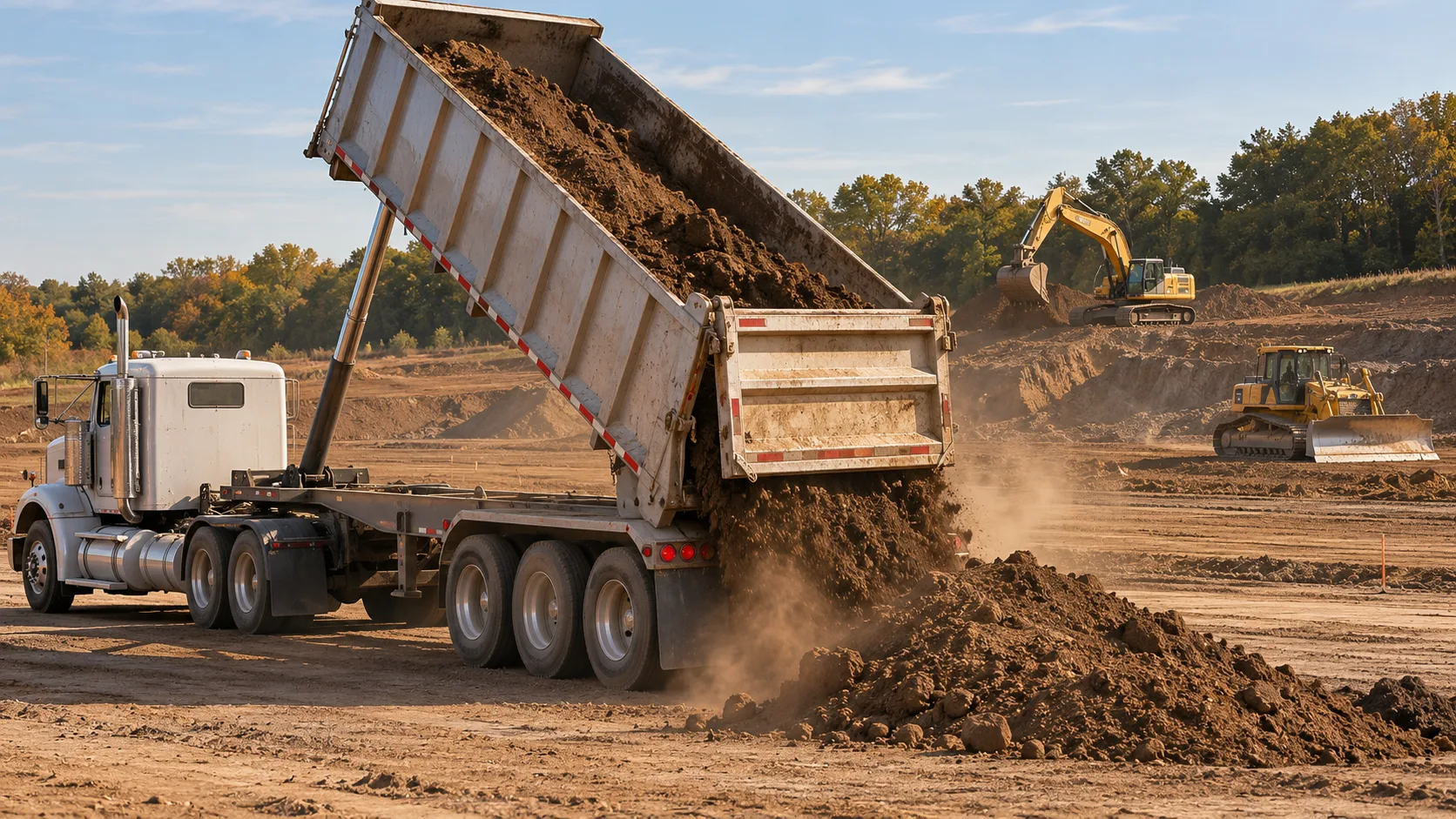
An end dump trailer raises the front of the box with hydraulic rams and empties out the back through a tailgate. It carries the highest single-load volume of the three, which is why it is the default choice for dense dirt, heavy rock, and demolition debris.
The trade-off is stability. A raised box puts the center of gravity high, and soft, sloped, or uneven ground under the trailer is where these units tip. End dumps want level, firm footing to unload, and they do not dump on the move — the load leaves in one pile, so someone with a dozer, loader, or excavator has to handle it afterward.
Two other traits are worth knowing before you spec one. End dump tailgates seal poorly, so they are a bad fit for wet or semi-liquid material. And because the box is tall when raised, overhead lines matter: check clearances at the dump point, not just along the haul route. If your dump point is a hopper or a pit you back into, the end dump's maneuverability is a real advantage. If your dump point is a soft fill area, it is the wrong tool.
Belly Dump Trailers: Windrowing Without a Second Machine
A belly dump, also called a bottom dump, carries clamshell gates in the floor of the trailer instead of a tipping box. The gates open and lay material in a controlled windrow beneath the trailer as the truck moves forward. Nothing is raised, so there is no elevated center of gravity and no tip-over risk during the dump.
That windrow is the whole point. On road base, aggregate, and sand, one belly dump pass can spread material to grade without a second machine following behind. Paving and grading crews run them for exactly that reason, often as a matched pair — a belly dump train — to lay a continuous lift.
The limits are equally specific. The gates need clearance underneath, so the haul road and dump path have to be firm and reasonably smooth. Large chunks can bridge the gates. Sticky, wet spoil will hang up rather than flow. Fine material and anything with water in it leaks out of the bottom gate, so neither belongs in a belly dump. And because material is deposited in a line rather than a pile, a belly dump is poor at building stockpiles — that takes a loader.
Side Dump Trailers: Stability When the Ground Is Bad
A side dump tilts its tub to the left or right with hydraulic rams. The load leaves fast, the trailer stays planted, and the center of gravity stays low through the entire dump cycle. Of the three, it carries the lowest rollover risk, and it can dump on soft or uneven ground where raising an end dump box would be genuinely dangerous.
Side dumps also spread on the move, creeping forward while the tub empties, which makes them efficient for road building, riprap placement, and aggregate where speed and stability both matter. The watertight tub handles wet material and debris that would leak out of an end dump gate or bridge a belly dump.
The constraints run the other way: generally smaller cubic capacity than an end dump, limited maneuverability in a tight dump area, and a dump site that has to be laid out to suit the side you dump to. In regions where side dumps are uncommon, the receiving site may not be arranged for one at all.
Matching the Trailer to the Material
The material usually makes the decision before anything else does.
- Dense spoil, rock, and demolition debris: end dump. Heavy-sided, big single drop, fastest way to get the load off on level ground.
- Road base, aggregate, and sand that needs spreading: belly dump. The windrow replaces a grading pass.
- Riprap, asphalt, wet material, and tight or uneven sites: side dump. Stable, watertight, and fast.
- Mixed material and one trailer for everything: side dump, accepting less capacity per load.
If the job is structural fill that has to be placed in lifts, the spread pattern matters as much as the trailer — see how thick compaction lifts should be — and if the material is coming from a borrow area, the loading side matters too, which is covered in loading trucks with an excavator.
Cycle Time, Not Capacity, Is Where the Money Is
A trailer that holds more but takes four minutes longer to unload can lose to a smaller one that dumps in 45 seconds. Real production is tons per hour over the round trip, and the dump cycle is the variable most contractors control least.
Count the actual dump time. An end dump has to stop, level out, raise the box, wait for the load to run, lower the box, and pull out — and it usually needs a second machine to push or carry the pile afterward. A belly dump rolls through and never stops. A side dump tips and creeps forward. On a short haul with 30 loads a day, the difference is not marginal.
Then add the support machine. A belly dump that eliminates a grading pass changes the whole crew cost on a base course job, which is why the trailer decision belongs in the estimate rather than the equipment yard. For the fuel and labor side of that math, see how much heavy equipment costs per hour.
Legal Weight Is the Real Ceiling
None of the three styles can carry more than the axles allow. Federal gross vehicle weight on the Interstate System is 80,000 pounds, and states set their own axle and bridge limits on top of that. A trailer rated for 30 tons of payload still has to scale legally loaded, which often means the practical limit is volume-limited on light material and weight-limited on dense material.
This is where the trailer choice interacts with the material. Dirt is heavy per yard, so an end dump or belly dump will hit a legal weight limit long before it runs out of cubic capacity. Mulch, dry topsoil, and similar light material will cube out first. Our breakdown of legal weight limits for hauling dirt covers the axle math, and how many yards a dump truck holds covers the volume side by truck type.
Trailers vs. Straight Trucks vs. Off-Road Haulers
Not every job wants a tractor-trailer. A straight dump truck with the body on the chassis is more maneuverable in tight residential work and can dump into a small area that a 40-foot trailer cannot reach. The trade-off is payload per trip.
On the other end, articulated and rigid off-road haulers take over when the haul road is too soft or too steep for highway equipment. They are slower on the road and cannot leave the site, but they climb grades and cross ground that would stop a loaded end dump. If that is the constraint you are working against, read articulated vs. rigid haul trucks before assuming highway trailers will work.
For most site prep, the answer is a mix: highway trailers for the long haul to an off-site disposal or borrow point, and off-road or straight trucks for moving material inside the site.
Ground Conditions and Dump-Site Layout
Walk the dump area before the first truck. An end dump needs a level pad with firm bearing, clear of overhead conductors, with enough room behind the tailgate for the pile and the machine that will handle it. A belly dump needs a smooth lane with gate clearance and a plan for where the windrow goes. A side dump needs a wide enough working area on the dump side and a firm edge so the trailer does not creep toward a slope as it unloads.
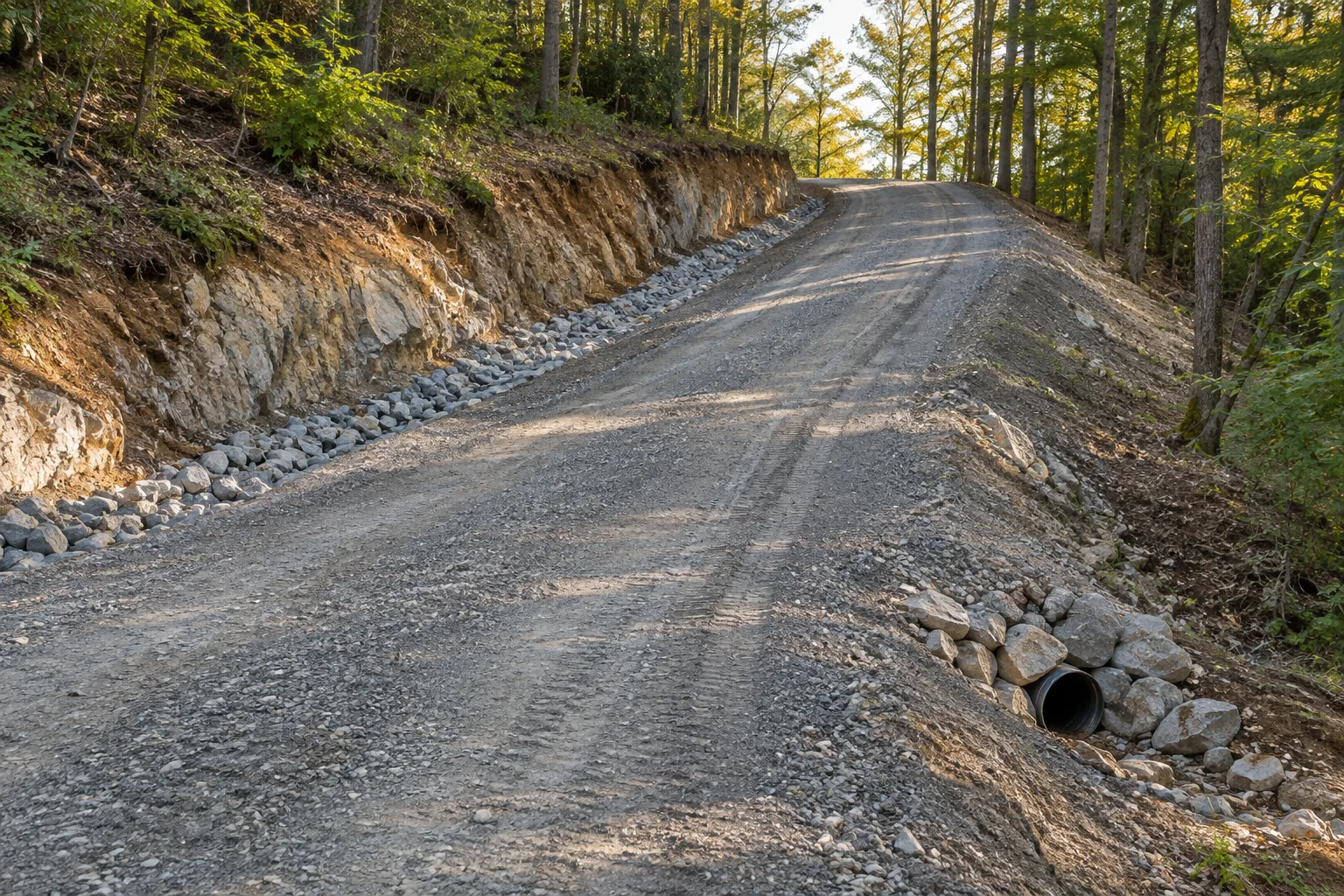
Soft ground is the most common failure point. A loaded trailer that breaks through the crust at the dump point can take hours to recover, and the recovery is its own job — the techniques are in why heavy equipment gets stuck and how contractors recover it safely. If the ground cannot be trusted, build the haul road first; our guide to building a construction haul road covers the base and drainage that keep trailers upright.
What to Ask Before You Rent or Buy
Whether you are renting for one job or adding to a fleet, four questions settle most of it. What material, in what condition, at what weight? How does the receiving site want the material delivered — pile, windrow, or spread? What does the truck have to do at the dump point, and how much room does it have? And what is the actual cycle time from load to load?
Answer those and the body style usually picks itself. Then read the rental terms closely, because damage, tire, and cleaning clauses differ by trailer type — the checklist in how to read an equipment rental agreement is worth ten minutes before signing. For a broader look at matching machines to earthwork, earthwork sequencing shows where hauling fits in the overall plan.