Building a Construction Haul Road

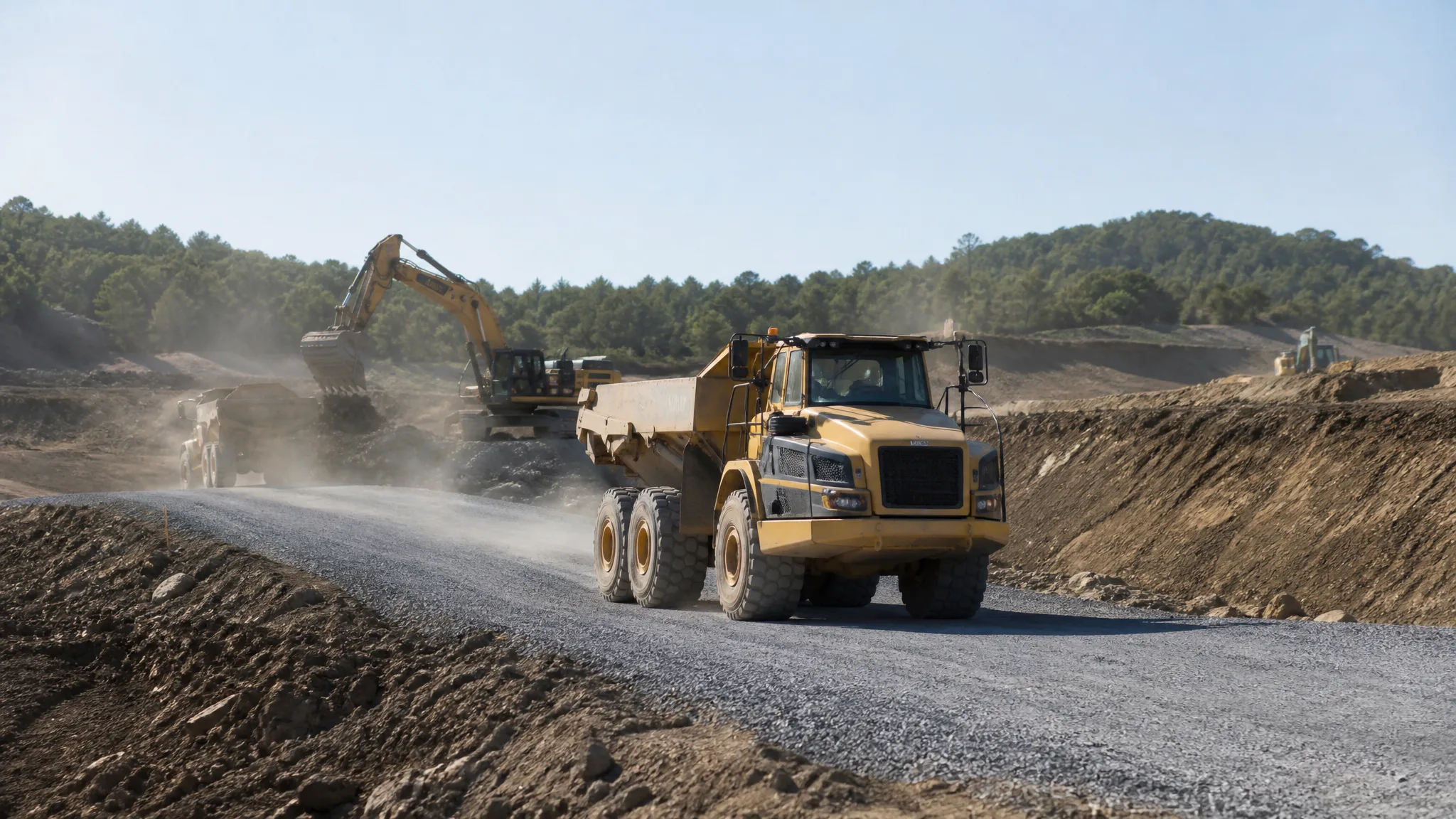
A haul road is the temporary or semi-permanent road that moves dirt, rock, and materials around a construction site. It is not glamorous work, but it is where excavation projects are won or lost on schedule. A well-built haul road keeps trucks moving at speed, in all weather, with a fraction of the fuel and tire cost of a rutted mud track. A poorly built one stalls trucks, breaks equipment, and turns a two-week earthwork phase into a two-month one. This guide covers how to plan, build, drain, and maintain a haul road that can take the loads a working site throws at it.
What Counts as a Haul Road
On a building site, a haul road is usually a temporary or semi-permanent gravel road built to carry loaded dump trucks, articulated haulers, and heavy equipment between a cut or borrow area and a fill area, a stockpile, or the site exit. It connects to the temporary construction entrance and to public roads, and it may later be converted into a permanent driveway or site road or be reclaimed.
Haul roads are different from a finished gravel driveway because the loads are huge, repeated, and fast, and because the road has to survive being built on raw, often wet subgrade. The design has to account for truck weight, traffic volume, and how the ground behaves in the worst weather.
Plan the Route and Grade First
Route the road before a single bucket of gravel moves. The goal is the shortest safe path between the two points, with as little grade change as possible. Consistent grades matter because sudden changes force drivers to shift gears repeatedly and overheat equipment; a steady incline is far more productive and fuel-efficient than a short, steep pitch.
For two-way traffic, plan the road for two full lanes and passing. Curves need to match the turning radius of the trucks and should not be placed on steep grades, because the inside of the curve steepens and the truck drifts. Reserve gentle, straight approaches to any intersection with a public road.
Road Width: Three to Three and a Half Times the Truck
Width is the most common thing people get wrong. Industry guidance for haul roads generally calls for a running width of roughly 3 to 3.5 times the width of the widest truck for two-way traffic. That buffer is not wasted space: it gives drivers room to pass, keeps them off the soft shoulder, and lets you build a safety berm along the outer edge.
A single-lane haul road works on a small site, but then you need pull-outs or turning areas so one truck can wait while another passes. Treat tracked and wheeled equipment differently, too: tracked machines chew up a soft road surface far faster than rubber-tired trucks, so plan their routes and turning points accordingly.
Grade, Crown, and Cross-Slope
Longitudinal grades on a working haul road should generally be held to about 10% or less, with gentler grades preferred for long, heavily loaded climbs. Cross-slope, the crown built into the surface to shed water, is the detail that keeps a road serviceable in the rain. A crown of roughly 2% to 4% away from the center to the edges is standard, which lets water run off the road instead of soaking in and turning the surface to mud.
The crown has to be maintained, not just built once. Every time a grader smooths the surface or a truck spins a tire, the crown flattens. Re-checking cross-slope is part of routine road maintenance, and it is the cheapest way to keep a haul road draining and usable.
Building the Cross-Section
A haul road is built in layers, like any pavement. The subgrade is the existing ground, prepared and compacted so it can carry the loads above it. On top of the subgrade sits a subbase of coarse, free-draining material — pit-run gravel or large crushed stone — sized to distribute load and drain. The surface course is a finer, compacted crushed gravel or base stone that takes the traffic and sheds water.
Layer thickness depends on the truck loads and the strength of the subgrade, so a road over firm clay needs far less stone than one over soft, saturated ground. Matching the stone to the job is its own topic; the basics of sizes and gradation are covered in gravel and stone sizes explained.
Separation and Reinforcement on Weak Ground
The most expensive mistake on a temporary road is trying to fix a soft subgrade with more stone. If you pump gravel into mud, the stone sinks and disappears, and the ruts come right back. The fix is separation and reinforcement, not thickness.
A nonwoven geotextile placed directly on the prepared subgrade keeps the fine subgrade soil from pumping up into the stone and keeps the stone from punching down, which preserves the road's thickness. On very weak ground, a geogrid adds tensile strength across the base and can cut the amount of aggregate needed. This is the same principle behind soil stabilization for unstable subgrade, scaled up to handle haul traffic.
Drainage, Ditches, and Safety Berms
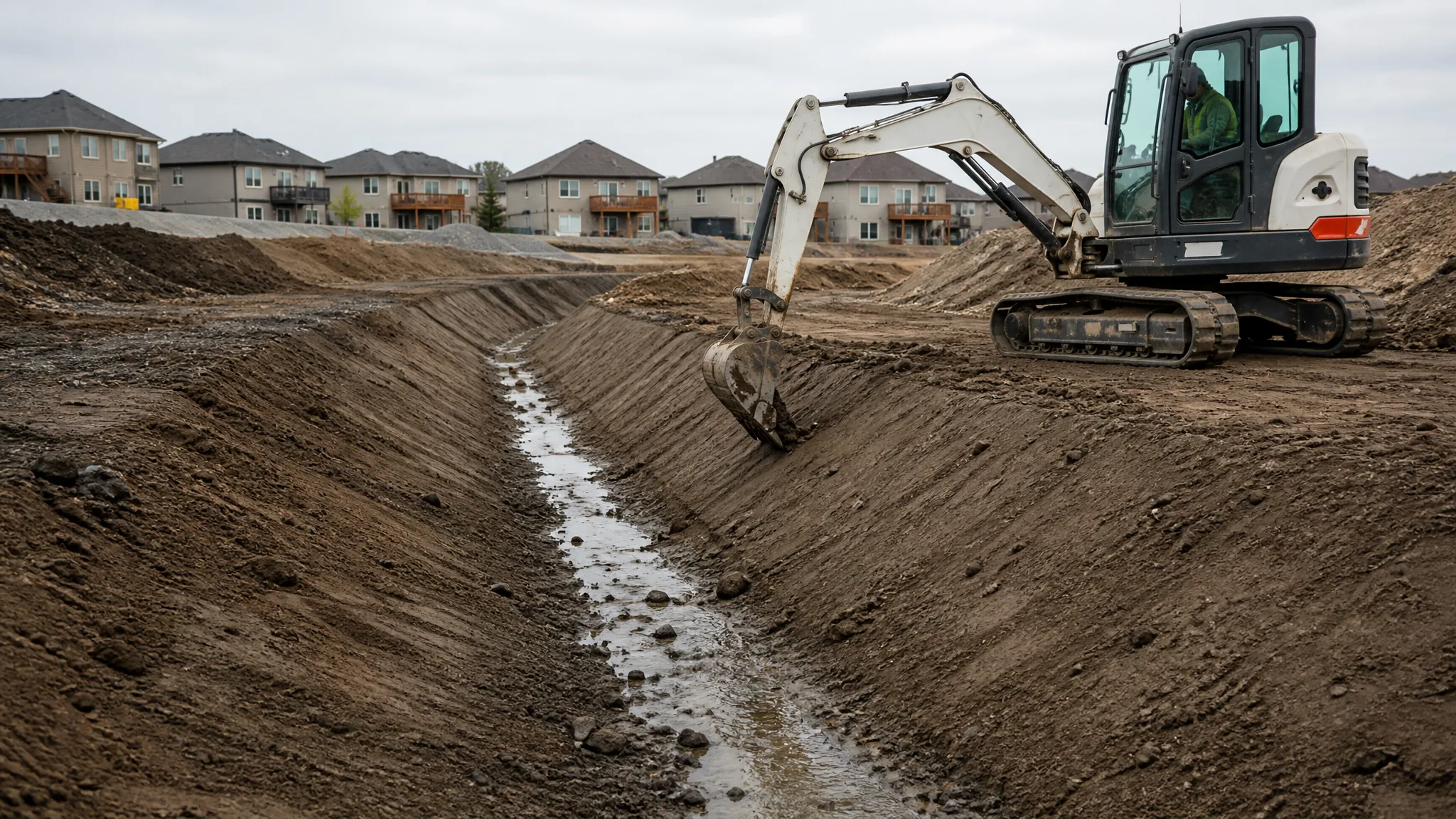
Water is the enemy of a haul road, so drainage has to be designed in, not added after it fails. Cut a ditch along the uphill side to intercept runoff before it reaches the road, and slope the road so its own water drains off. Ditches beside a haul road are typically sloped at about 2:1 (horizontal to vertical) so they can be cleaned, and they must have a place to discharge.
On any road with a drop-off along the outer edge, build a safety berm — a windrow of compacted material along the shoulder that acts as a physical stop for a truck that drifts. Berms should be substantial, sized to the truck's tires, and never left as loose spoil that will wash or get pushed aside. Where the road crosses wet ground, plan dewatering so the road does not sit in standing water.
Dust Control and Surface Maintenance
An unpaved haul road generates dust, and dust is both a safety issue (it blinds drivers) and a compliance issue. The standard approaches are to water the surface regularly, keep speeds down, and, on heavier-traffic roads, apply a suppressant or stabilize the surface so the fine material binds together. New gravel also has to be anchored to the surface, because loose stone gets swept off or pressed into the soil and the road loses its wearing course.
Maintenance is a continuous cycle: blade the surface to restore the crown and smooth ruts, re-add stone where it has been lost, clean the ditches, and inspect berms. A motor grader and a water truck on routine duty cost far less than the fuel and downtime of trucks crawling through a disintegrating road.
Speed Limits, Traffic, and Safety
Speed is the hidden variable in haul-road cost and safety. Rolling resistance climbs as a surface roughens, and even a small increase in resistance means more fuel burn, more heat in the tires, and slower cycle times. Keeping speeds reasonable protects both the road and the trucks.
Set and post a site speed limit, separate haul traffic from other crews and pedestrians, and keep working areas clear of the road. Train drivers on the specific route — grades, curves, and passing areas — and never let a haul road turn into a shortcut for general traffic. Most haul-road incidents come down to speed, visibility, or a road that was allowed to fall apart.
Reclaiming the Road and Common Mistakes
When the earthwork is done, a haul road can be reclaimed, graded back into the site, or upgraded into a permanent road by adding the final base and surface layers. Either way, plan the end use early so the route, grades, and drainage line up with what the finished site needs.
The recurring mistakes are consistent: not enough width, no crown so it floods, no ditch so runoff crosses the road, fighting soft ground with more stone instead of a geotextile, no safety berms, and no maintenance until the road fails. The roads that last are the ones designed for the trucks that will actually use them, drained from day one, and maintained on a schedule rather than an emergency. Related reading: controlling dust on a construction site and why heavy equipment gets stuck.