How to Read an Equipment Rental Agreement: Daily, Weekly and Monthly Rates, Minimum Billable Hours, Delivery Charges, Fuel Policy, Damage Waivers and Downtime Credits

A rental quote looks like a single number, but the number is only the beginning of the story. Two contractors can rent the same machine class on the same day, run it for the same number of hours, and still pay very different amounts — because the rate is only one line on the agreement. The rest is made up of how hours are counted, what the delivery actually includes, who pays for fuel and wear, and what happens when the machine goes down.
That is why reading the agreement matters more than comparing headline rates. Below is how rental pricing is actually structured, and which clauses quietly decide whether a quote turns out to be cheap or expensive.
Why the headline rate is not the price you pay
Equipment rental prices are quoted per machine class and per time block, not per job. A yard advertises a daily rate for a 5-ton excavator; your invoice adds transport, fuel, a damage waiver, cleaning, and possibly overtime. On short rentals those extras can rival the base rate, which is why a quote that looks higher can still be the cheaper option once the terms are read side by side.
Before comparing anything, ask two questions: is this a bare machine or an operated one, and what time period does the quoted rate actually cover? Most disagreements start with one of those two answers.
Daily, weekly and monthly rates: how the tiers interact
Rental desks publish a ladder of rates — day, week, and four-week month — and the tiers are not linear. A weekly rate is normally well below seven daily rates, and a monthly rate is normally well below four weekly rates. That is deliberate: yards want long rentals because the machine earns without being moved.
The practical consequence is a break-even point. Once a job runs past a handful of days, the weekly tier usually wins; once it runs past a couple of weeks, the monthly tier usually wins. Excavator rental prices per month are typically quoted as a 28-day block rather than a calendar month, so a job that runs from the 1st to the 30th can attract a prorated extra week. Ask the desk to write down the exact break-even for your machine class, and compare excavator rental prices per day against the monthly rate using the number of days you will actually work — not the number of days the machine sits on site.
Minimum billable hours and the clock
Many agreements bill a minimum — often a half day for short jobs and a full working day for anything longer — plus a maximum number of hours included per day before overtime starts. A "day" is usually defined as a set number of working hours, not a calendar day, and the meter is what counts.
Two details matter more than they look. First, the day the machine is delivered often counts as a rental day even if it never moves. Second, if the meter is read at pickup rather than at return, hours lost to a broken hour meter can be estimated against you. Note the starting reading yourself and photograph it.
Bare rental versus operated hire
Bare rental (sometimes called dry hire) means the machine arrives fueled and ready and you supply the operator. Operated rental (wet hire) includes the operator, and often fuel and daily servicing. Excavator hire prices on an operated basis are naturally higher, but they remove your labour cost, your fuel exposure, and often your liability for damage caused by operation.
Neither is automatically better. For a homeowner digging a footing drain, operated hire is usually the lower-risk choice; for a contractor with an idle operator and a short trench, bare rental usually wins. Just make sure the quote says which one you are being sold.
Delivery, pickup, and the "near me" premium
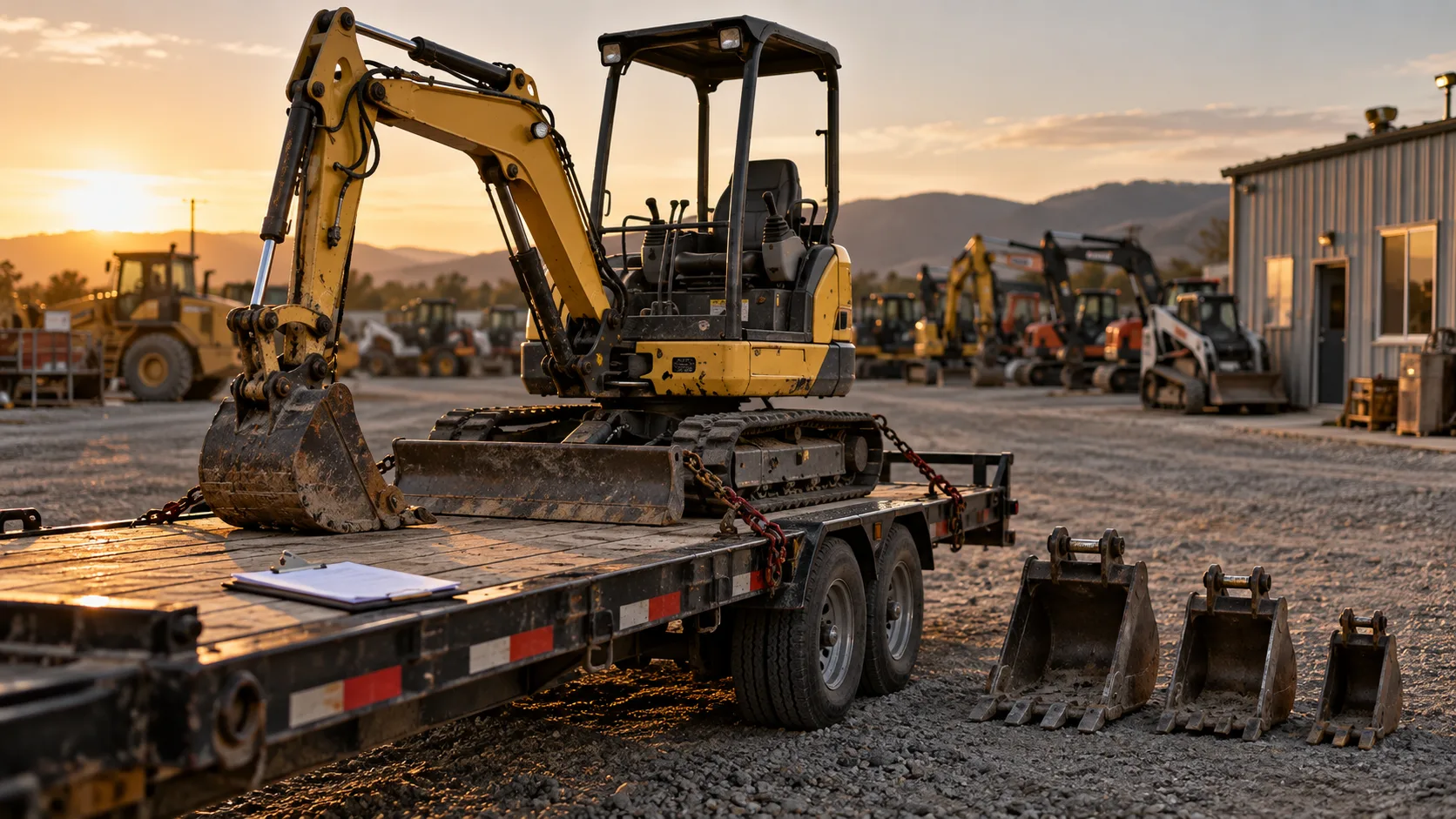
Transport is the most variable line on the invoice. Yards price delivery and pickup by distance and by machine size, and many charge a minimum transport fee regardless of how close the job is. Hauling a compact excavator on a tag trailer is cheap; moving a large machine on a lowboy with permits and an escort is not.
This is the real reason excavator rental prices near me searches return such different numbers. A yard two towns over may advertise a lower rate but add a transport charge that erases the difference — and a local yard with a higher rate may include delivery inside its radius. Ask for the out-the-door total: rate, delivery, pickup, and any fuel or environmental fee.
Fuel: full-to-full, refueling fees, and idle time
Most agreements run a full-to-full fuel policy: the machine leaves full and must come back full. Return it low and the yard refills it at its own price plus a service charge — rarely the cheapest fuel in town. Fuel surcharges, where they exist, should be stated as a percentage of the rate rather than discovered on the invoice.
Idle time is the quieter cost. Machines left running while crews wait, or left idling overnight, burn fuel and hours without producing work. On a metered rental, that is money spent twice.
Damage waivers, insurance, and deductibles
A damage waiver is not insurance. It is a contractual reduction of your responsibility for certain accidental damage, and it almost always excludes the expensive categories: tip-overs, damage from misuse, track and tire damage, glass, theft without a police report, and anything caused by an unlicensed operator.
Your own policy may already cover rented equipment — many general liability and inland marine policies do, sometimes only above a deductible, and sometimes only if the rental is listed. Read the waiver's exclusion list before you decide it is redundant, and if your insurer covers the machine, ask the yard whether waiving theirs is permitted. A certificate of insurance is usually required either way.
Cleaning, wear parts, and the excessive-wear clause
Machines must come back reasonably clean. Mud packed into tracks and undercarriage is the classic cleaning charge, and yards bill it at shop rates. Wear parts are a separate matter: bucket teeth, cutting edges, and track components are consumables in normal use, but "excessive" wear — running steel tracks on pavement, dragging a bucket, or operating with a worn pin — is charged back to you at list price.
If a machine arrives with a worn edge or a damaged tooth, photograph it and note it on the check-out sheet. Otherwise you inherit the previous renter's wear.
Downtime and breakdown credit
When a rented machine fails through no fault of yours, most agreements credit the lost rental time — but only for the hours the machine was down, and usually only after you report it. What they rarely cover is your crew standing around, the subcontractor who left, or the concrete truck that turned up to a hole that was not finished. Consequential damages are normally excluded, which is why the downtime clause deserves a read before the machine leaves the yard.
Report failures immediately, in writing, with a timestamp and photos. Ask what the replacement commitment is: same class within a set period, or "as available".
Why the same machine quotes differently
Rate cards reflect the fleet, not just the market. A newer machine with low hours rents higher; a high-hour backup rents lower and may come with more risk. Attachments change the number — a thumb, a breaker, or a grading bucket is often priced separately, and some yards will not split them from the machine.
Brand and class matter too. Compact machines hold value well, which is part of why Kubota rental prices sit where they do in the mini class, while backhoe rental prices and excavator rental prices for machines of comparable size can carry noticeably different rate cards because the market values them differently. Bulldozer rental prices are a separate conversation again: a dozer is usually priced with a different transport and operator structure because it rarely moves on a tag trailer.
Finally, markets are regional. Rates are quoted in local currency and priced off the local machine population, so an excavator hire quote in South Africa, the UK, or Australia is not a benchmark for a US invoice — the machine mix, fuel costs, and labour structure are all different. Compare quotes from yards that serve the same ground you are working.
The checklist before you sign
- Is the rate bare or operated, and does it include fuel?
- What counts as a day? How many hours are included, and when does overtime start?
- What is the minimum billing period, and what is the break-even to weekly and monthly tiers?
- Is delivery and pickup included, or priced separately — and at what radius?
- What does the damage waiver exclude, and does my own policy cover rented equipment?
- Who pays for downtime, and what is the replacement commitment?
- What is the cleaning and excessive-wear standard, and who records condition at check-out?
None of these questions are unusual, and a decent rental desk will answer all of them before you sign. If a quote cannot be explained line by line, that is the answer.
If you are still at the earlier question — whether renting is the right call at all, and what a machine should cost by size and duration — start with what it actually costs to rent an excavator, then bring the rates here and compare the terms. For the compact end of the market, mini excavator costs covers the machines most homeowners and small crews end up renting, and excavation cost per cubic yard is the right unit when you need to weigh a rental day against production.
And if the math keeps pointing toward ownership, the comparison is worth doing properly: renting versus owning an excavator lays out the utilisation threshold where a purchase starts to make sense. For the labour side of the same equation, what heavy equipment costs per hour explains why an operated rate lands where it does.