Articulated vs. Rigid Haul Trucks

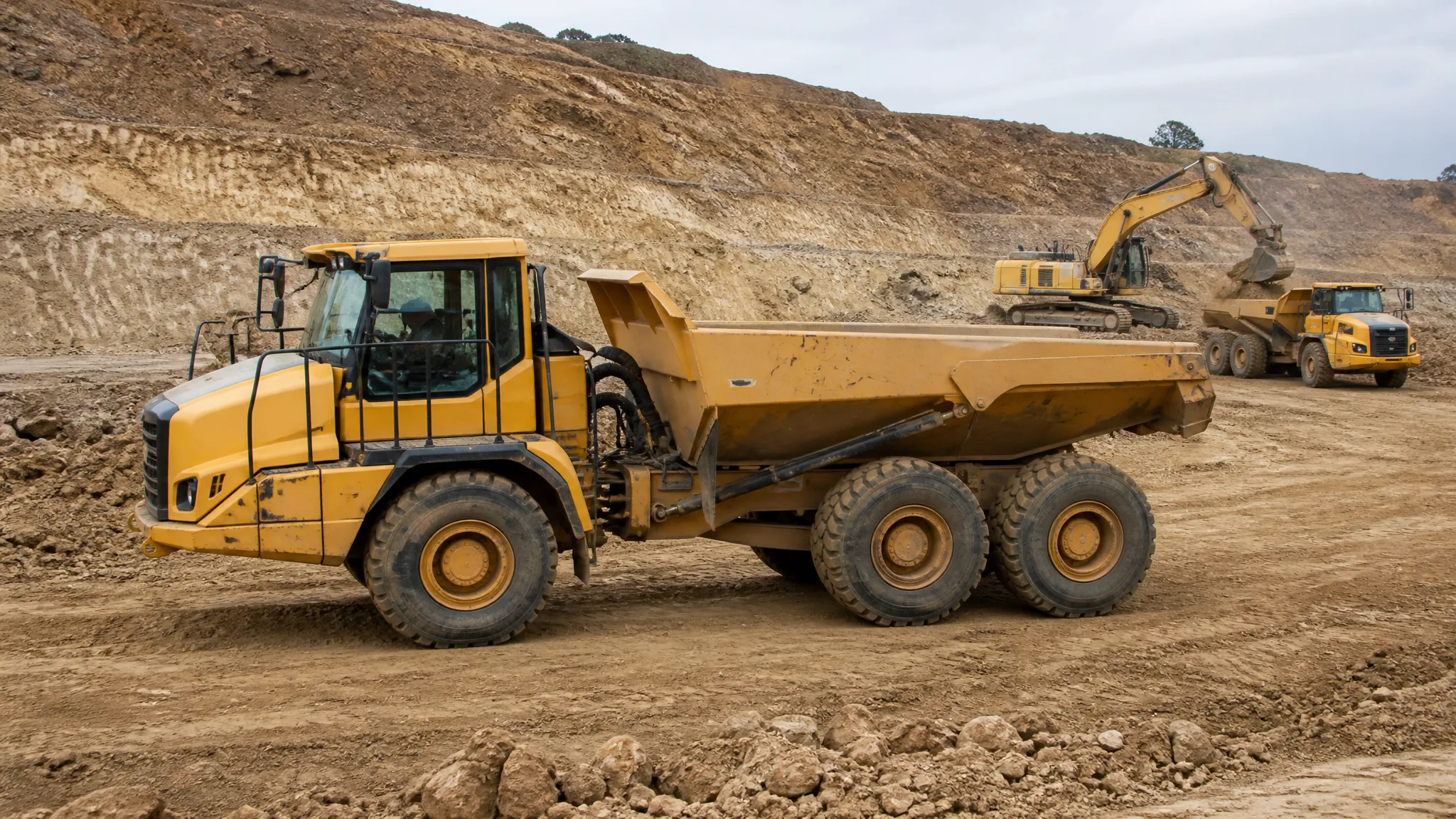
On most earthwork jobs the haul fleet is the biggest single cost line after the excavator itself, and the choice between an articulated dump truck and a rigid haul truck decides a lot of that cost before a single yard moves. The two machines look similar in photographs and behave nothing alike in the field. One is built to go anywhere; the other is built to be fast on a road that somebody else paid to build.
Getting the choice right comes down to four conditions: haul road quality, grade, haul distance, and how much room the site gives you to turn around.
The Structural Difference That Drives Everything
A rigid haul truck is a single frame. The operator sits over the front axle, the body pivots on a fixed chassis, and the machine depends on a wide, smooth, well-drained haul road to perform. These are the big off-highway trucks seen in quarries and mines, generally in the ninety-ton-and-up class, though smaller rigid trucks exist in aggregate operations.
An articulated dump truck is two frames joined by an articulation joint, with a rear axle that oscillates. The tractor unit and the trailer can move independently, which is why an ADT can walk through mud, climb a soft grade, and turn inside a footprint a rigid truck could never manage. Payloads in the common earthwork classes run roughly from the mid-twenties to the mid-forties of tons.
That joint is not a convenience feature. It is the reason an ADT keeps all six tires loaded on uneven ground while a rigid truck picks up a wheel and loses traction. On a site with ruts, soft spots, and temporary roads, that difference is worth more than any spec sheet number.
Where the Haul Road Decides
Rolling resistance is the silent tax on hauling. A hard, smooth, well-compacted road lets a tire roll with very little energy lost to deflection; soft ground or loose gravel turns engine power into rutting instead of travel speed. Rigid trucks are extremely efficient on good roads and extremely expensive on bad ones, because everything about them assumes a road that stays firm under a hundred-ton load.
If the project can justify a properly built and maintained haul road — crowned, drained, compacted, and kept watered — a rigid fleet will move more tons per hour at a lower cost per ton than anything else. Building that road is a real scope of work in itself, and the design principles are covered in building a construction haul road.
Many earthwork sites never get that road. Residential subdivisions, utility corridors, clearing jobs, and wet-season work all involve temporary running surfaces that degrade faster than they can be maintained. That is ADT territory. An articulated truck's flotation and oscillation let it keep cycling through conditions that would bog a rigid truck to the frame — the same physics behind why heavy equipment gets stuck.
Grade and Gradeability
Grade resistance adds to rolling resistance, and it compounds fast: the steeper the ramp, the more of the engine's output goes into climbing rather than hauling. A rigid truck on a long steep ramp is limited by its power-to-weight ratio, and heavily loaded it may be crawling in a low gear for the whole climb.
Articulated trucks handle grade better in practice for two reasons. Their power-to-weight ratio is generally more favorable at their size, and their drivetrain layout — often six-wheel drive on modern machines — puts traction on every axle. Many site plans that would need a switchback for a rigid fleet can be served by ADTs on a straighter, steeper temporary ramp.
None of that makes steep ramps safe. Grade still governs stability, braking, and the load's center of gravity, and the operating rules for machines on a slope apply regardless of truck type. The principles in working on slopes with an excavator translate directly to hauling: keep the load low, travel the fall line, and never let the machine get sideways on a grade.
Haul Distance and Cycle Time
Cycle time is load, haul, dump, return, and maneuver. Short hauls are dominated by the fixed elements — spotting under the bucket, turning, dumping — while long hauls are dominated by travel speed. That is the dividing line between the two machines.
On a short haul, an ADT's tighter turning circle and faster spotting usually win, because it wastes less time at each end. On a long, flat, well-built haul, a rigid truck's higher travel speed and larger payload win decisively. As haul distance grows, the fixed time per cycle becomes a smaller share and speed takes over.
The math for fleet sizing is the same either way, and it is worth doing rather than guessing: match truck cycle time to loader cycle time so neither machine waits. The method is worked through in how many trucks you need to haul dirt and in how many yards an excavator can move per hour.
Payload, Volume, and What Actually Gets Hauled
Payload ratings are weight ratings, and dirt does not always cooperate. A truck rated to carry a certain tonnage may run out of volume first with light material, or hit its weight limit with a half-full bed of wet clay. The conversion between the two is bulk density, and the numbers move a lot by material and moisture.
Articulated trucks have an advantage here that is easy to overlook: the body shape and the option of a tailgate. A tailgate helps contain flowable or wet material so the truck can carry a fuller volume without spilling on the ramp. On a job moving wet spoil, that translates into fewer trips for the same tonnage.
Whatever the machine, the volumes you plan with are bank cubic yards, and the truck carries loose yards. Swell is the bridge between them, and ignoring it is one of the most common estimating errors in hauling. Soil swell and shrinkage factors explains the conversion, and how many yards a dump truck holds covers the capacity side.
Site Geometry, Turning, and Traffic
Rigid trucks need room. Their turning radius, their width, and their habit of needing a wide, straight run to reverse safely all push site layout decisions. On a tight urban lot or a subdivision with mature trees and narrow temporary roads, a rigid fleet can be physically impossible to operate efficiently no matter how good the road is.
ADTs exist for those conditions. The articulation joint lets the machine turn sharply, and the operator can steer the trailer by working the joint, which shortens the effective turning path considerably. Sites that were laid out for a 40-ton articulated truck often cannot be re-planned for a rigid one without moving fences, utilities, or stockpiles.
Traffic management matters just as much. Mixing haul trucks with workers on foot is one of the highest-risk situations on an earthwork site, and the larger the machine the larger the blind spots. Working safely around heavy equipment covers the separation, spotting, and visibility rules that apply to any haul fleet.
Cost: Per Hour, Per Ton, and Per Yard
A rigid truck costs far more per hour than an ADT — often several times more — which makes the comparison tempting to shortcut. The honest metric is cost per ton hauled, and that depends on how many tons each machine actually moves in an hour on your specific site.
A rigid truck that can only make six cycles an hour on a soft temporary road may cost more per ton than an ADT making ten, even at triple the hourly rate. Conversely, an ADT on a long, hard, straight haul is simply the wrong tool and will lose on cost per ton every time. Run the numbers on your road, your grade, and your distance, not on the dealer's brochure.
The ownership cost side — depreciation, fuel, tires, and repair reserves — is the same framework regardless of machine type, and it is laid out in how much heavy equipment costs per hour. Fuel use in particular swings hard with grade and road condition, so the same truck can look efficient on one job and wasteful on the next.
Licensing, Weight, and Road Legality
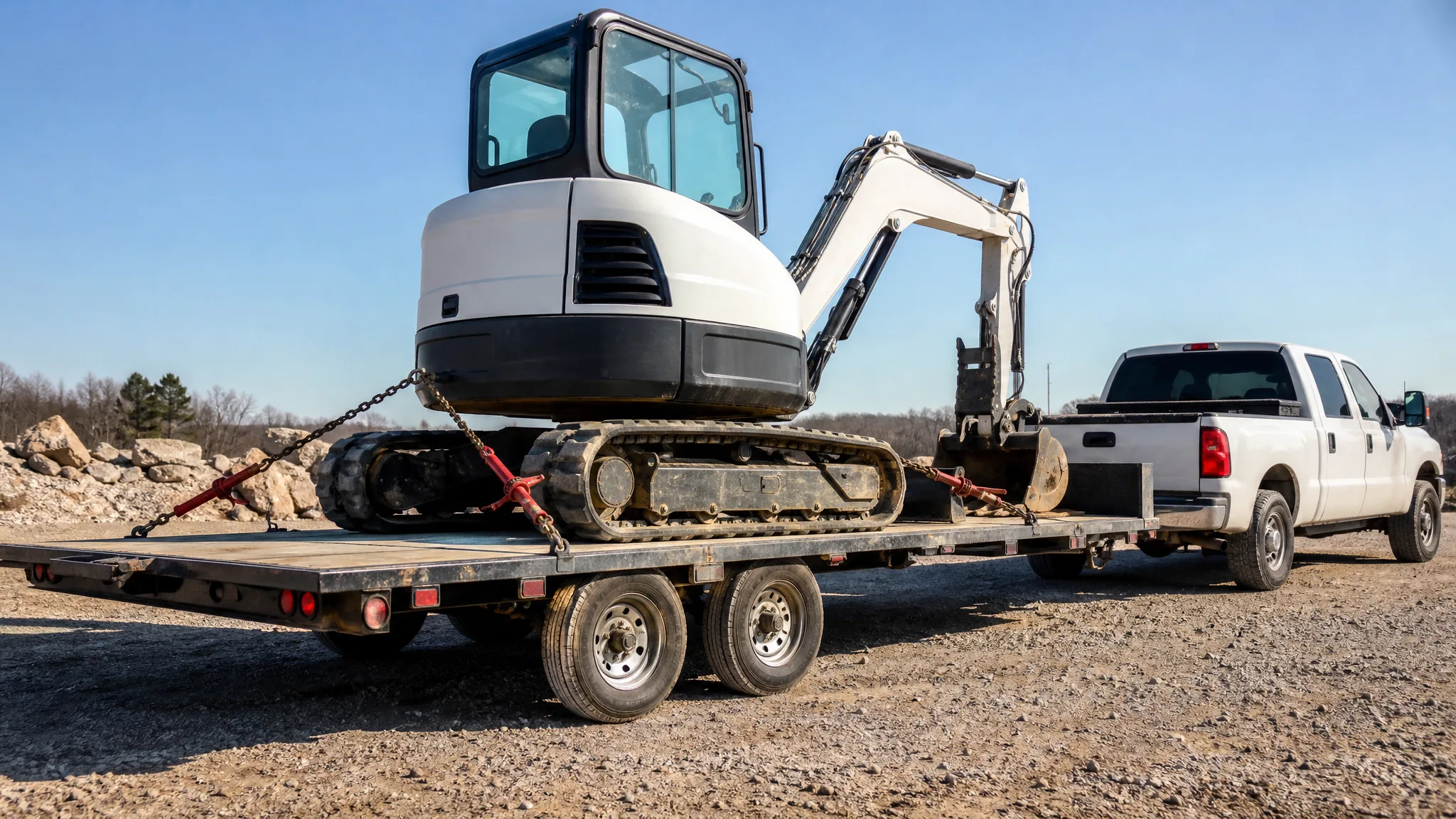
Neither machine is a highway truck in the ordinary sense, but the legal picture still matters. Off-highway rigid haul trucks are not built for public roads and generally move between sites on a lowboy under permit. Articulated trucks are sometimes registered and plated for limited road travel, which can save mobilization cost on jobs with short moves between locations — but the weights involved usually require oversize or overweight permits, and bridge limits apply.
Any hauling that does touch public roads brings axle and gross weight law with it, along with licensing questions for the drivers. Legal weight limits for hauling dirt covers the axle, tandem, and bridge formula limits, and whether you need a CDL to haul heavy equipment addresses the driver side.
Practical Selection Rules
- Choose an ADT when: the haul road is temporary or soft, grades are steep, the site is tight, haul distances are short to moderate, and the material is mixed or wet.
- Choose a rigid haul truck when: the road is built and maintained, grades are modest, the haul is long, volumes are high, and the operation runs on a fixed cycle day after day.
- Choose a highway dump truck when: the material leaves the site on public roads and legal payload, not off-road capacity, is the governing constraint.
Many contractors end up with a mixed fleet for exactly this reason: ADTs feeding a stockpile area from the cut, and highway trucks or rigid haulers taking material off site or to a fill area on a maintained route. That structure plays to each machine's strength instead of forcing one truck to do both jobs badly.
The Bottom Line
The articulated-versus-rigid question is really a question about infrastructure. If you are willing to build and maintain a haul road, a rigid truck rewards you with the lowest cost per ton available. If you are not — or the site will not allow it — an articulated truck keeps the material moving through conditions that would stop everything else.
Decide on road quality and grade first, then distance, then site geometry. The payload numbers and the price tags sort themselves out after that. Get the fleet matched to the haul, and the earthwork schedule stops being a gamble on the weather.