Earthwork Sequencing

Every earthwork project follows the same broad order, and most site problems trace back to somebody breaking it. Grade gets built before the utilities are in. Topsoil disappears under fill that was supposed to be structural. Silt fence goes up after the first rain has already pushed mud into the street. Sequencing is the cheapest quality control on a dirt job, because getting the order right costs nothing and fixing it later costs a fortune.
What follows is the working sequence for a typical building site, what has to be finished before each step can start, and the shortcuts that cause the most expensive rework.
Why the Order of Site Work Matters
Earthwork is destructive. Once a cut is made or a stockpile is buried, undoing the decision means moving material twice, and the second move is always the expensive one. Every phase also creates the surface the next phase depends on: clearing exposes ground that can be stripped, stripping exposes subsoil that can be graded, and grading produces the subgrade that compaction and paving ride on.
There is a second reason. Survey control, drainage patterns, and erosion controls all assume a particular ground condition. Bulldoze first and you will spend the rest of the job re-establishing what a five-minute staking check would have protected. Contractors who bid sequence properly also bid fewer change orders, because the work they priced is the work that actually gets done in that order.
Before the First Bucket: Survey, Staking, and Locates
The job starts with control, not iron. A surveyor sets benchmarks and horizontal control outside the limits of disturbance, and the staking crew sets offsets and cut and fill marks that the operator will work to. If those points sit where a track loader will run over them in week one, they need to be reset somewhere safer before anything moves. The full process is covered in construction staking and site layout.
Utility locates come next, and they come before excavation of any kind. A locate request through 811 covers public utilities; private lines on the property, such as a service lateral to a shop or an old irrigation main, usually do not get marked and have to be found another way. See calling 811 before you dig for the waiting periods and the tolerance zone. A geotechnical report, if one exists, belongs in this phase too, because it decides how deep the unstable material goes and whether the site can be graded as planned.
Erosion Controls Come Before Disturbance
Perimeter controls are installed while the ground is still vegetated and stable, not after it is bare. Under EPA's 2022 Construction General Permit, erosion and sediment controls must be in place before earth-disturbing activity begins, and stabilization must be initiated immediately wherever grading stops on a portion of the site. The permit gives 14 calendar days to complete stabilization when disturbance is limited to five acres or less at one time, and seven calendar days when it is not.
In practice that means silt fence, inlet protection, construction entrances, and any required sediment basin go in first, and a site that is going to sit idle gets seeded or blanketed on a schedule instead of at the end of the job. The permit framework is explained in what is a SWPPP, and the entrance and track-out side of it is covered in temporary construction entrance.
Clearing, Grubbing, and Topsoil Stripping
Clearing removes vegetation, debris, and anything above grade. Grubbing removes the root mass and stumps below it. Only then does stripping make sense, because topsoil cannot be salvaged if it is full of root wads and pushed into a pile with the brush. The method itself matters: mulching, dozing, and excavator grubbing leave very different surfaces and very different amounts of debris to handle. Whatever the method, the trees that are staying need protection before the machines arrive, as covered in protecting trees during excavation and grading.
Strip the topsoil to the depth the soils report or the spec calls for and stockpile it separately, out of the way of traffic and away from drainageways. That pile is future topdressing for the finished slopes, and it is the one material on site that cannot be replaced cheaply. The mechanics are covered in topsoil stripping and stockpiling.
Mass Excavation: Cuts, Fills, and Balance
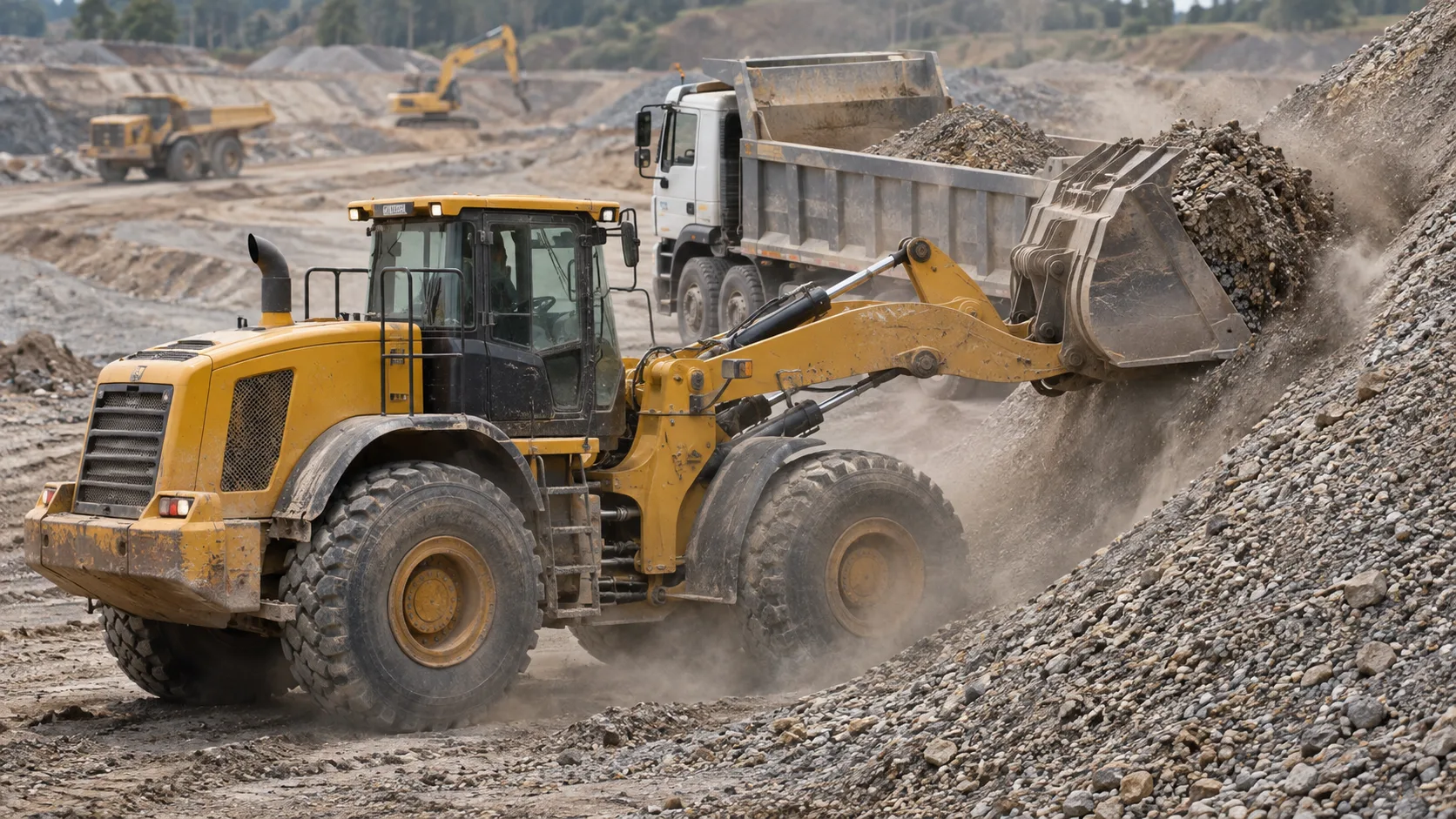
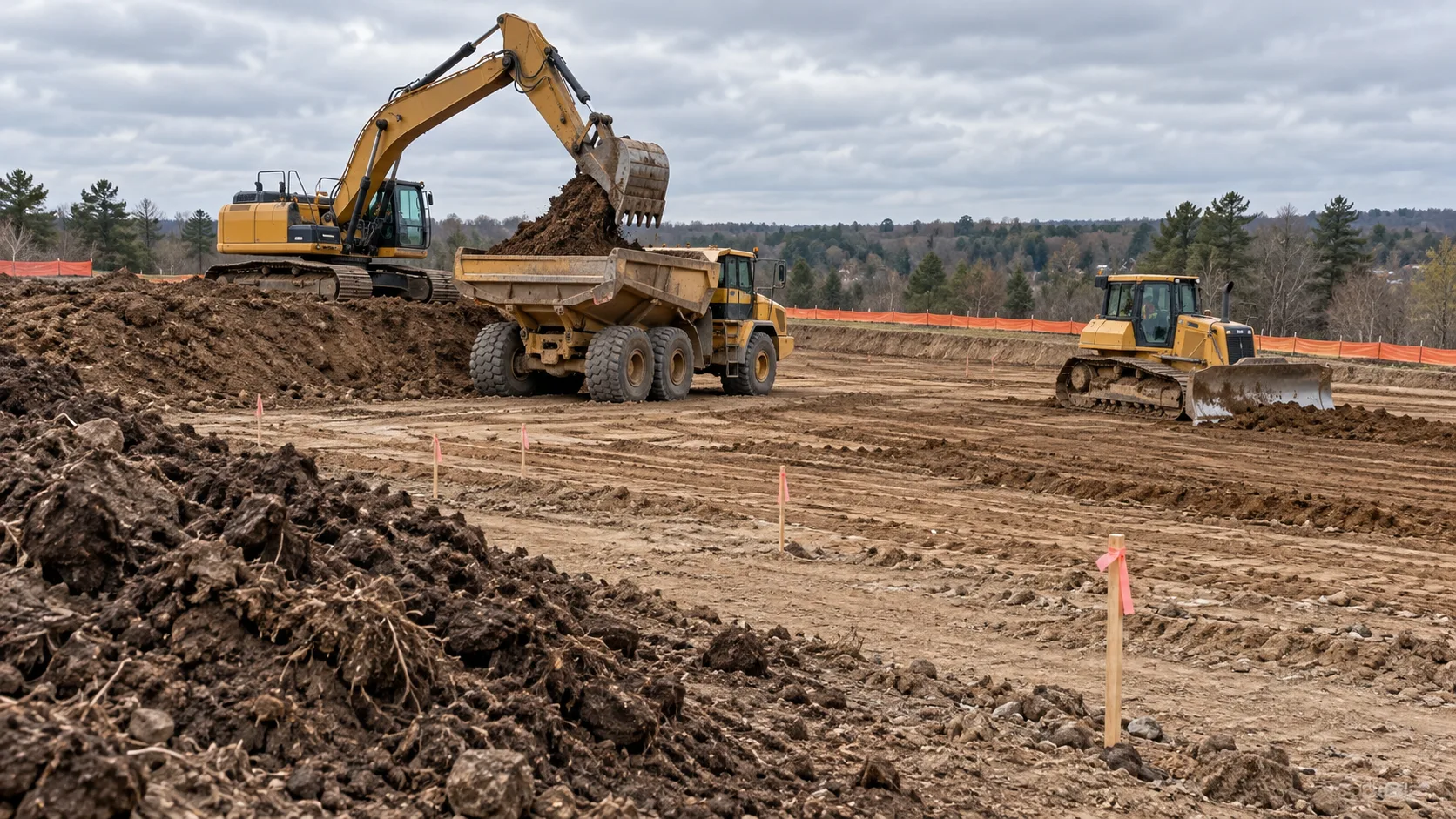
With the site stripped, mass grading moves the big volumes: cuts come down to subgrade, fills go up in lifts, and the goal is to balance the two so trucks are not hauling material off site that could have been used elsewhere. Balance is never as clean as the plan suggests because soil swells when excavated and shrinks when compacted, which is why cut and fill volumes have to be adjusted for swell and shrinkage before they are compared to a bid. Those adjustments are the same ones used in excavation takeoff methods.
Haul logistics belong to this phase, not to the end of it. A haul road built early, crowned and drained, keeps loaded trucks moving when the site turns wet, and the truck count has to match the excavator's production rather than the other way around. Production per machine hour is the number to start from, and it is covered in how many yards can an excavator move per hour.
Utilities Before Grade (and Before Pavement)
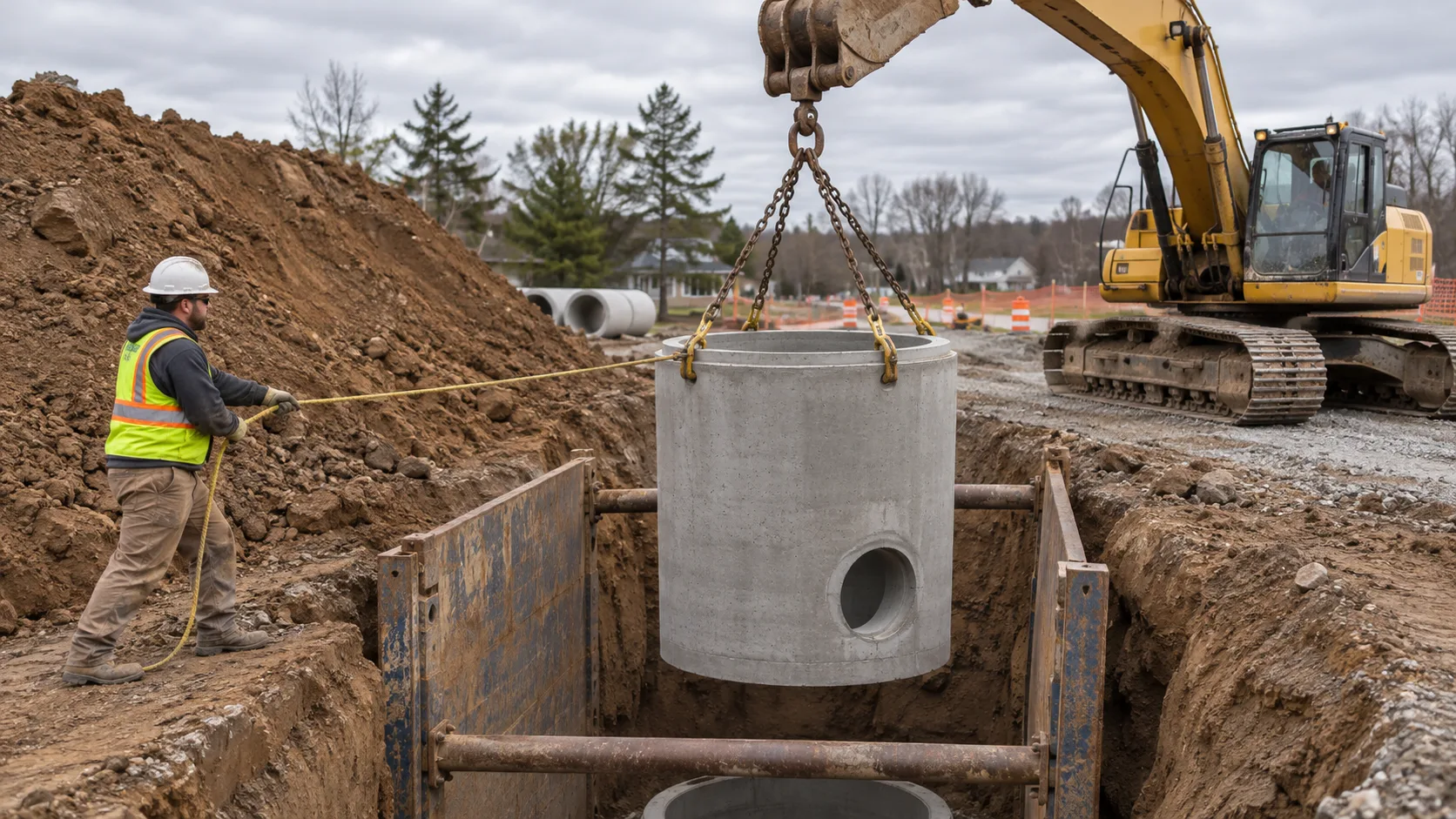
Underground work goes in after mass grading establishes rough elevations and before fine grading locks the surface. Water, sewer, storm drain, electric, gas, and communications all need open trench, and every one of them will be more expensive if it has to be cut through a finished subgrade or a paved surface later. Trench safety applies the whole time: protective systems, spoil setback, and access.
Bedding, haunching, and backfill decide whether the trench settles in two years. Granular backfill compacted in lifts, or flowable fill for utility trenches where compaction is impractical, is what keeps a utility trench from becoming a dip in the pavement. The line work itself is covered in excavating for water and sewer lines.
Rough Grade, Subgrade, and Compaction
Rough grading brings the site to within a working tolerance of design elevations and shapes the drainage. Then the subgrade gets proved: proof rolling exposes soft spots and unsuitable material that a grade check will never find, and those areas are undercut and replaced before fill goes on top. Skipping proof rolling is how a building pad ends up with a soft corner that shows up as a cracked slab a year later.
Fill goes in lifts thin enough for the compactor to actually reach the bottom of each one, at moisture content close enough to optimum for density to develop, and it gets tested. The sequence matters here too: stabilize the subgrade, then place fill, then compact, then test, then place the next lift. The practical rules are in rough grading vs. finish grading, how thick should compaction lifts be, and proof rolling a construction site.
Fine Grade, Then Stabilization
Fine grading is the last earthmoving operation: the surface is brought to final elevation, slopes are checked against the plan, and positive drainage is confirmed everywhere water will run. This is also when grade stakes, hubs, and machine control get their final workout, because tolerances tighten considerably compared with rough grade. See how to set grade.
Stabilization closes the loop that erosion controls opened. Disturbed areas that will not be worked again get topsoil, seed, mulch, or blanket, and the site stays in compliance instead of waiting for a final inspection to force the issue. Details are in seeding and stabilization after grading.
Around a Building: Foundation Sequence
On a building pad the sequence narrows to a repeatable loop: excavate the foundation and footing trenches to the elevations on the plan, pour footings, build the walls, waterproof and drain the exterior, then backfill in compacted lifts on both sides so the walls are loaded evenly. The footing drain has to be in and inspected before backfill, because it cannot be fixed afterward without digging the foundation back out.
See excavating for a house foundation, installing a footing drain, and backfilling a foundation for the depth, drainage, and compaction rules that apply at each step.
Where Sequences Break Down
Most of the expensive mistakes are not exotic. They are ordinary steps taken out of order.
- Stripping after mass grading. Topsoil gets mixed into structural fill instead of being salvaged, and the site loses its topdressing material.
- Utilities after paving. A trench cut through new asphalt or concrete never goes back the way it was, and the patch is visible for years.
- Fill placed on unstripped ground. Organic material under a pad decomposes and settles, no matter how well the lift above it was compacted.
- No haul road until it rains. Trucks start spinning, production collapses, and the schedule absorbs the difference.
- Fine grading before the subgrade is proved. Soft spots get buried under a smooth surface and reappear as settlement after the slab is poured.
A Sequence Checklist You Can Walk
- Survey control, benchmarks, and staking set outside the disturbance limits.
- 811 locates called, private utilities identified, geotechnical recommendations in hand.
- Erosion and sediment controls installed and inspected.
- Clearing and grubbing complete, debris removed.
- Topsoil stripped to depth and stockpiled separately.
- Mass cut and fill balanced, haul road built and drained.
- Underground utilities installed, tested, and backfilled.
- Rough grade to tolerance, subgrade proof rolled, soft spots repaired.
- Fill placed in lifts, compacted, and tested.
- Fine grade, drainage verified, disturbed areas stabilized.
Walk that list at the start of a job and again at every phase change. The order is not bureaucracy; it is the difference between moving dirt once and moving it twice.