Digging Post Holes for Decks and Fences

A deck, a fence, a mailbox, or a gatepost is only as good as the hole under it. Dig it too shallow and frost will jack it out of the ground within a couple of winters. Dig it too narrow and the post has no soil or concrete to bear against, so it leans under load. Get the layout off and the whole run is visibly crooked. Post holes are small excavations, but they follow real rules — and a few minutes of planning saves a season of rework.
How Deep Does a Post Hole Need to Be?
The depth of a post hole comes from two rules, and you use whichever gives you the deeper hole. The first is a proportion rule: bury roughly one-third of the post's total length in the ground. A 6-foot above-ground fence post becomes an 8-foot post with about 2 feet buried, and a shorter deck post follows the same logic. Many builders stretch that to one-third to one-half of the above-ground height for taller or more heavily loaded posts.
The second rule is the one that actually governs: the bottom of the hole has to reach below the frost line. The building code sets footing depth at a minimum of 12 inches below undisturbed ground even where frost is not a factor, and deeper wherever the local frost depth is greater. For a deck, that same frost-depth requirement applies to the footing that carries the post. Deepest rule wins.
Frost Depth and Frost Heave: The Rule That Decides Depth
Frost heave is why shallow posts fail. When the soil around and under a footing freezes, water in the soil expands and lifts whatever is sitting in it. A footing set above the frost line gets nudged upward a little each winter, and after a few cycles the post is out of plumb, the fence line is wavy, and the deck framing is racked.
Frost depth varies enormously by location. It can be near zero in the southern Gulf states, around 12 inches across much of the South, roughly 30 to 42 inches through the Midwest and Northeast, and more than 60 inches in parts of the upper Midwest and northern states. There is no single national number, so the depth your local building department publishes for your area is the one that counts — it overrides any rule of thumb, online calculator, or map.
One related code point worth knowing: attached decks and elevated structures need footings below frost, because if the outer posts heave while the house does not, the connection between deck and house is stressed. Small freestanding, ground-level structures have narrower allowances in many jurisdictions. When in doubt, dig to frost depth.
How Wide Should a Post Hole Be?
The common field rule for fence posts is to dig the hole about three times the width of the post. A 4x4 post gets a hole roughly 9 to 12 inches in diameter, which leaves room for a drainage base and enough concrete or compacted soil to grip the post on all sides. A hole only as wide as the post gives you nothing to backfill against.
Deck footings are sized more formally. The footing has to spread the load of the post over enough soil that the ground is not overloaded. The prescriptive tables in the residential code size the footing diameter from the tributary area each post carries and the soil's bearing capacity. On typical residential soil, a post carrying a small entry-deck area may need only a 12-inch footing, while a post carrying a large tributary area can call for 20 inches or more. That is a bigger hole than a fence post needs, and it is driven by structural load, not by habit.
Choosing a Digging Method: Auger, Hand Digger, or Machine
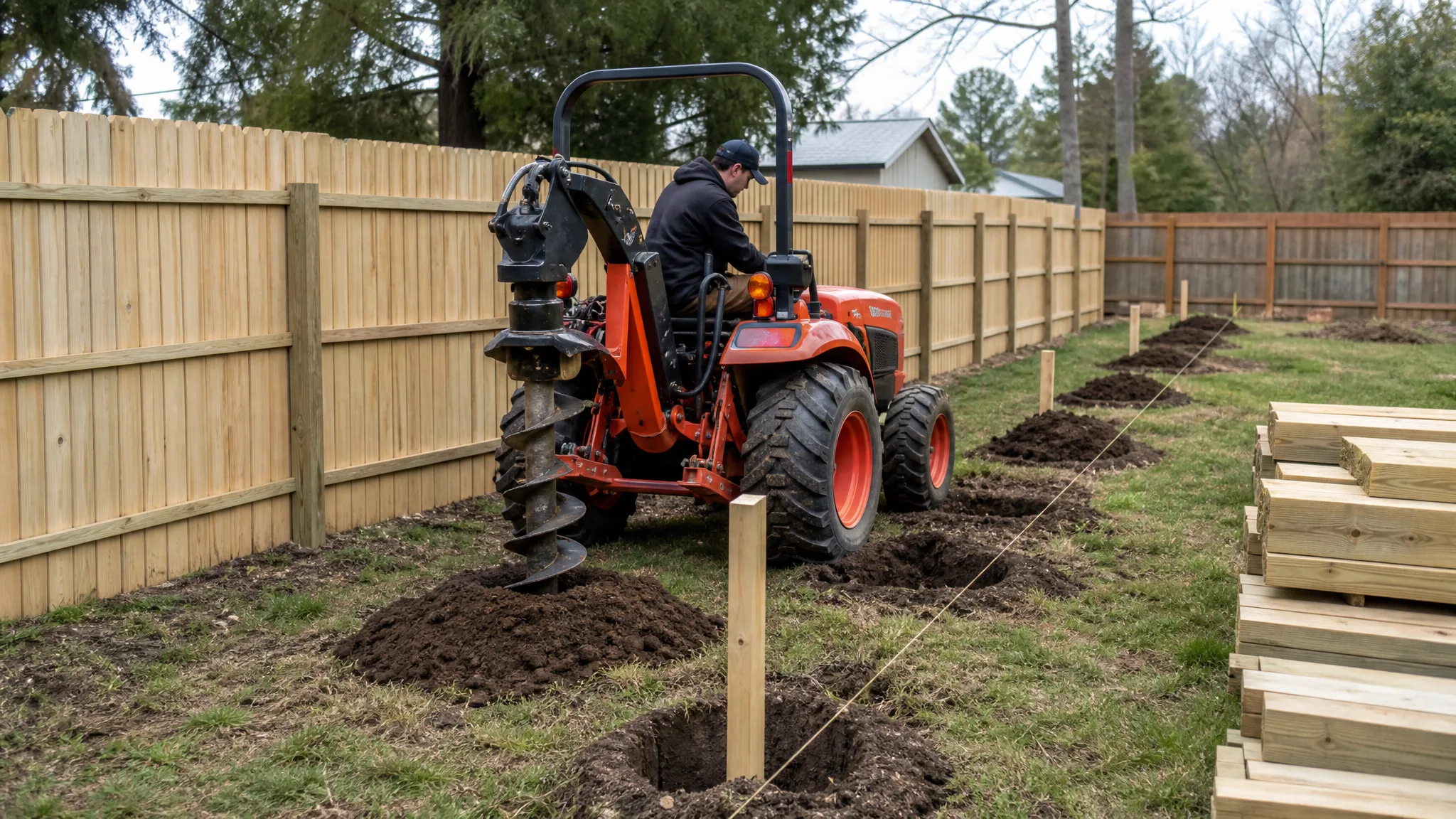
For one or two holes, a clamshell-type hand post hole digger and a digging bar are enough. For a fence line of 20 holes, a powered auger changes the job from an afternoon of misery into an hour of work.
- Hand digger and bar: best for a few holes, tight spots against a foundation, and anywhere you must dig carefully by hand near utilities or tree roots.
- Two-person gas auger: the standard rental tool for fence lines. Fast through normal soil, but hard work to control in rock or heavy clay.
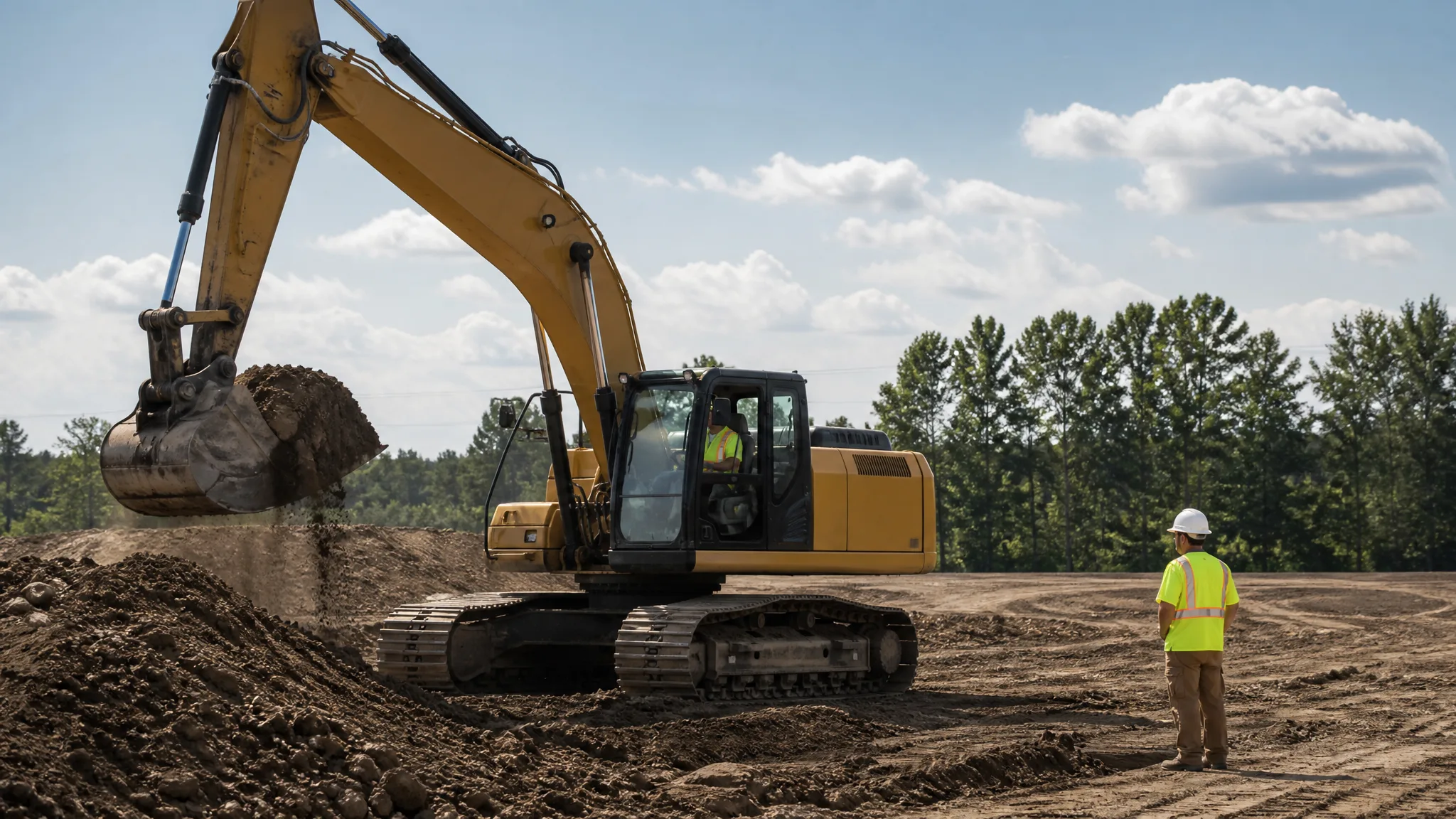
- Skid steer or tractor-mounted auger: the production choice for long runs and larger deck footing holes. A compact track loader or skid steer with an auger attachment bores consistent, straight holes and handles rocky ground far better than a hand-held unit; the machine trade-offs are covered in mini excavator vs. skid steer.
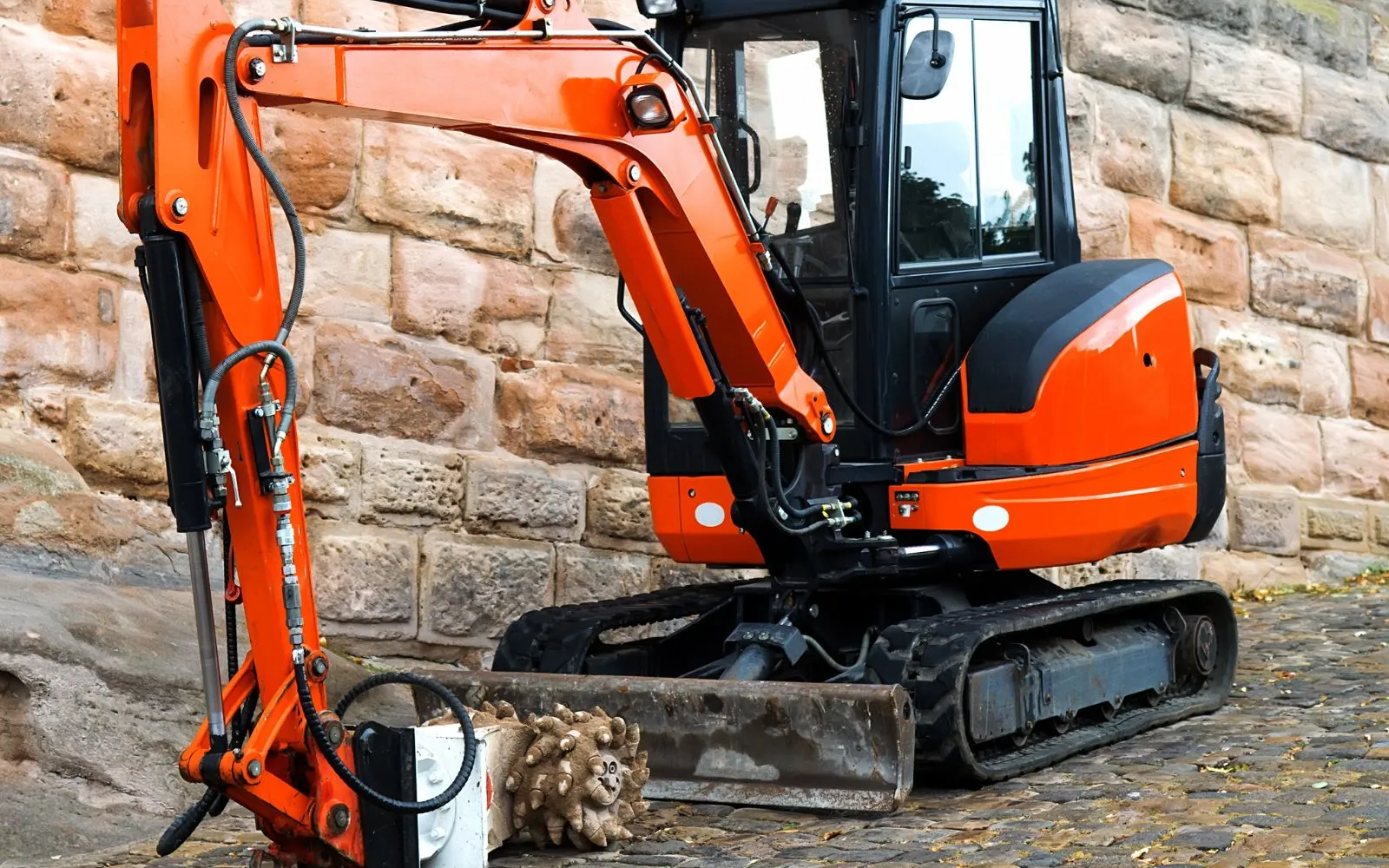
- Mini excavator with a narrow bucket: useful where the auger cannot reach, where holes must be dug around obstructions, or where a large deck footing needs a bell or flare at the base.
Whatever the tool, keep the hole plumb and keep the sides roughly vertical. A bell-shaped hole that flares at the bottom resists uplift, but a hole that mushrooms out near the surface gives the post nothing to bear against.
Laying Out the Holes
Layout is where a fence or deck is won or lost, and it starts with a string line. Run a taut line along the fence path or the deck beam line, then mark each hole center on the line at your chosen spacing. Fence posts commonly land at 6 to 8 feet on center; deck posts follow the beam span, typically every 6 to 8 feet for common residential beams.
For a square or rectangular project such as a deck, set the corners first and check them with the 3-4-5 method or diagonals before marking anything in between. On sloped ground, remember that a level string line and a level post base are two different things — you may need to step the fence down the slope in sections rather than following the ground surface. The same drainage and slope thinking that governs a yard applies here; see how much slope a yard needs for drainage.
Gravel Base and Drainage in the Hole
A post hole is a container that collects water, and trapped water is what rots a wood post from the bottom up. The fix is a drainage base. Put 4 to 6 inches of coarse, washed gravel such as #57 stone in the bottom of the hole, compact it, and set the post on top. In heavy clay, where water perches instead of draining, many builders increase that base to about 8 inches and oversize the hole. The reasoning behind the stone choice is the same as anywhere else; see gravel and stone sizes explained.
The gravel serves a second purpose: it gives you a firm, level base at the exact height you need, so the post does not sink while you are plumbing and bracing it. It also means the post end grain sits on stone rather than in a puddle of soil.
Setting the Post: Gravel, Concrete, or Both
There are three common ways to lock a post in the hole, and each fits a different situation.
- Gravel or crushed stone only: fast, drainy, and easy to adjust. Good for fence posts in well-drained soil where the post is rated for ground contact.
- Concrete: the most rigid option, standard for deck posts and gate posts. Concrete can be placed as a wet mix or dry-poured and wetted, then crowned slightly above grade so water sheds away from the post instead of pooling against it.
- Concrete footing with a post base: the longest-lasting deck detail. A concrete pier is poured to the footing size and depth, and a galvanized post base holds the post roughly an inch above the concrete so the end grain stays dry.
To estimate concrete, treat the hole as a cylinder, subtract the volume of the post that sits in it, and add a little for waste. A post-hole volume calculator turns those dimensions into bags quickly, which is far better than guessing at the counter. Depth and hole diameter both come straight off the layout you already set.
Clay, Sand, and Rocky Soil
Soil type changes the approach more than most people expect. Heavy clay drains poorly and swells when wet, so it needs a thicker gravel base and, ideally, a ground-contact-rated post or a concrete pier that keeps wood out of the wet zone. Sandy soil drains well but caves easily, so holes may need to be dug wider or lined to stay open long enough to set the post. Rocky ground is slow work regardless of method — a hand bar and a machine-mounted auger with a rock pilot bit will get through material that stalls a hand-held unit, and if the rock is shallow and solid, a surface-mount or helical option may be worth pricing before you spend a day fighting it.
Whatever you dig out, keep the spoil clean and separate. Soil from the hole is usually fine to backfill and crown around the post, but debris, roots, and construction trash do not belong in the hole. If you need a quick handle on how heavy that spoil is, our how much does a yard of dirt weigh guide gives the per-yard weights.
Call 811 Before You Dig
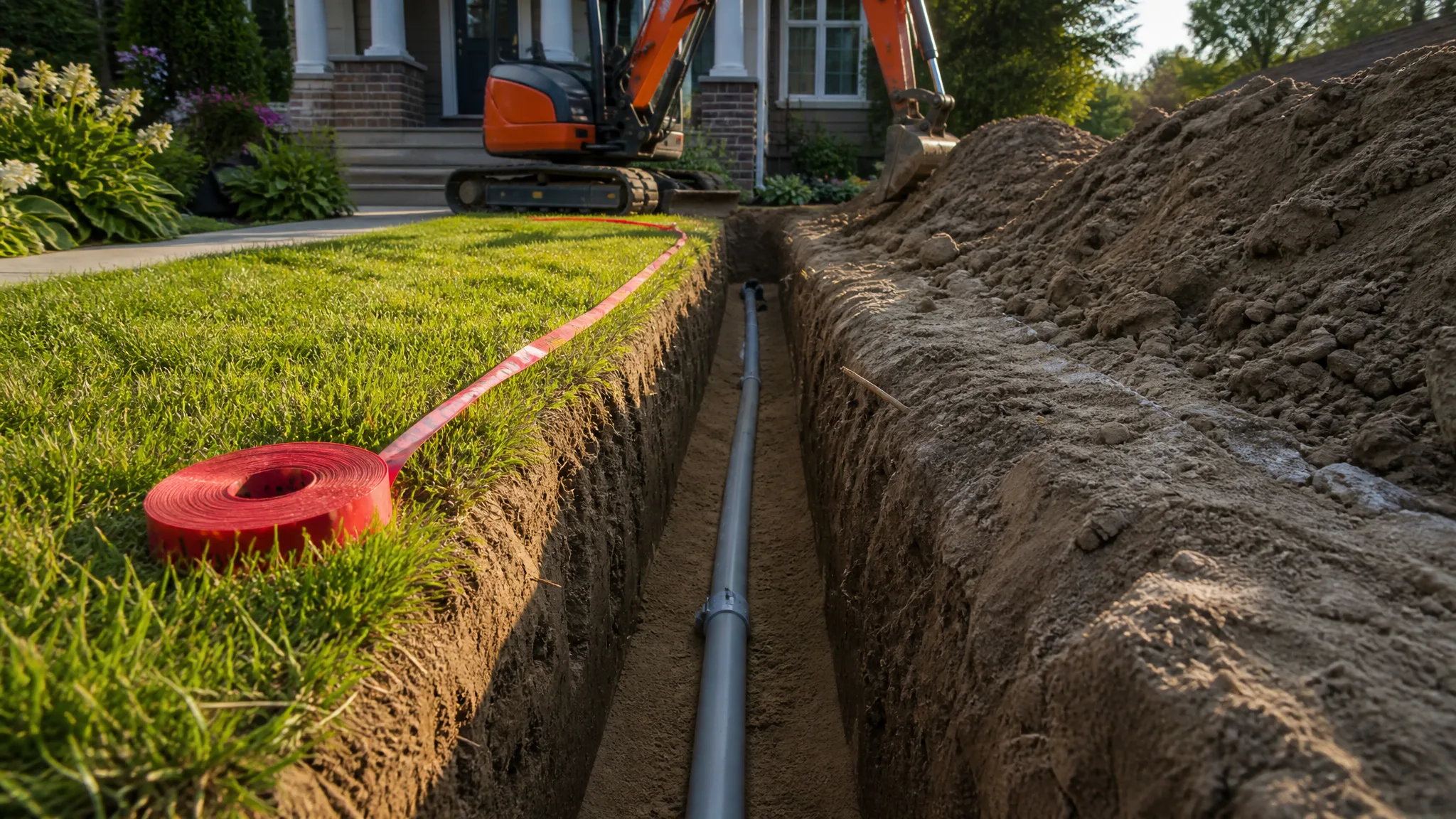
Post holes are shallow, which is exactly why people skip the locate call and exactly why it is a mistake. Gas service lines, water laterals, private irrigation, landscape lighting, and low-voltage wiring all sit in the top 12 to 24 inches — right where a post hole goes. Call 811 a few business days before digging and let the utilities mark the public lines.
Two cautions matter here. First, 811 marks public utilities only; private lines on your own property, past the meter, are your responsibility to locate. Second, stay outside the tolerance zone — often 18 to 24 inches on either side of the marks — and hand-dig rather than using a power auger inside it. The full process, the color codes, and the liability picture are in calling 811 before you dig.
Common Post Hole Mistakes
- Stopping above frost depth. The number one cause of heaved, leaning posts after a hard winter.
- Digging holes too narrow. A hole the width of the post leaves no room for a drainage base or backfill.
- Skipping the gravel base. Wood posts rot from trapped water at the bottom of the hole.
- Not crowning the concrete. Flat or dished concrete around a post funnels water straight into the wood.
- Ignoring the locate call. A shallow hole is still deep enough to hit a gas or water line.
- Chasing the ground surface on a slope. Step the run or use longer posts instead of setting shallow holes at the low end.
Post holes are simple, but they are still excavations, and the same discipline that applies to a footing dig applies here. If the project grows into a larger structure, the sequencing is covered in excavating for a house foundation and excavating for a pole barn. Set the depth to frost, size the hole to the load, put stone under the post, and the structure above it will stay straight for decades.