Storing Heavy Equipment for the Off-Season

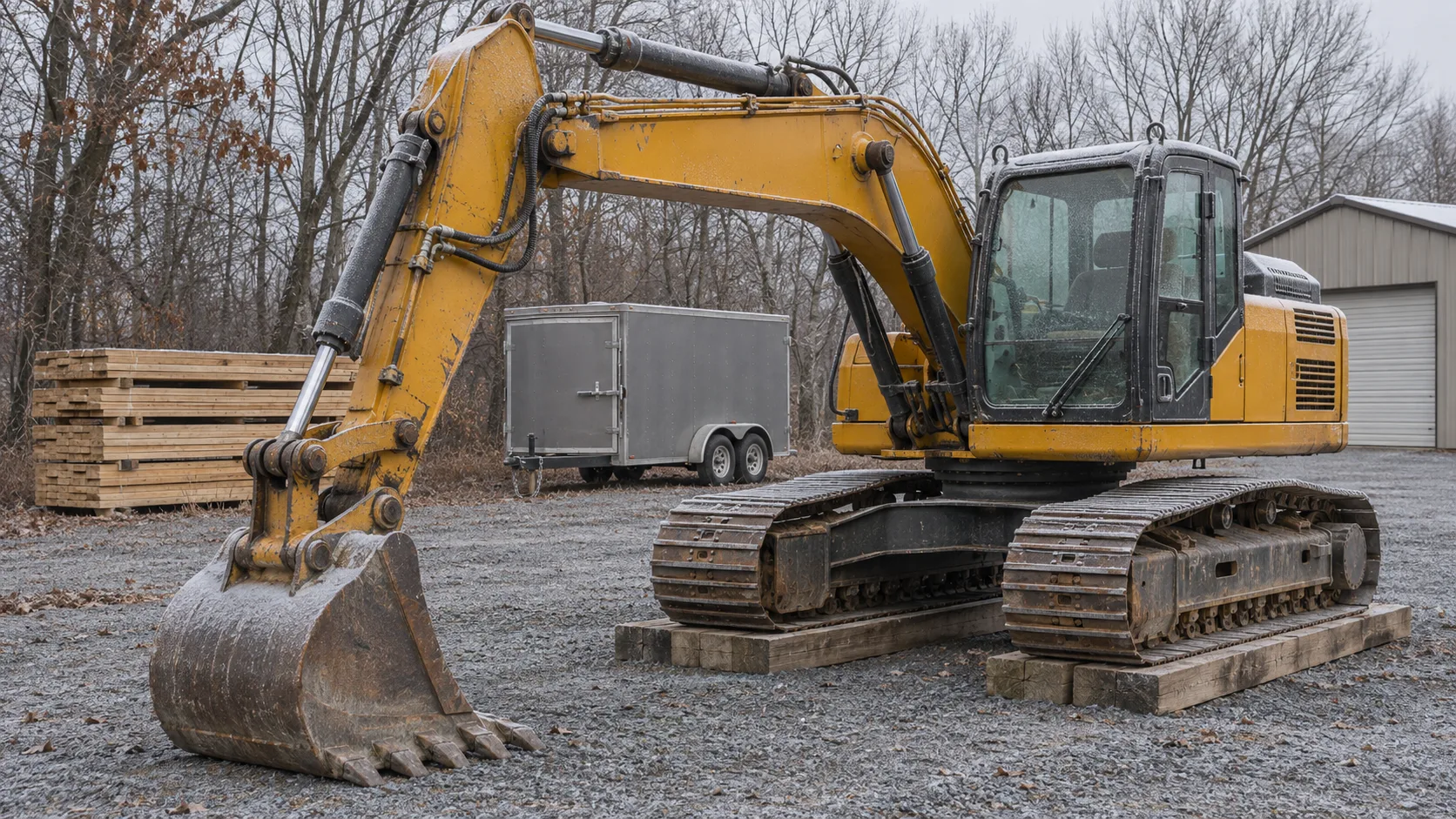
An excavator that sits for four months does not simply wait. Fuel goes stale, batteries discharge and freeze, cylinder rods pit, seals dry out, rodents move into the wiring, and water finds every opening that is not sealed. Most of the expensive spring failures were created in November by a machine that was parked and forgotten.
Off-season storage is not complicated, but it is a sequence. The machines that come out of storage ready to work are the ones that were cleaned, serviced, protected, and checked once a month by somebody who wrote it down.
Why an Idle Machine Degrades Faster Than a Working One
A working machine burns off moisture. It circulates oil, keeps the battery charged, exercises the seals, and moves the grease around. An idle machine does none of that, and every one of those systems starts drifting the wrong direction at the same time.
That is why the calendar matters more than the season. Storage begins the day the machine comes off its last job, not the day the weather turns.
First, Decide How Long It Is Actually Sitting
A two-week gap between projects and a five-month winter layup need different levels of effort. Short gaps need a wash, a full fuel tank, and a battery maintainer. Long layups need the full treatment, including fluid decisions that are easier to make before the machine cools down.
Be honest about the duration. A machine parked in October and expected back in March is a long storage event even if nobody calls it that, and treating it as a short break is how a fuel system ends up with a filter full of biological sludge in the spring.
If the machine is being kept as backup capacity rather than returned to full production, this is also the moment to revisit whether owning it still pencils out against renting for the few jobs it covers, since cost per hour changes when the machine stops earning.
Wash It Before You Park It
A washdown is not cosmetic and it is not a favor to the next operator. Mud holds moisture against steel, hides leaks, packs into the undercarriage, and makes the inspection you are about to do worthless.
Clean the undercarriage thoroughly, including between the track links and around the rollers and idlers. Clean the engine compartment with care around electrical connectors, and clean the boom and stick so you can see rod condition and hose wear. Pay attention to the areas that stay wet: the belly pans, the battery box, and anywhere debris collects.
The wash is also the inspection. Every leak, chafe, cracked hose, missing guard, and worn pin you find now is a winter repair instead of a spring emergency, which is the same logic behind the routine daily maintenance checklist operators run in season.
Anything that needs fixing goes on a list attached to the machine, not in somebody's memory.Fuel: Fill It, Treat It, and Know Its Clock
Park the machine with the fuel tank full. A full tank leaves minimal airspace for condensation to form as temperatures swing, and condensation is the source of the free water that drives everything else bad in a fuel system.
Treat the fuel if it will be sitting for months. Fuel distributors commonly put untreated ultra-low sulfur diesel at roughly six to twelve months of usable storage in a well-kept tank, with the clock running faster in heat. A stabilizer extends that window; a biocide is appropriate where microbial growth has already been a problem, not as a routine additive.
Before the machine goes into storage, drain water from the water separator and replace fuel filters if they are near the end of their interval. The bulk side of the equation matters too: jobsite fuel storage rules apply to the tank the machine is filled from, not just the machine.
Tighten caps and check that tank vents are clear but not open to rain. A tank that breathes freely through a loose cap is a tank that makes its own water.Then leave it alone. Starting an engine for five minutes and shutting it down is worse than not starting it, because the engine never reaches operating temperature and the exhaust system never dries out.
DEF: The Fluid With a Thermometer in It
Diesel exhaust fluid is the most temperature-sensitive thing on a Tier 4 machine, and it is worth understanding how SCR and DPF systems use it before deciding how much to leave in the tank over a long layup. The American Petroleum Institute publishes a shelf-life table that makes the point: roughly 36 months at a constant 50 degrees Fahrenheit or below, 18 months at 77 degrees, 12 months at 86 degrees, six months at 95 degrees, and test-before-use above that.
That means the storage location decides the fluid's life, on top of the handling requirements covered in diesel aftertreatment and DEF.
A machine parked in a hot shed all summer with a full DEF tank may be carrying fluid that is already out of specification by the time it is used. A cold, shaded, or indoor spot buys months.Handle it like the specification demands. Use dedicated containers and dedicated dispensing equipment, never a funnel that has touched other fluids. Do not add aftermarket additives, do not cut it with water, and keep it out of direct sunlight. If the tank freezes, that is normal and not damaging: API notes DEF expands by up to seven percent when frozen, which is why tanks and containers are designed with room for it.
Hydraulics: Retract, Protect, Top Off
Hydraulic cylinder rods are chrome-plated for a reason, and that plating is thin. A rod left extended for months collects moisture, dust, and condensation on the exposed surface, and the resulting pits tear up the rod seal the first time the cylinder retracts.
Retract the cylinders as far as the machine allows before shutdown. If the machine already has a slow cycle or a drifting cylinder, fix it before storage rather than letting it sit for months, since the diagnosis behind excavator hydraulic problems is far easier on a clean machine in a shop.
Where a cylinder cannot be fully retracted, coat the exposed rod with a corrosion-inhibiting grease or oil that is compatible with the seal material, and wipe it clean before returning the machine to service.Top off the hydraulic reservoir to its proper level. A full reservoir leaves less airspace for condensation, the same principle as the fuel tank, and keeps water from collecting in the oil over a long idle period. If a fluid change or oil analysis is due, do it before storage rather than after, so the machine sits with clean oil instead of contaminated oil.
Batteries Are the Most Common Casualty
More machines fail to start in the spring because of a battery than because of anything mechanical. Lead-acid batteries self-discharge while sitting, and the rate climbs with temperature. A battery left connected also feeds parasitic loads like clocks, radios, and controllers.
Disconnect the batteries, or better, remove them and store them in a cool, dry place above freezing. A fully charged battery resists freezing far better than a discharged one, because the electrolyte in a discharged battery is closer to weak acid and freezes at a much higher temperature.
Put them on a maintainer rather than a charger. A maintainer holds the battery at full charge without cooking it; a constant charger will boil off electrolyte over a winter. Check water levels on serviceable batteries before storage, and clean and protect the terminals so corrosion does not start while the cables are off.
Coolant, Oils, Filters, and the Pre-Storage Service
Do the scheduled service before storage, not after. Oil that has been through a season carries acids and suspended contaminants, and letting it sit in the engine for months gives those contaminants time against bearing surfaces.
Check coolant freeze protection with a refractometer and correct it for the lowest expected temperature at the storage site. Grease every fitting while you still have access and the machine is clean, and note anything that will not take grease, because that is a seized joint developing.
Replace air and fuel filters if they are close to their interval, clean or replace the cab air filter, and check the hydraulic breather.
Tracks, Tires, and Getting the Load Off the Ground
Tires flat-spot when a loaded machine sits in one position for months, and the flat spot does not always come out with heat. If a wheeled machine is being stored long-term, block it up so the tires carry little or no load, or at minimum inflate to the high end of the recommended range and move the machine periodically.
For tracked machines, clean the undercarriage, check track tension, and look at the rollers, idlers, and sprockets while everything is accessible, because undercarriage wear is the largest single maintenance cost on a tracked excavator. Do not park a tracked machine in standing water or in mud that will freeze around the tracks. A machine frozen into the ground is a spring recovery job, not a spring startup.
Set the attachment down. A bucket or blade left hanging on a cylinder is load held by hydraulic pressure for months, and it is also a hazard if a hose fails while nobody is around.
Pests, Weather, and Security
Rodents are a real storage risk, not a joke. Wiring harnesses, cab insulation, and seat foam are attractive nesting material, and chewed harnesses produce electrical faults that are slow and expensive to trace. Seal openings, remove food and debris from the cab, and use traps or repellent around the storage area rather than relying on the machine being sealed.
Cover the machine with something that breathes, or leave it uncovered. A tight tarp traps moisture underneath and produces more corrosion than open air. Plug the exhaust and any open intake if the machine sits where water or rodents can get in, and label the plugs so nobody cranks the engine with them in place.
Security deserves the same attention as the mechanical work. A stored machine is an unattended machine, and equipment theft does not take a season off.
The Monthly Wake-Up Routine
Long storage is not a single event. Once a month, walk the machine: check battery voltage or maintainer status, look for new leaks or rodent sign, confirm covers and plugs are intact, check tire pressures, and look at the ground under the machine for anything that has dripped.
If the machine can be run safely, a monthly warm-up to full operating temperature is better than nothing, but only if it actually reaches temperature and runs long enough to dry the exhaust. Short idling cycles do more harm than good.
Write the checks down. A clipboard on the wall of the shop with dates and initials turns storage from a hope into a maintenance record, and it also tells you in March exactly what was done in November.
Return-to-Service Checklist
- Remove covers, plugs, and restraints; confirm nothing is left in the intake or exhaust.
- Inspect the machine for leaks, rodent damage, and corrosion before adding fuel or starting.
- Check engine oil, coolant, hydraulic oil, and final drive levels.
- Reinstall and connect batteries; check terminals and charge state.
- Drain any water from the fuel separator and inspect fuel condition before cranking.
- Check track tension or tire pressures and remove blocking carefully.
- Grease all fittings, including the ones you could not reach in storage.
- Start and idle, then check for leaks at every hose and cylinder under pressure.
- Cycle all functions slowly through full travel before loading the machine.
- Run a full pre-shift walkaround and log the hours and any defects found.
If the plan is to sell rather than run the machine again, storage condition is the whole negotiation. Buyers walk the machine the same way you just did, and a documented service history and a clean undercarriage are worth more than a fresh coat of paint, as the inspection points in buying a used excavator make clear.
The machines that cost the least to own are not the ones with the lowest hourly rate.
They are the ones that go into storage prepared and come out of it with nothing to fix, and that outcome is entirely a matter of a few hours of work at the end of the season.