How to Remove a Concrete Slab


Removing a concrete slab is demolition, earthwork, and hauling rolled into one job. A cracked driveway, a tired patio, a garage apron, or a shed pad that has heaved out of level all come out the same way: cut it, break it, pull the pieces, and deal with what is underneath. The work is straightforward, but the details — utilities, reinforcement, dust, and disposal — decide whether it is a clean day's work or an expensive mess.
This guide walks through how a concrete slab actually comes out, from planning and saw cutting to breaking, hauling, recycling, and preparing the base for whatever replaces it.
When Removing a Concrete Slab Makes Sense
Not every failing slab needs to go. Hairline cracks, surface scaling, and a single low spot can often be patched or leveled. Removal is the right call when the slab is structurally broken: deep, wide cracks; multiple heaved sections; a surface more than a couple of inches out of level; or soil settlement underneath that will keep moving. If the plan is to pour a new slab, lay pavers, or rebuild the driveway on the same footprint, the old concrete has to come out so the base can be corrected.
Step 1: Plan the Job, Call 811, and Check Permits
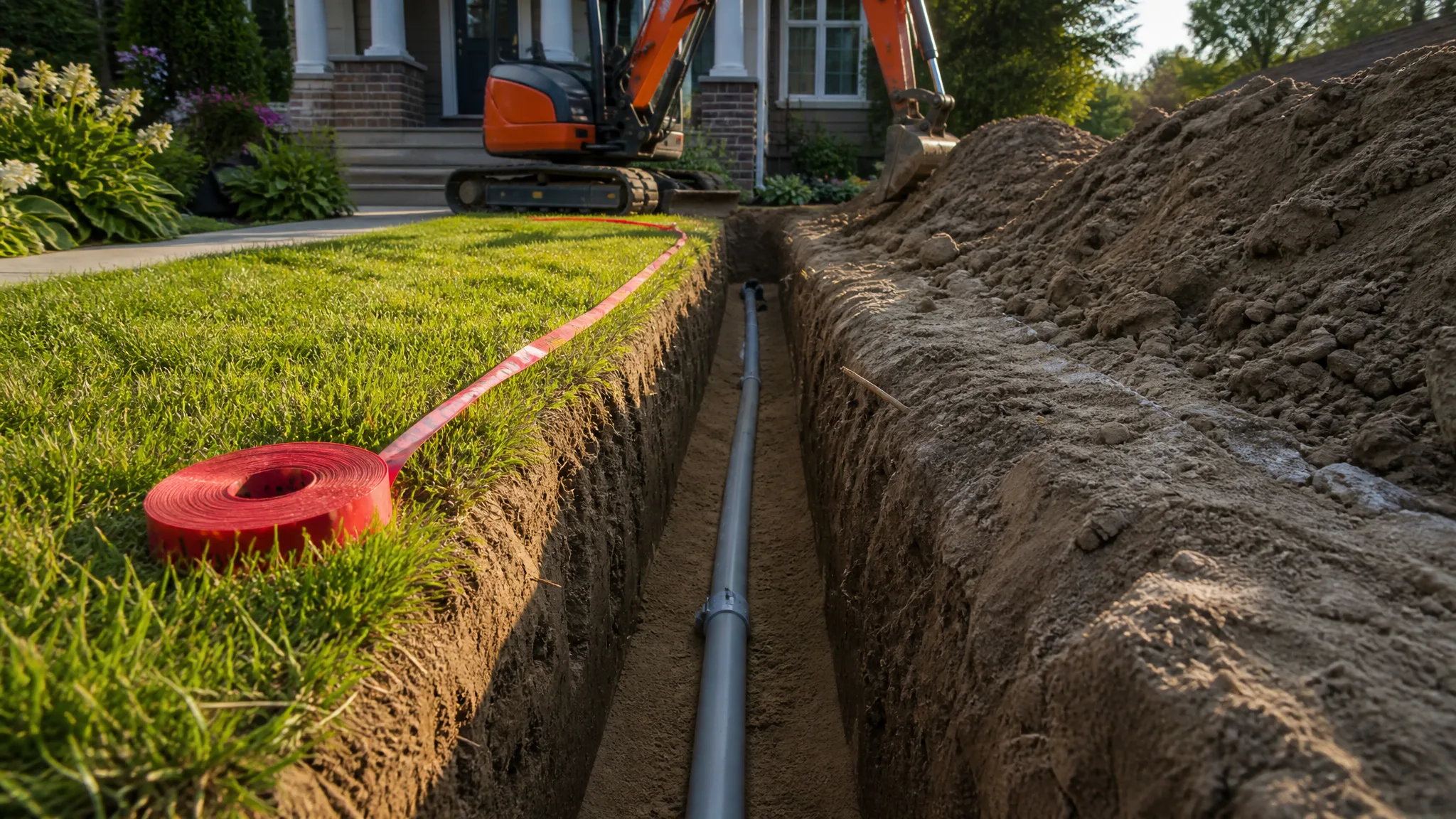
Before a single cut, call 811 so utilities are located and marked. Buried gas, electric, water, and communications lines run under and beside driveways and patios more often than people expect, and hitting one is dangerous and expensive. The 811 locate process is free and it is not optional.
On top of the locates, check whether the work needs a permit — a demolition permit for a structure, or an approach or right-of-way permit if the concrete meets the street. Plan access and staging too: concrete is heavy, and where the pieces will be stacked, where a machine can reach, and how a truck will get in and out should all be settled before demolition starts. Protect whatever stays — fences, siding, landscaping, and the lawn — with plywood and plastic. Larger jobs follow the same discipline as a full house demolition, just at a smaller scale.
Step 2: Size Up the Slab and Its Reinforcement
Walk the slab and note its thickness, whether it is reinforced, and where it meets other surfaces. Most residential slabs are about four inches thick; driveways, garage floors, and pads under hot tubs or equipment may run six inches or more, sometimes over a compacted base. Reinforcement matters because welded wire mesh and especially rebar make the concrete far harder to break and slow the job considerably. Thickness and reinforcement are the two biggest drivers of both labor and cost.
Step 3: Saw Cut the Slab Into Manageable Sections
Cutting the slab into sections before breaking it does two things: it gives the concrete a starting plane to fracture along, and it keeps the pieces small enough to handle. A walk-behind concrete saw with an integrated water-feed system cuts straight lines and controls dust; for small jobs a handheld saw or a demo blade can score the surface.
Cut through the full slab depth where the section meets a foundation, a garage wall, or anything that must stay intact. Never break a slab that butts a structure without first isolating it with a clean cut.
Step 4: Break It Up — Sledgehammer, Jackhammer, or Machine
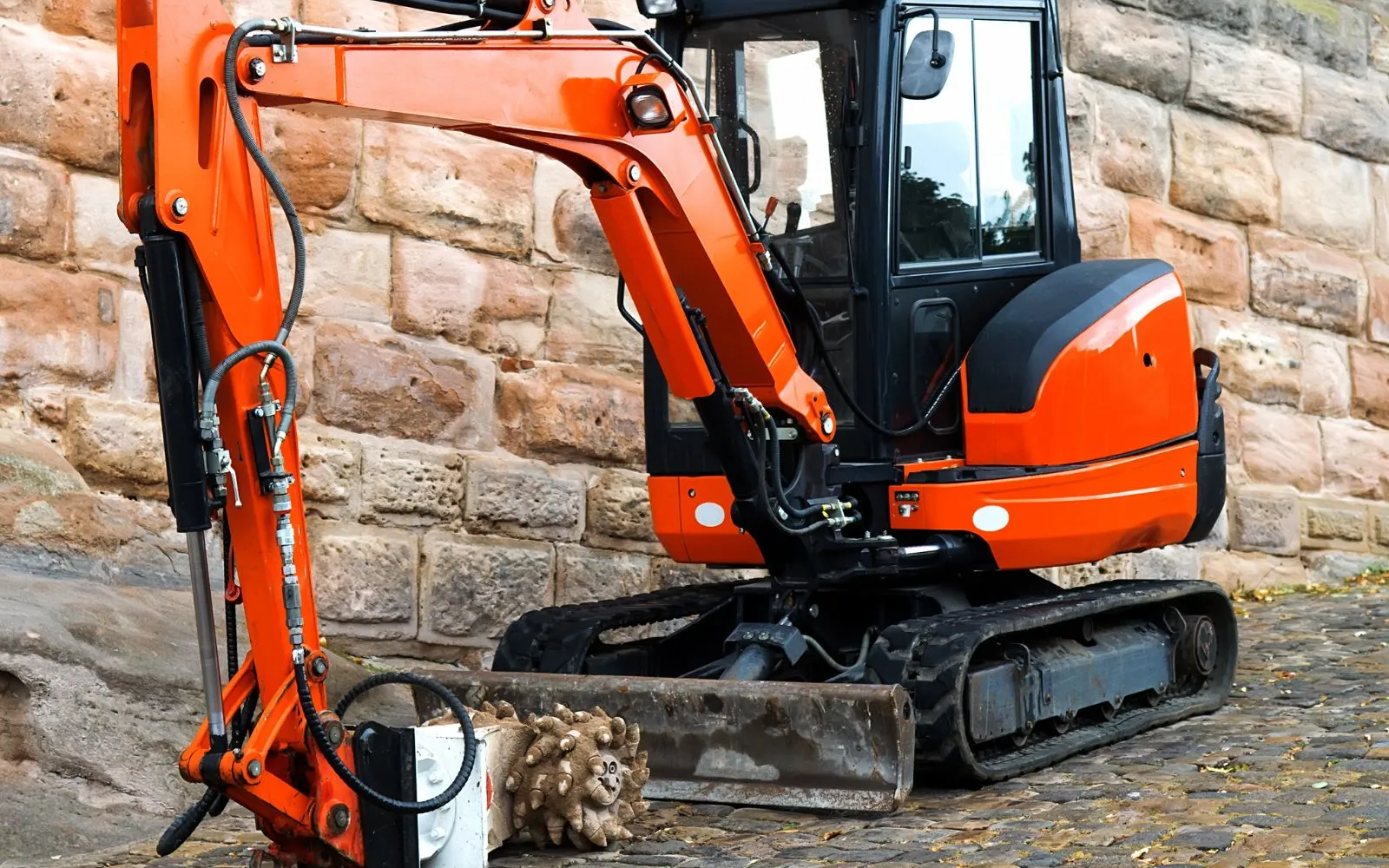
Small jobs can be done by hand with a sledgehammer and a pry bar, especially thin, unreinforced patios. Most jobs go faster with a powered breaker: an electric demolition hammer or a pneumatic jackhammer for interior or tight work, or a skid steer or excavator fitted with a hydraulic breaker for driveways, slabs, and anything reinforced. Matching the machine to the job is the same logic as any other attachment work, much like the approach in safe and efficient rock breaking.
A simple trick makes hand-breaking easier: dig a little material out from the edge of the slab so the concrete can drop and flex. A slab resting solidly on the ground absorbs blows; a slab with a void underneath breaks much faster. Work from a free edge inward, and expect to lever heavy chunks rather than lift them by hand.
Step 5: Remove Rebar, Load, and Haul the Debris
Once the concrete is broken, separate the pieces from the reinforcement. Cut rebar and mesh free, coil them, and recycle them as scrap metal; leaving them in the load increases weight and can be rejected at the facility. Then move the concrete. A cubic yard of concrete weighs roughly two tons, and the numbers add up fast: a four-inch slab of about 100 square feet produces roughly 1.2 cubic yards, close to two and a half tons of material. Working out volume before you haul is the same load-count math used on any earthwork job.
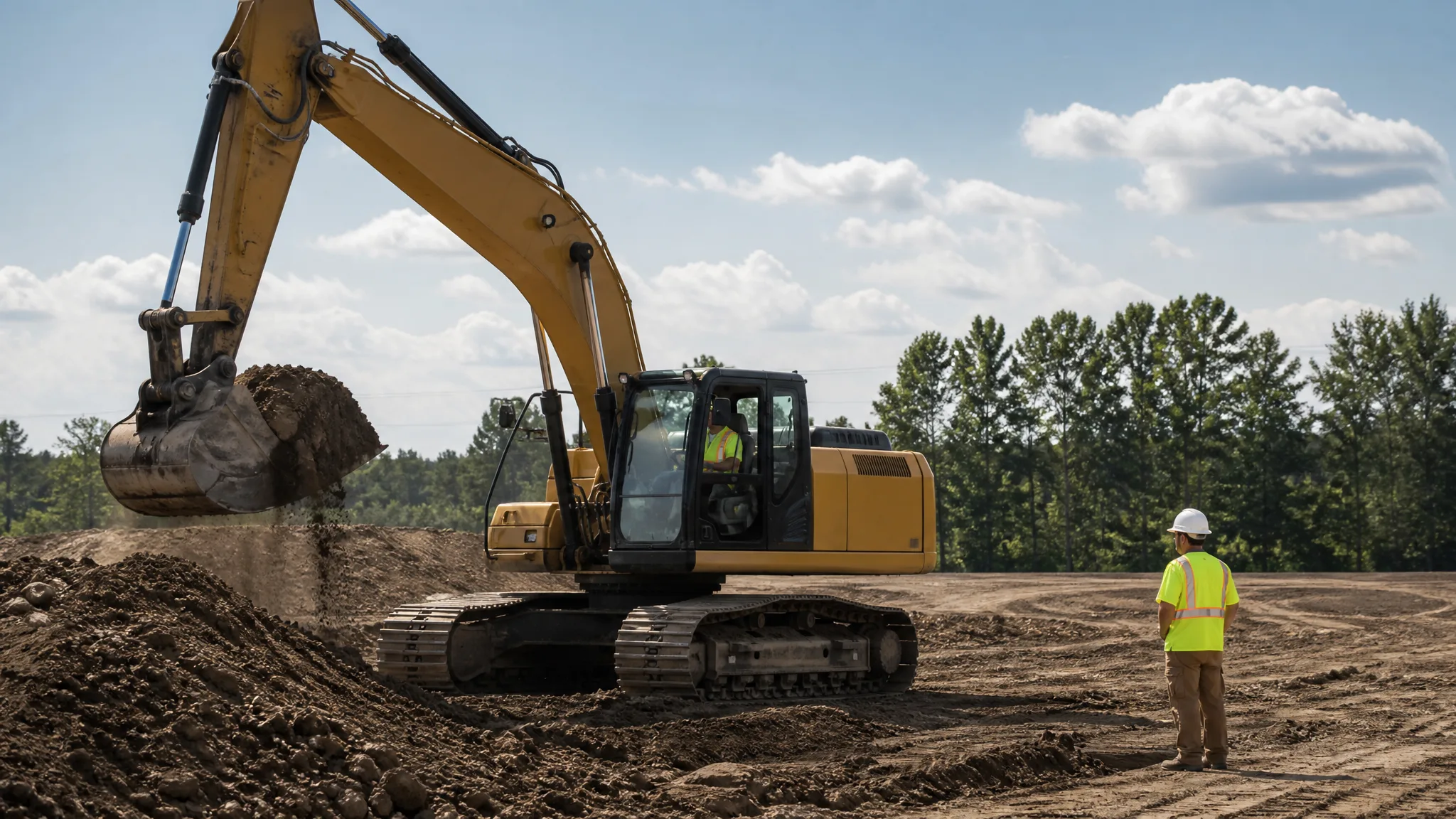
Machines make short work of loading. A skid steer or excavator with a bucket can pick and place the rubble into a dump truck or roll-off container in a fraction of the time it takes a crew with wheelbarrows. Knowing how much a truck holds — see dump truck capacity — keeps the haul from ballooning into extra trips.
Recycling and Disposal Options
Clean concrete is one of the most recyclable materials on a jobsite. Many facilities accept broken concrete and crush it into recycled concrete aggregate (RCA), which is used as base under roads and driveways — the same material covered in crushed concrete as a driveway base. Depending on the area and how much metal is mixed in, recycling can be cheaper than landfilling. Landfills that take concrete typically charge by weight, and disposal fees commonly run roughly $50 to $100 per ton.
If the debris is clean and the volume is small, an on-site option is to reuse the broken concrete as fill or riprap rather than hauling it off, though this is not appropriate under a finished slab or pavement where a compacted granular base is required.
Silica Dust and Concrete-Demolition Safety
Cutting, grinding, and breaking concrete releases respirable crystalline silica, a dust linked to silicosis and lung cancer. OSHA's silica rule sets specific controls for these tasks: saws should use integrated water delivery, and jackhammers and chipping tools require either water at the point of impact or a shroud with a high-efficiency dust collection system, with respirators where the standard requires them. Keeping the material wet is the simplest control and also keeps dust off the neighbors.
Beyond dust, the usual demolition safety rules apply: heavy-duty gloves, eye and hearing protection, steel-toe boots, care with pinch and crush points, and no one standing in the path of a swinging or falling chunk of slab.
After the Slab Is Gone: Repairing the Base
Removal exposes whatever the slab was poured over, and that base is usually why the slab failed in the first place. Soft or settled subgrade, organic material, or fill that was never compacted all have to be corrected before anything new goes down. That means checking the subgrade — including proof rolling on larger jobs — digging out soft spots, and rebuilding the base with compacted, well-graded granular material to the depth the new surface requires.
If the plan is a new concrete slab, the base gets prepared the same way a new pour would be, as outlined in site prep for a concrete slab, because the new slab is only as good as the layer under it. If the plan is grass or a different surface, the subgrade is graded, topped with topsoil, and seeded instead — and any leftover spoil is handled as spoil to be managed, not just shoved aside.
What Concrete Removal Costs and When to Hire
Professional concrete removal commonly runs about $2 to $8 per square foot including disposal, with unreinforced slabs at the low end and thick, rebar-reinforced concrete at the high end; reinforcement alone can add roughly $1 to $2 per square foot because it slows breaking and loading. A typical 10-by-10-foot slab — 100 square feet — often falls in the $300 to $800 range. Hand-breaking with a rented breaker and a rented dumpster can cut the labor cost, but it rarely beats a machine once the slab is thick or reinforced.
Hiring makes sense whenever the slab is large, reinforced, or hard to access; when utilities run beneath it; or when permits and hauling logistics are involved. A contractor brings the breaker, the machine, the truck, and the disposal channel in one package, and takes on the risk of what is buried underneath.
Removing a concrete slab is really two jobs: taking out the old material and fixing the ground that failed it. Get the utilities marked, cut and break the slab into manageable pieces, recycle what you can, and rebuild the base properly — and the replacement surface will last the way the first one should have.