How Contractors Demolish a House


Watching a house come down looks like raw destruction, but a professional demolition is one of the most carefully ordered jobs on a construction site. Before the first wall falls, there are permits to pull, utilities to disconnect, inspections to complete, and a plan for where every piece of the building goes. For contractors and homeowners alike, understanding that sequence is the difference between a clean, predictable teardown and a project that stalls on the first day.
Before the Excavator Arrives
Demolition starts with paperwork and disconnects, not iron. The owner or contractor pulls a demolition permit from the local building department, and every utility that serves the structure has to be properly terminated: the power company disconnects or removes the service, gas is capped, and water and sewer lines are cut and plugged — usually at the meter or property line, not just at the house. Contractors also verify who owns the lines running through the property, because overhead and underground services can feed neighboring buildings.
This is also the moment to settle the details that bite later: where the dumpsters or debris trailers will sit, whether street closure or crane permits are needed, and what the site plan shows for protecting trees, driveways, and adjacent property. A good demolition contractor treats this pre-work with the same seriousness as pre-construction planning on an excavation job — because the failures that cost time and money are almost always the ones nobody planned for.
Asbestos and Hazardous Materials Come First
Before any mechanical demolition, the building has to be checked for hazardous materials — and the big one is asbestos. Under the federal asbestos NESHAP rule (40 CFR Part 61, Subpart M), covered demolition projects must be inspected for asbestos, and the owner or operator must notify the delegated state or local air agency at least 10 working days before demolition begins. If regulated asbestos-containing material is found above threshold amounts, it has to be removed by trained workers before the structure is touched. Single-family homes and small residential buildings of four or fewer units are generally outside the federal notification requirement, but many state and local agencies still require notice, and disposal facilities commonly demand inspection records before they will accept debris — so the inspection happens on nearly every real job.
Homes built before the 1980s are the usual suspects: pipe insulation, duct wrap, flooring and mastic, drywall joint compound, textured ceilings, and exterior siding can all contain asbestos. Lead paint is a separate concern in pre-1978 housing, and older buildings may hold anything from old fuel oil in a basement tank to mercury switches and refrigerants that have to be captured rather than smashed. An environmental consultant or the demolition contractor sorts all of this out before the machine starts, because once a wall comes down, contaminated material is mixed into the pile and the cost of dealing with it multiplies.
The Engineering Survey and the Demolition Plan
OSHA's demolition standard — 29 CFR 1926 Subpart T — requires that before workers start demolition, a competent person conducts an engineering survey of the structure to determine the condition of the framing, floors, and walls, and the possibility of unplanned collapse. The survey shapes everything that follows: which walls are load-bearing, what sections are unsafe to walk on, where floors are rotted or fire-damaged, and how the building will come down without dropping on the crew.
Out of that survey comes a written demolition sequence. The plan establishes work zones, exclusion areas around the machine, and the order of operations, and it identifies anything unusual — a masonry chimney, a poured concrete strong room, an attached garage with a car inside, or a structure that shares a wall or sits close to a neighbor. Structures that lean, sag, or show prior fire damage sometimes have to be pulled down with cables from a safe distance or stabilized before workers can enter, which is exactly what the survey is meant to catch.
Strip-Out and Salvage
Mechanical demolition is faster and cheaper when the interior is emptied first. A strip-out crew removes cabinets, fixtures, doors, trim, appliances, and any remaining contents, separating what can be donated or sold from what is trash. In many markets, salvage adds up: vintage doors and hardware, dimensional lumber, and architectural details have real resale value, and removing them by hand is far cheaper than picking them out of a rubble pile with a machine.
Strip-out is also when recyclables get separated at the source — scrap metal, wiring, and copper piping are pulled rather than shredded into the debris, and recyclers often pay for the metal rather than charging to take it. On older homes the strip-out can be the messiest phase of the job, which is why good contractors schedule it with dust and debris containment in mind and keep the site organized as they go.
Machines and Attachments for House Demolition
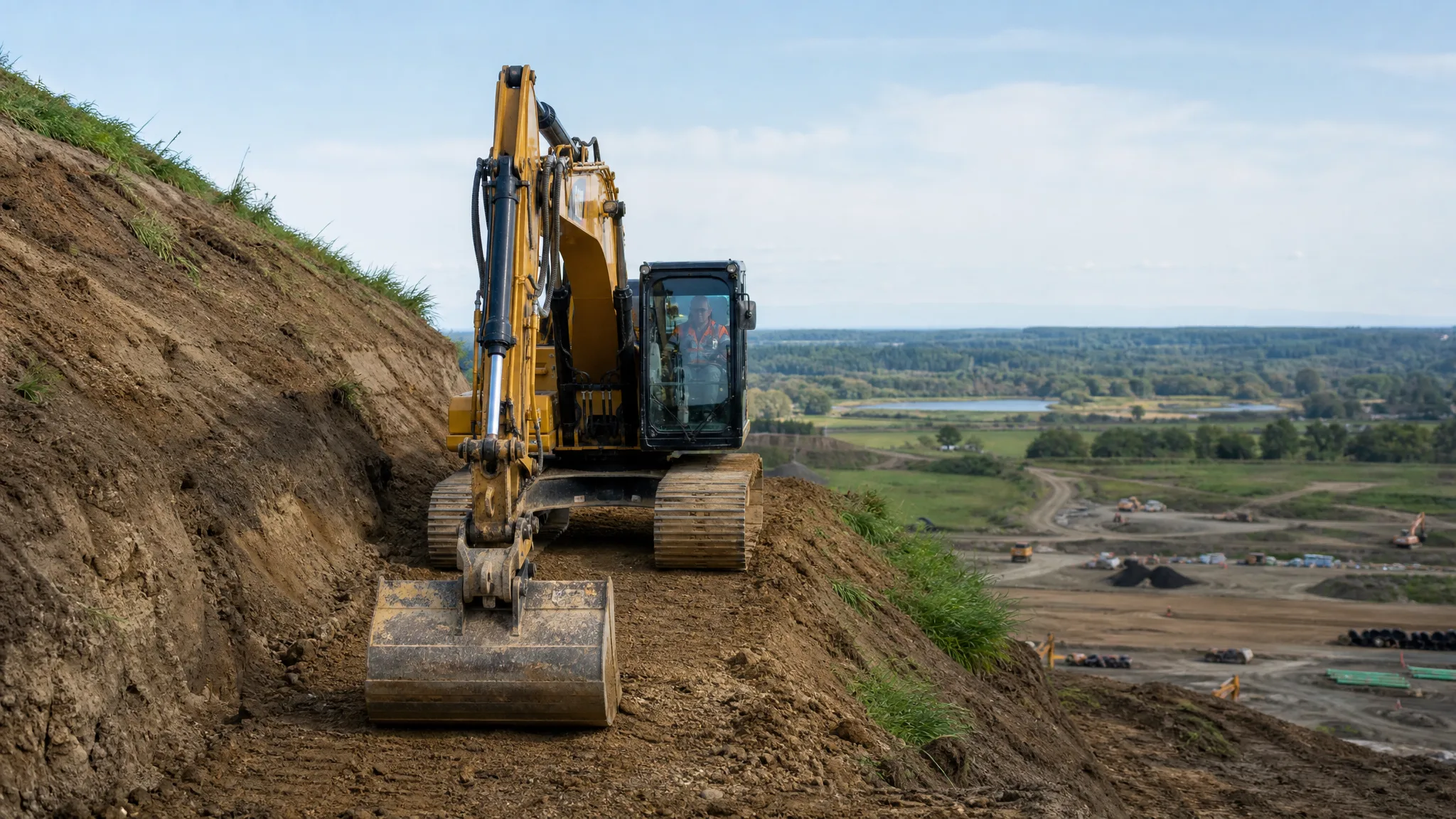
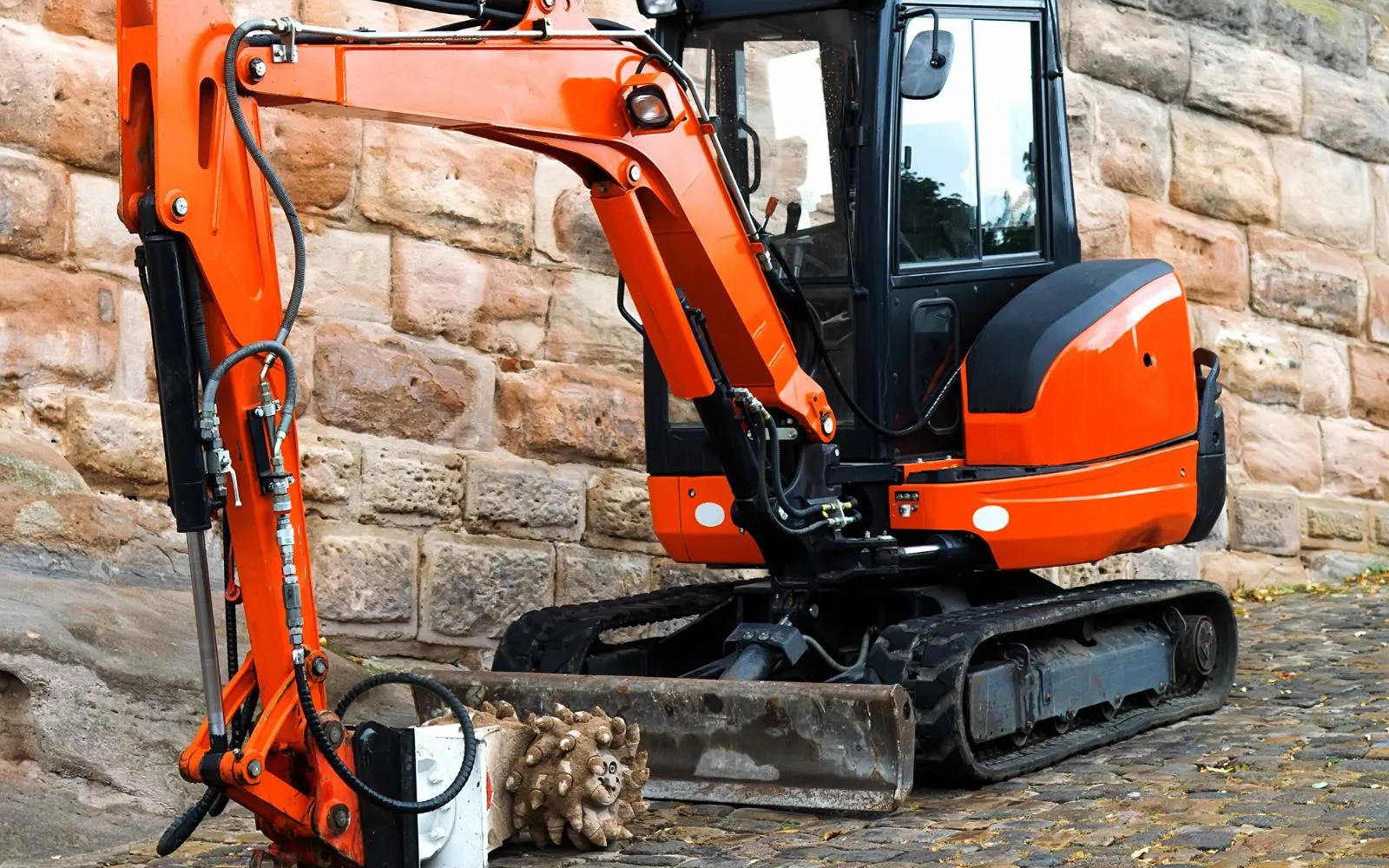
The heart of a residential teardown is a tracked excavator — typically a mid-size or larger machine sized to the structure — fitted with demolition attachments. A hydraulic shear snips through wood framing, roof structure, and light steel like scissors, and it is the tool of choice for working a house down from the top. A thumb turns the same excavator into a sorting machine, picking rebar out of concrete and loading debris into trucks. For slabs, footings, and masonry, crews switch to a hydraulic breaker or hoe ram, and a skeleton bucket screens fine material out of the pile so clean fill and recyclables are not buried in trash.
Machine selection follows the building. A two-story brick house with a basement needs a bigger machine and a longer reach than a single-story frame house on a slab, and confined lots sometimes force contractors down to smaller iron with more passes. Whatever the size, the excavator does the heavy work while ground crews stay out of the machine's swing path — the same size-and-reach thinking that applies to any excavation job, applied in reverse.
How the Structure Comes Down
The sequence is always top-down and deliberate. Workers remove roofing and interior finishes in the strip-out phase, and the machine then takes the structure apart floor by floor, shearing wall sections and letting material fall inward onto the footprint rather than outward onto the site. Walls are pushed or pulled with the excavator only when the crew has confirmed nobody is inside the fall zone, and tall or unstable sections are handled with extra care — a wall that falls the wrong way can take a machine or a worker with it.
Throughout the pull-down, the operator watches what the debris is doing: material is worked down to a manageable pile, steel is pulled as it appears, and concrete is broken up so it does not create voids when the pile is loaded. Dust is controlled with water — often a hose or water truck — and crews wear the appropriate PPE. Experienced operators keep the site orderly as they go, which is not tidiness for its own sake: it keeps the work area predictable, and predictable work areas are safe ones. Anyone running this kind of work should already be fluent in the advanced safety habits of excavation work, because the same hazards — cave-ins of debris, struck-by, falls, and utility strikes — show up in demolition.
Slab, Foundation, and Basement Work
Once the structure is down, the concrete work begins. The slab and foundation walls are broken up with a hydraulic breaker or by dropping the excavator's bucket, with rebar and mesh separated from the concrete as it is processed. The concrete itself is valuable: clean, broken concrete is recycled concrete aggregate, crushed and reused as driveway base, road base, and fill — which is why demolition contractors sort it carefully rather than burying it.
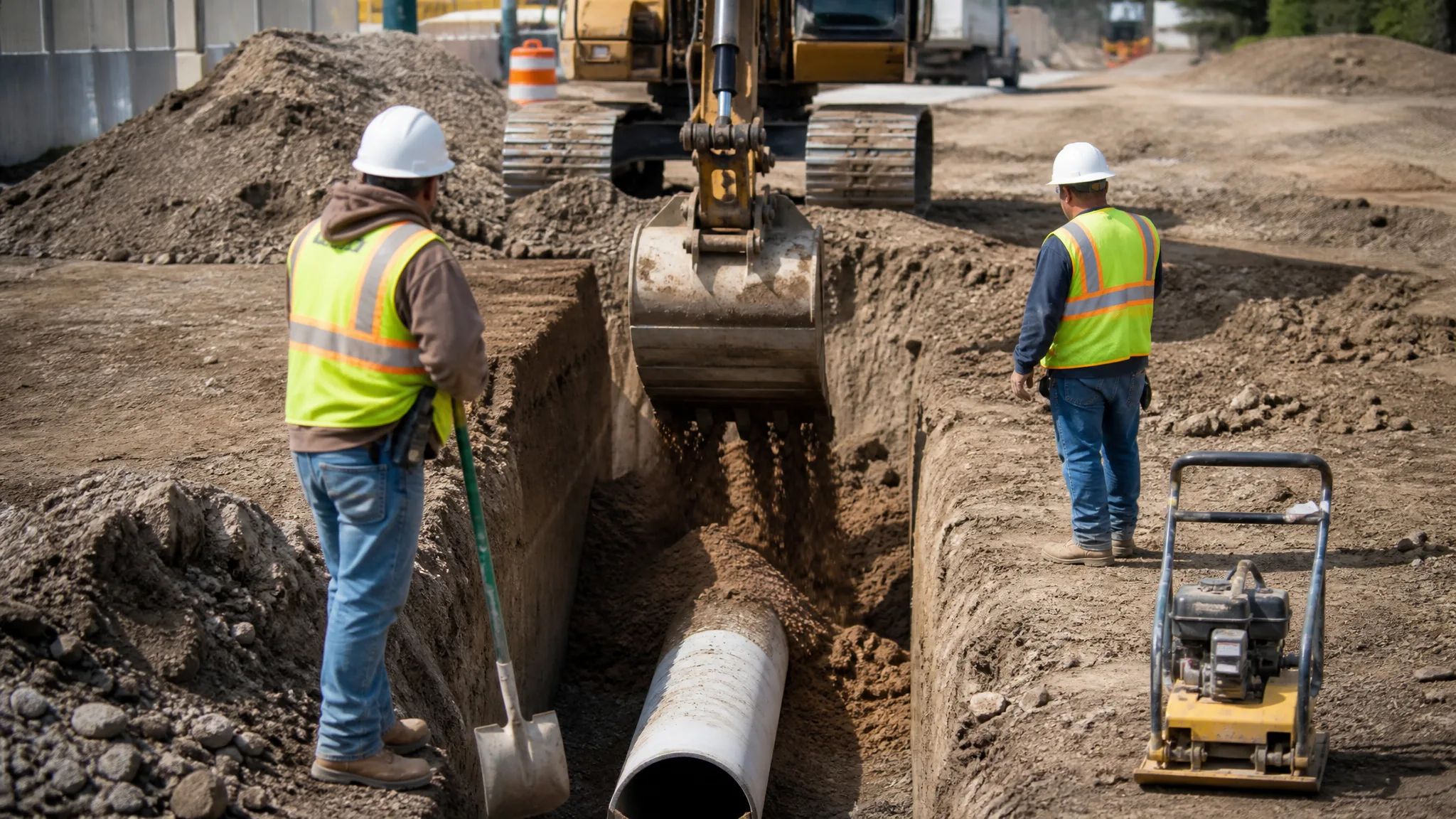
Basements present a choice. The common approach is to leave the basement excavation open, knock down the walls into it, and backfill the whole hole with clean fill. Alternatively, the basement walls and floor can be removed entirely and the hole closed with imported fill. Either way, dewatering may be needed first if groundwater is present, and the fill work follows the same rules as any structural backfill: suitable material placed in thin lifts and compacted so the site does not settle later under a new driveway, patio, or foundation.
Sorting Debris and Hauling It Off
A house produces a surprisingly predictable stream of material, and professionals sort it on the way out. Wood goes to a landfill, a biomass facility, or a recycler; metal is separated for scrap; concrete and masonry are crushed or hauled to a concrete recycler; and the remaining trash goes to the landfill by the truckload. Sorting happens at the pile with the excavator thumb and skeleton bucket, and it pays twice — recyclers charge less or nothing for sorted loads, and clean fill is worth something rather than costing disposal fees.
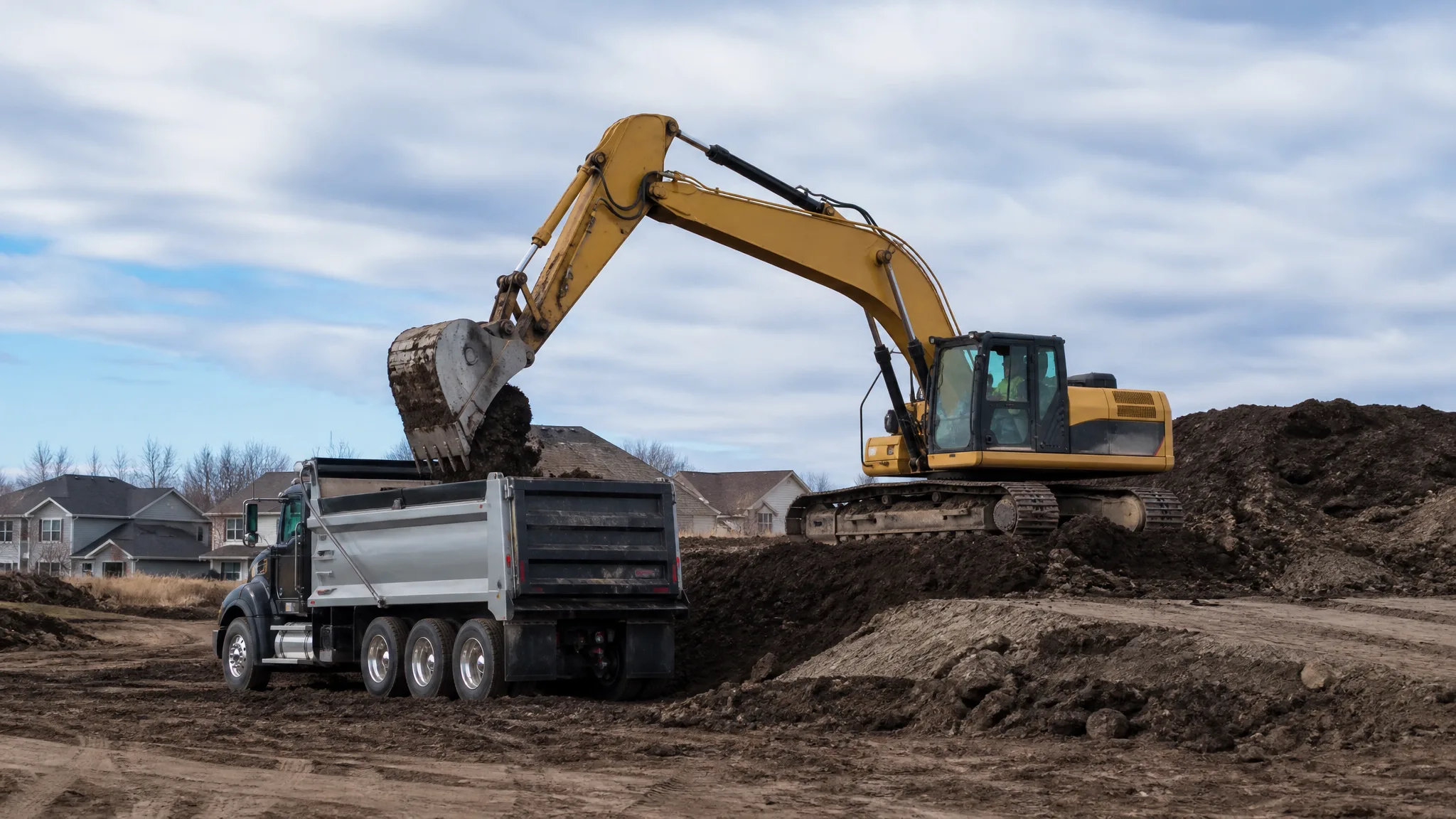
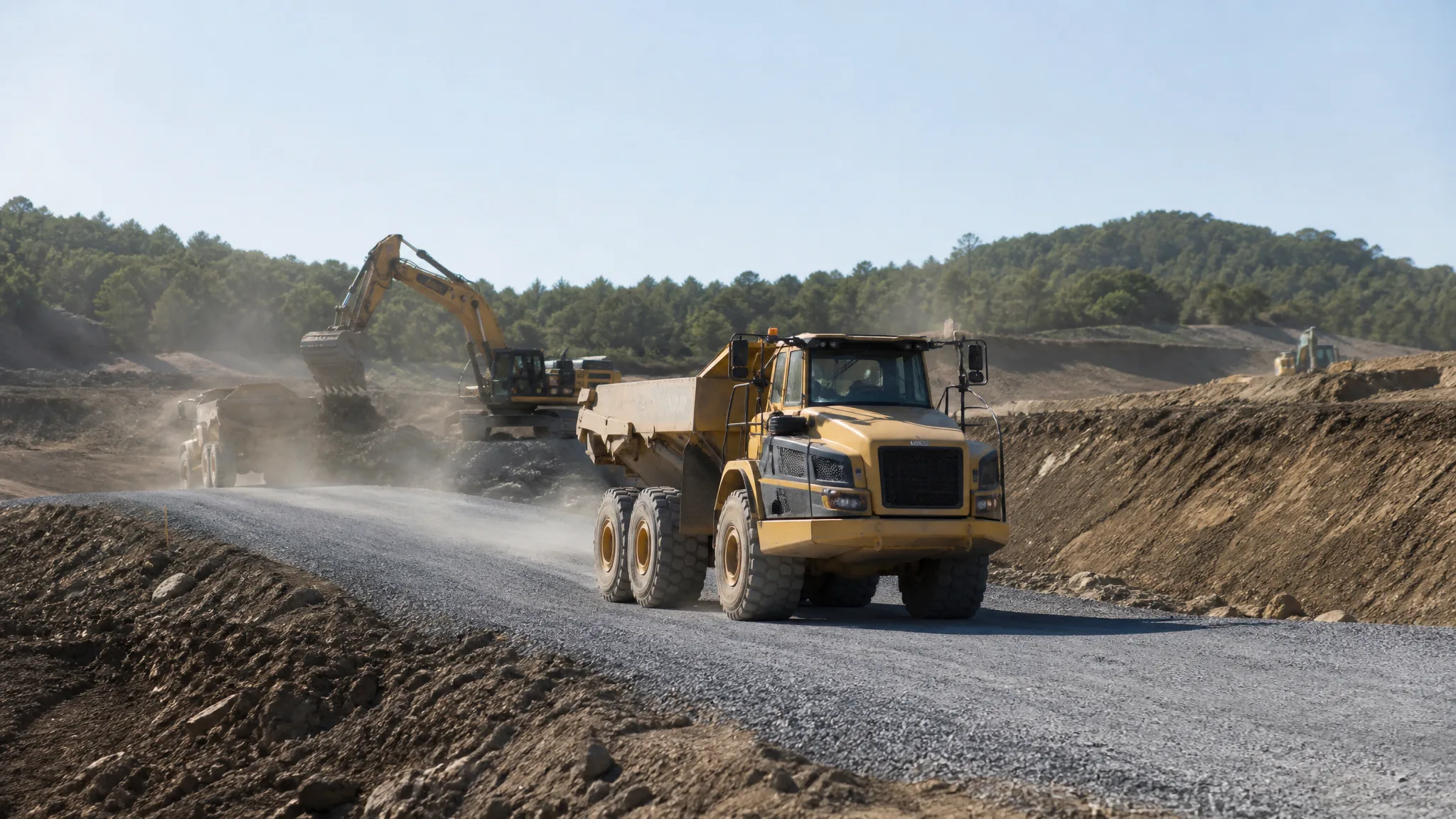
Hauling is a logistics exercise in its own right. Contractors estimate debris volume and match trucking to it, typically running tri-axle dump trucks that carry roughly 12 to 15 cubic yards per load — the same load-count math used on excavation haul-off. Staging piles and debris trailers have to stay organized and within the site, which makes this phase a close cousin of spoil pile management: keep the piles stable, keep them out of drainage, and keep the site from turning into a mud pit.
Backfilling and Grading the Site
With the debris gone, the site gets put back together. Basement holes and utility trenches are backfilled with clean, compactable fill placed in lifts — typically 8 to 12 inches at a time — and compacted to the specification on the plans, usually 90 to 95 percent of maximum dry density under the Proctor compaction standard. Skipping the lifts or rolling wet fill is how a "finished" demolition site turns into a sagging driveway two years later, and it is the same failure mode that ruins building pads everywhere.
Final grading sheds water away from the site and leaves the ground ready for whatever comes next — a new house, an addition, or a level yard. If a new structure is planned, the demolition crew typically grades to rough grade and hands off to the excavator crew for the new grading and pad work, keeping the two operations cleanly separated so the new foundation starts on undisturbed, compacted ground rather than demolition rubble.
What Residential Demolition Costs
National cost guides put whole-house demolition at roughly $4 to $17 per square foot, with most single-family teardowns landing between $6,000 and $25,000 total; a typical 2,000-square-foot house commonly runs about $10,000 to $16,000. Square footage is the biggest driver, but the list of add-ons is long: two-story and brick or masonry homes cost more to bring down, foundation and basement removal adds real money, asbestos abatement and lead remediation are billed separately, and permit fees, utility disconnects, and dumpster or disposal charges are often excluded from the headline number.
Location moves the price as much as anything — urban sites with tight access, street permits, and higher disposal fees can run well above rural averages. The reliable way to budget is the same as for any construction work: get three itemized bids on an identical scope, read what is excluded as carefully as what is included, and confirm that the contractor carries demolition-specific insurance. A house that comes down on schedule and on budget is the product of the boring work — the permits, surveys, and sorting — that happened before the first wall fell.