Working on Slopes with an Excavator

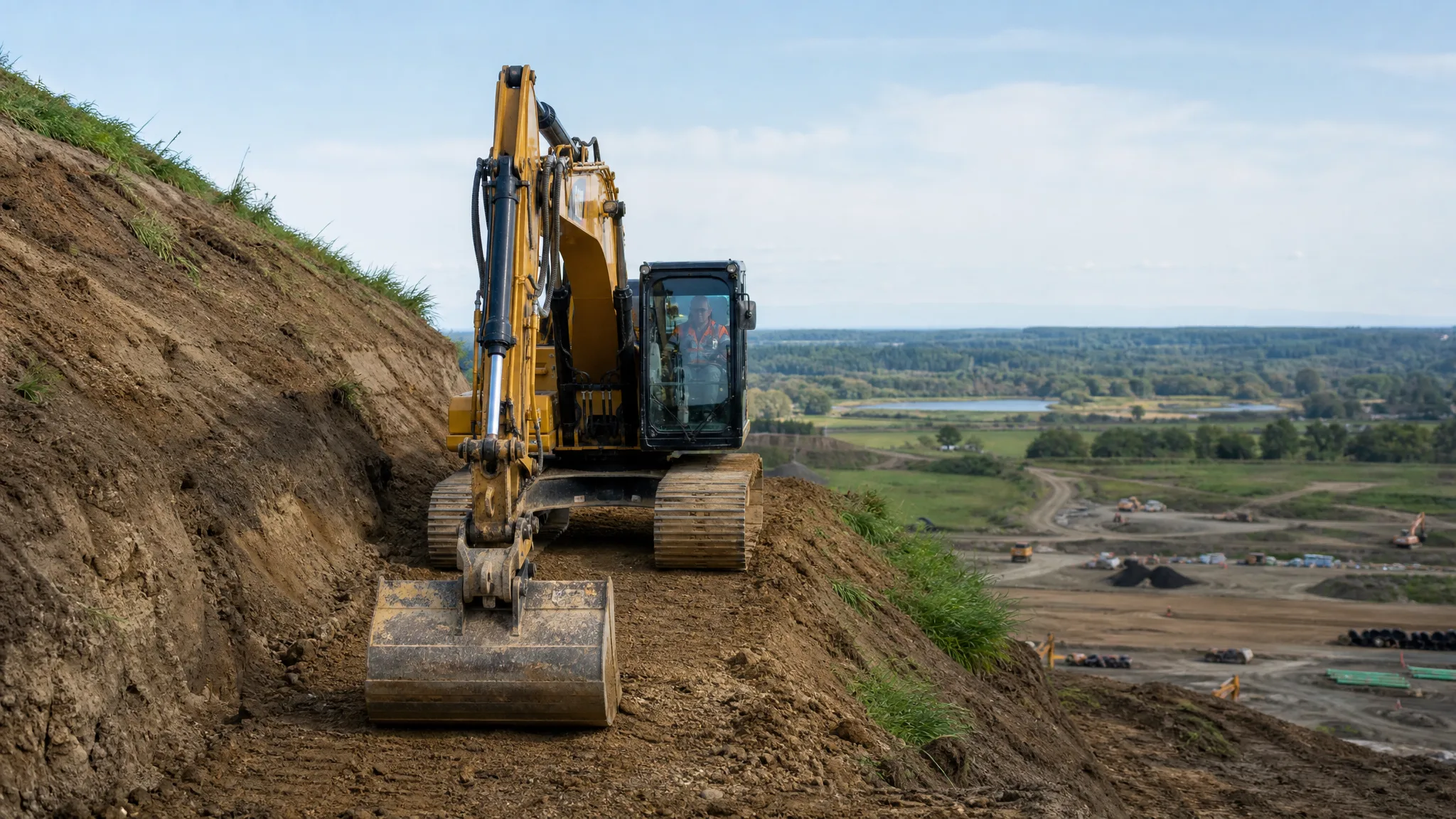
An excavator is one of the most stable machines on a jobsite — until you put it on a grade. Slope work changes the physics under the tracks, and it is where operators get complacent, because a machine that feels planted on flat ground can feel just as normal two feet into a slope right up to the moment a track breaks loose. Working on slopes safely is not about being timid. It is about understanding stability, keeping the machine level whenever you are actually digging, and following a handful of rules that experienced operators never break.
Why Slopes Change Everything About Excavator Stability
On level ground, an excavator's weight is spread evenly across the undercarriage and the machine has a wide margin against tipping. On a slope, that weight shifts toward the low side, the contact patch between tracks and soil changes shape, and the machine's ability to resist a rollover drops. Add a full bucket swung out to one side and you have moved a lot of mass away from the machine's center, which is exactly when tip-overs happen.
Traction drops at the same time. Loose, wet, or frozen soil that holds a track on the flat will shear and slide on a grade, so the machine that stops where you want it on your haul road can slide where you do not want it on a slope.
The Physics: Center of Gravity and the Tip Line
Think of the excavator's center of gravity as the single point its whole weight acts through. Stability is simply how far that point stays inside the machine's footprint. Raising the boom lifts the center of gravity; swinging the bucket to the side moves it toward that edge; carrying a heavy load out front pulls it forward. Each move shrinks the safety margin.
That is why the two most repeated rules in excavator operation are to keep the load close to the machine and to keep the bucket low. Both keep the center of gravity low and inside the footprint. Machine geometry matters too: track width and gauge, counterweight, blade position, and whether you are on a compact excavator or a full-size machine all change where the tipping line sits, which is why the operator's manual for your specific machine — not a rule of thumb — is the authority on its limits.
Traveling on a Slope: Up and Down, Never Across
The consensus across equipment safety guidance is that you travel straight up and down the fall line, not across the slope. Traversing puts the machine's narrow dimension against the hill, puts the tracks on uneven ground, and turns a small slip into a sideways rollover. When climbing or descending, keep the tracks aligned with the direction of the slope and drive deliberately.
Two habits separate good slope operators from lucky ones. First, never travel with the attachment folded in and up: losing the boom's weight forward can strip away rearward stability, and a rearward rollover is a real risk. Second, when carrying a load, descend backward down the slope if the site allows, and use the same low gear range to come down that you needed to climb up. Avoid using the declutch brake pedal while descending a grade.
If traction breaks mid-slope, do not panic-steer. Ease the boom back toward the front of the machine and put down-pressure into the ground with the bucket to anchor yourself, then reset and pick a better line. Choosing the flattest sensible route, steering straight, and making only small gradual direction changes keeps the machine settled.
Keep the Bucket Low
Carrying the bucket low to the ground is the single most useful habit on a slope. It lowers the center of gravity, improves visibility over the boom, and gives you an instant anchor: if the tracks start to slide, you can drop the bucket and use it as a brake or a stabilizer. A bucket held high adds height and points the machine's weight the wrong way.
Outside its operating envelope, a high bucket also turns the machine into a hazard for everyone else. Never swing the bucket over a truck cab or over people, and never let anyone stand under a load handled by the digging equipment. If you want the fundamentals of machine control first, start with how to operate an excavator.
Build a Level Working Platform Before You Dig
Here is the rule that separates amateur slope work from professional slope work: excavators are designed to dig from level ground. If the work is happening on a slope, you do not operate the machine leaned over — you cut a level bench or platform into the hillside and work from it.
Benching means cutting a flat pad wide enough for the tracks, with enough room to swing, and with a back slope that will not slough into the work area. You cut it by working down-slope in controlled passes, then leveling the pad before you settle in. A proper platform lets you dig, swing, and load without the machine fighting the grade. The same thinking drives slope stabilization during excavation, where the goal is a stable, workable face rather than a steep, dangerous one.
Digging and Cutting on a Grade
Once you have a platform, the cutting strategy should follow the material. On a cut slope, work top-down in passes rather than undercutting the face, because undercutting can bring the slope down on the machine. Where the slope is being shaped, benched terraces and gentle grades hold up better than one steep face, and the finish geometry belongs in your grade setting work rather than in a freehand guess.
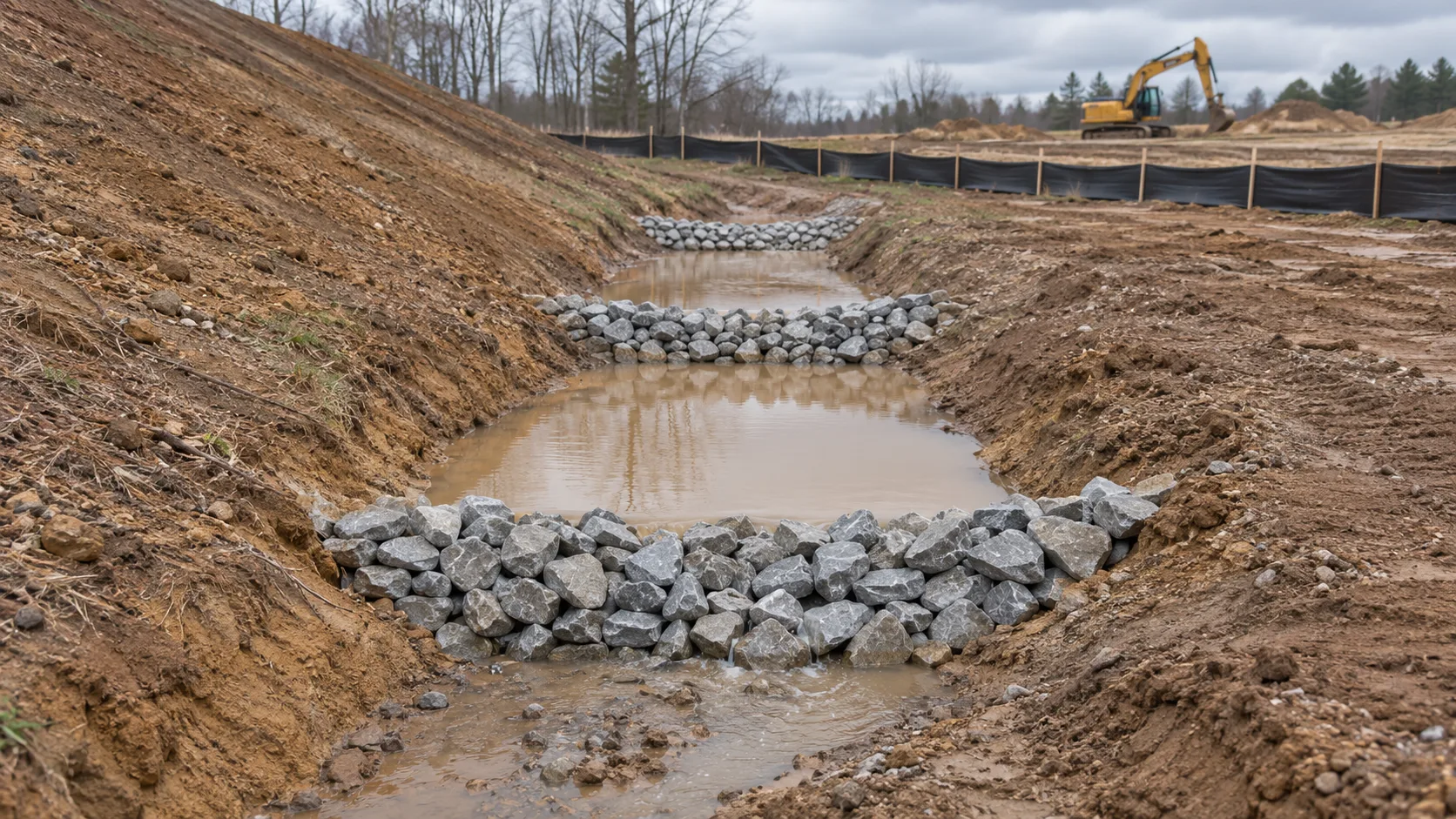
Keep the spoil where it cannot roll back onto you. Material piled uphill of the cut, or left on an unstable bench edge, is a hazard you built yourself. On long slopes, plan the sequence so the machine always has a stable platform to retreat to, and so the finished surface drains instead of trapping water against the face — the same principle behind yard drainage slope.
Wet, Loose, and Frozen Ground
Traction failure, not tipping, is the most common way slope work goes wrong. Saturated clay, silty fill, and thawing frost all lose shear strength fast, and a track that cannot bite cannot hold. If the ground is wet enough to pump under the tracks, address the water before you climb the grade — the techniques in dewatering an excavation apply directly. In cold weather, frozen crust over soft soil is its own trap and is worth a separate read in cold weather earthwork.
When a machine does get stuck or bogged on a grade, recover it deliberately rather than by flooring the throttle; the recovery playbook in why heavy equipment gets stuck and how contractors recover it safely is the right reference.
ROPS, Seat Belts, and What OSHA Requires
The equipment rules matter here because slopes are where they get tested. Under OSHA's material handling equipment standard at 29 CFR 1926.602, seat belts must be provided on covered earthmoving equipment, and rollover protective structures fall under subpart W. Rollover protection is only useful if the operator stays inside it, which is why the seat belt is the difference between a scary moment and a fatality.
The same standard requires that access roadways and grades be constructed and maintained so equipment can move safely over them, and that emergency ramps and berms be built to restrain runaway vehicles. Earthmoving equipment must also have service brakes capable of stopping and holding the machine fully loaded on the grade. Translation for a slope job: the ramp is engineered, the berm is real, and the brakes are tested before anyone climbs the hill.
Working Near Edges and Excavations
Slope work often happens next to an open excavation, and that combination has its own rules. Employees must never be under loads handled by lifting or digging equipment, and spoil and equipment must be kept back far enough from the edge that the excavation wall cannot fail under the load — the setback distances are covered in how far spoil piles and equipment must be kept.
When mobile equipment operates near an excavation edge and the operator cannot clearly see that edge, OSHA requires a warning system such as barricades, hand signals, or stop logs, and the grade should run away from the excavation wherever possible. Keep machine operators and ground crews apart with the practices in working safely around heavy equipment.
Common Mistakes Operators Make on Slopes
The same errors show up again and again. Traveling across a slope instead of up and down. Traveling with the bucket stowed high and tucked in. Swinging a loaded bucket out over the low side of the machine. Digging from a leaned-over machine instead of benching a platform. Undercutting a face and bringing it down. Climbing a wet grade and spinning the tracks. Skipping the seat belt. And assuming gradeability is unlimited, when the real limit is printed in the operator's manual for that exact machine.
Add preventative maintenance to the list: track tension, undercarriage wear, and brake condition all change how the machine behaves on a grade, and undercarriage wear and maintenance is the inspection that keeps slope work predictable. If you work on steep sites year-round, understanding the differences in tracked versus wheeled excavators will also tell you which machine belongs on the hill.
A Practical Slope-On Checklist
Before the tracks touch the grade: check the seat belt and ROPS, walk the slope and look for wet or loose zones, pick the flattest safe route, and confirm the machine's gradeability and lift limits from the operator's manual. On the grade: travel straight up and down, keep the bucket low, make small steering inputs, and never traverse. Before digging: cut and level a working platform. While working: keep the load close, never swing over people or truck cabs, keep the spoil behind you, and stop the minute the ground starts pumping or sliding.
Slope work rewards preparation and punishes hurry. Build the platform, keep the center of gravity low, respect the grade, and let the machine's published limits — not your confidence — set the pace.