When Is an Excavation a Confined Space?

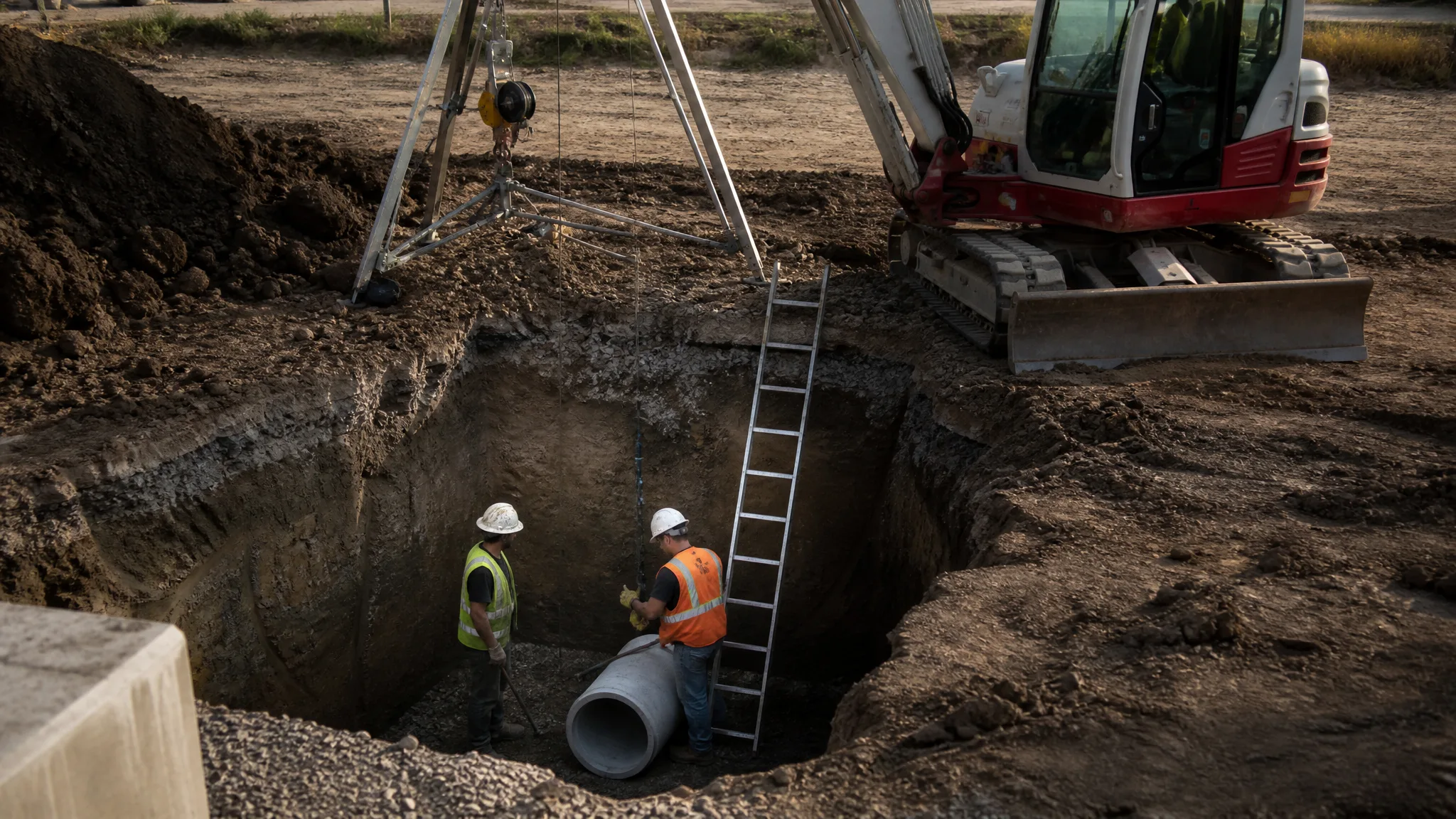
Every few months a crew somewhere gets cited for the wrong standard. Someone reads that a trench is a confined space, prints out the general industry rule, and builds a permit program around a hole that OSHA actually regulates as an excavation. The confusion runs the other way too: a worker drops into a live storm drain manhole with a gas monitor still in the truck, because nobody thought of a manhole as anything more than a lid.
Both mistakes come from skipping the definitions. Whether a hole in the ground is a confined space, and whether that confined space is a permit space, are two separate questions with two separate tests. The answer decides which standard applies, who has to be stationed at the top, and what has to be true before anyone breaks the plane of the opening.
Start with the three-part confined space test
OSHA's construction rule defines a confined space with three conditions that all have to be met. The space must be large enough and so configured that an employee can bodily enter it, it must have limited or restricted means for entry and exit, and it must not be designed for continuous employee occupancy.
The middle condition is where most arguments happen. The rule does not require a hatch or a ladder well. It defines limited or restricted means as any condition with the potential to impede movement into or out of the space, and it names trip hazards, poor illumination, slippery floors, inclining surfaces, and ladders as examples. A 30-foot-long, 8-foot-deep trench with one ladder at the far end is not designed for occupancy and does not offer quick egress, even if the sky is open above it.
That third condition does most of the filtering. A building interior is designed for occupancy. A trench, a pit, a vault, a tank, a sewer, and a drilled shaft are not.
Then ask whether it is a permit space
A confined space becomes a permit-required confined space when it has one or more additional characteristics. It contains or has the potential to contain a hazardous atmosphere; it contains a material with the potential to engulf an entrant; it has an internal configuration that could trap or asphyxiate someone through inwardly converging walls or a floor that slopes down to a smaller cross-section; or it contains any other recognized serious safety or health hazard.
The word to notice is potential. You do not need a reading to have a permit space. If the space could contain a hazardous atmosphere under the conditions you are working in, it qualifies before the meter ever comes out. A sewer manhole with a known hydrogen sulfide history is a permit space on the drawing, not after the first bad reading.
Hazardous atmosphere itself is defined numerically: flammable gas, vapor, or mist above 10 percent of its lower flammable limit, oxygen below 19.5 percent or above 23.5 percent, combustible dust at a concentration that meets or exceeds its LFL, or any substance above a published exposure limit that could cause death, incapacitation, injury, or acute illness. That definition is worth memorizing, because it is the same set of thresholds that decides when ventilation is working and when a crew has to come out.
Which standard actually governs the work
This is the part that gets mangled most often. The widely quoted permit space rule, 29 CFR 1910.146, is a general industry standard, and its own scope paragraph says it does not apply to construction. Construction has its own rule: Subpart AA of Part 1926, sections 1926.1201 through 1926.1213, titled Confined Spaces in Construction.
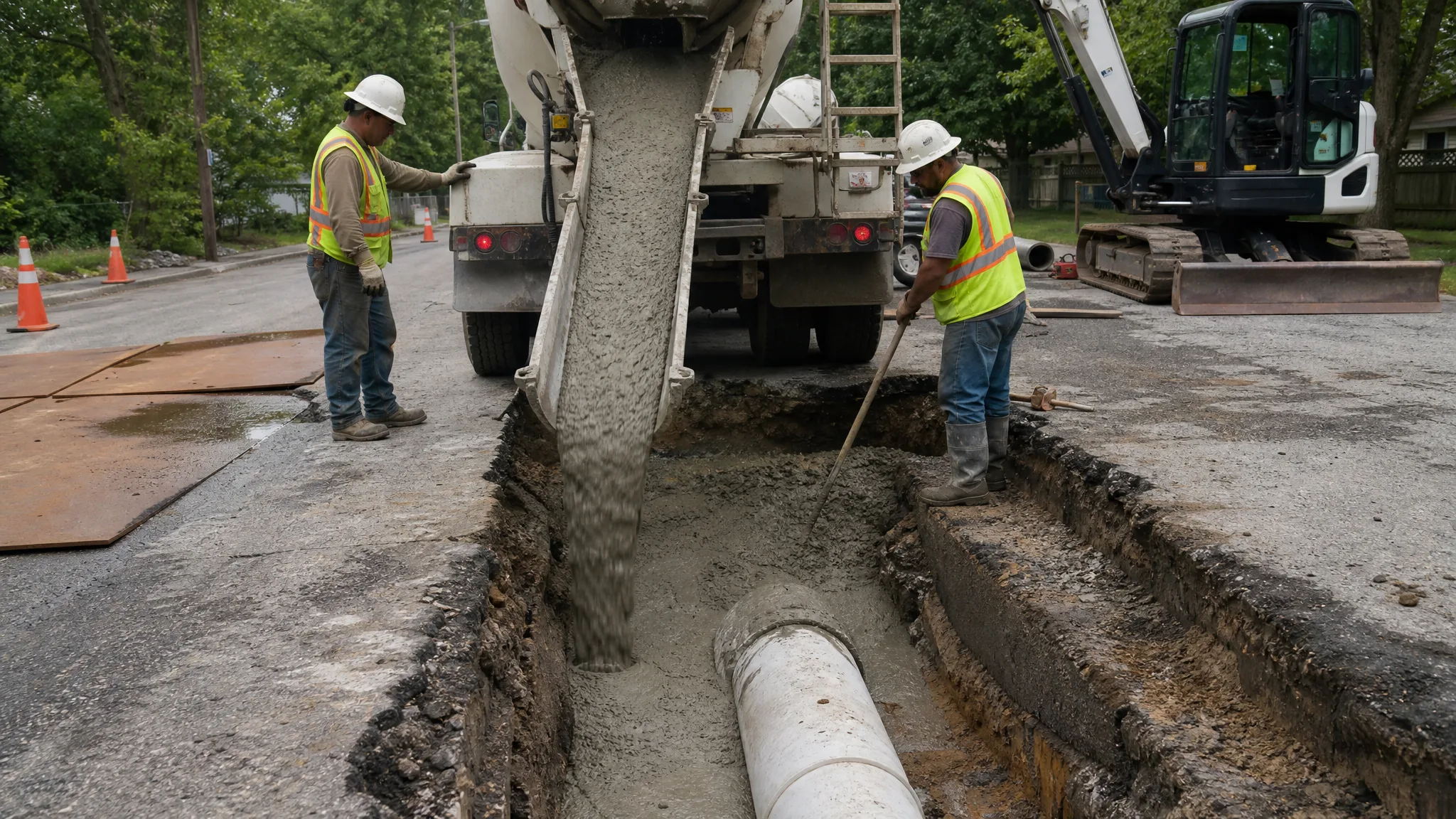
Subpart AA then carves out three exclusions. It does not apply to construction work regulated by Subpart P, which is the excavation standard; to work regulated by Subpart S, covering underground construction, caissons, cofferdams, and compressed air; or to work regulated by Subpart Y, diving. So the hazards of the cut itself, the cave-in risk and the spoil and the water, are handled under the excavation rules. Tie into an existing manhole, enter a utility vault, climb into an abandoned tank, or work inside a sewer, and the confined space standard is the one that applies.
Where both standards address the same hazard, 1926.1201(c) settles it: the employer has to comply with both. That matters for atmosphere testing, because Subpart P has its own air testing requirement sitting alongside the confined space rule. On a borderline job, the practical move is to get the split confirmed in writing by whoever owns safety for the project rather than guessing which citation is coming.
The excavation rules that apply either way
Subpart P does not go quiet just because a permit program exists. Excavations five feet or more deep require a protective system unless the excavation is entirely in stable rock, and that protection has to be in place before anyone works in the cut. Trenches four feet or deeper need a stairway, ladder, ramp, or other safe means of egress within 25 feet of lateral travel.
Air testing is required before employees enter an excavation deeper than four feet where oxygen deficiency or a hazardous atmosphere exists or could reasonably be expected to exist. The standard gives landfill areas and excavations near stored hazardous substances as examples, and the list should really include anything backfilled with demolition debris, any cut through old fuel contamination, and any excavation tied into a live sewer. Where a hazardous atmosphere could develop during the work, rescue equipment such as breathing apparatus, a safety harness and line, or a basket stretcher has to be readily available and attended while in use.
Two more excavation rules matter here. Ventilation must be provided to prevent exposure to a flammable gas concentration above 20 percent of its lower flammable limit, which is a looser trigger than the 10 percent LFL that defines a hazardous atmosphere in the confined space rule. And employees entering bell-bottom pier holes or similar deep, confined footing excavations must wear a harness with a lifeline attached, with the lifeline separate from any line used to handle material and individually attended at all times.
Where permit spaces actually turn up in earthwork
The confined space rule's own list of examples reads like a utility contractor's schedule: pits for pumps, valves, and equipment; sewer, storm drain, electrical, and communication manholes; fuel, chemical, and water tanks; transformer vaults; storm drains; water mains; precast manhole units; drilled shafts; lift stations; cesspools; and sewers.
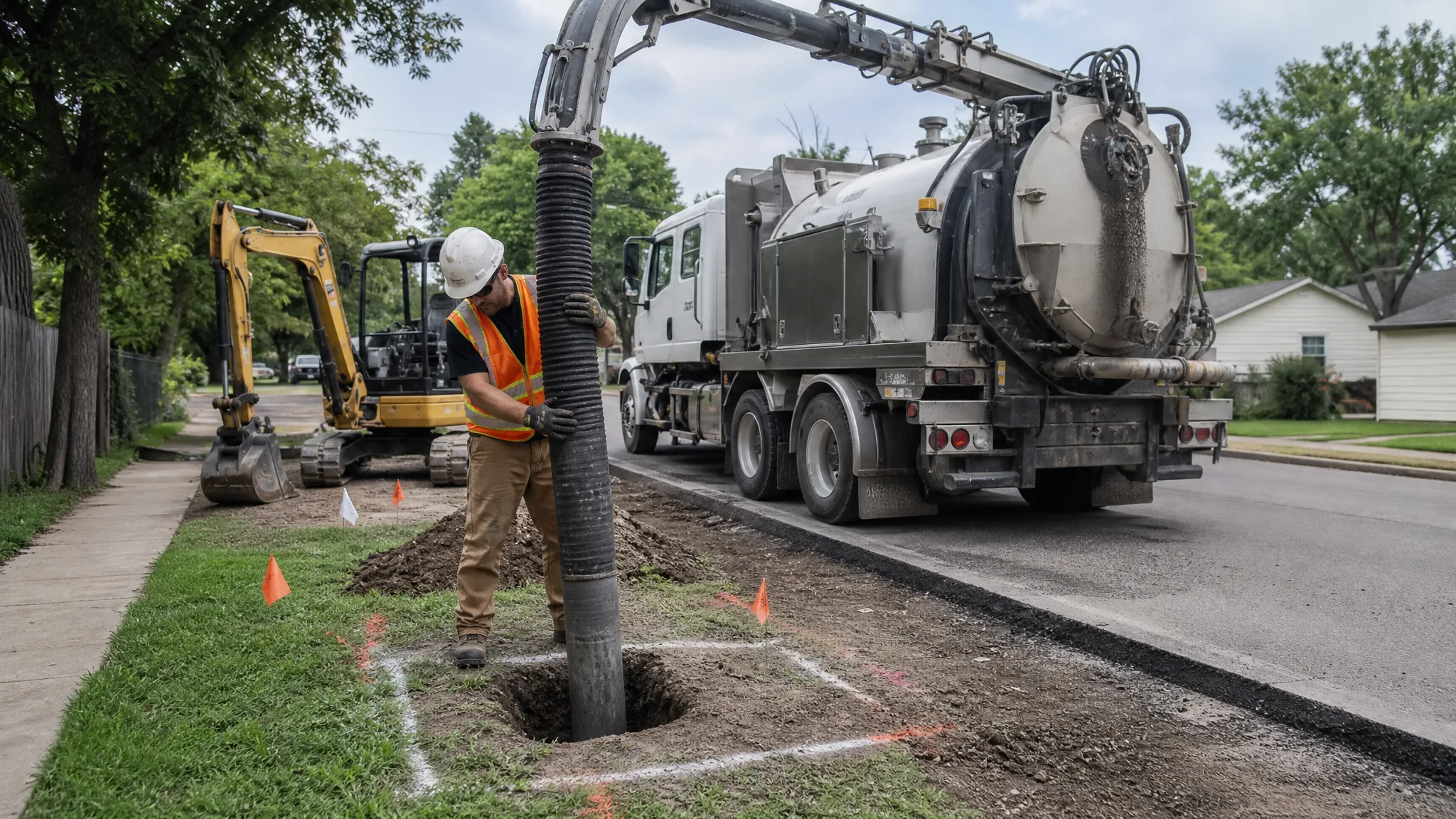
On a typical site those show up as the structures you are tying into rather than the hole you are digging. A storm drain connection means dropping into an existing inlet or manhole. A utility crossing means working in a vault the power company owns. Tank removal means entering or working over an excavated vault that was never designed for people to stand in. Septic work means a tank that has held sewage. Potholing and test pits are usually shallow enough to stay out of this conversation, but a deep pothole next to a fuel line is exactly the case the standard was written for.
The hazards that make a hole a permit space
Atmospheric hazards dominate. Oxygen deficiency can develop where soil gases displace air, where organics are decaying, or where inert gas has been used nearby. Hydrogen sulfide accumulates in sewers and lift stations. Methane migrates from landfills, leaking gas mains, and buried debris. Gasoline and diesel vapors linger in tanks and in soil around them. Carbon monoxide from equipment exhaust settles into low spots, and welding or cutting inside a structure adds its own gases.
Engulfment is the second family. Loose spoil, saturated soil, and water can bury someone in seconds, which is why the excavation standard already pushes spoil and equipment back at least two feet from the edge. Inwardly converging walls and a tapering floor are the third, and they describe a bell-bottom pier hole or a hopper-shaped pit precisely.
The fourth catch-all, any other recognized serious safety or health hazard, is broad enough to include heat, noise, electrical equipment, and machinery operating at the rim. It is also the reason a space can be a permit space one day and not the next, depending on what else is running.
What a permit program requires
Before work begins, a competent person has to identify every confined space employees may work in and determine which are permit spaces, using testing where necessary. Permit spaces get posted with danger signs, and the controlling contractor has to be told about them in a way other than a sign.
If employees will enter, the employer needs a written permit space program implemented at the site and available for inspection. Entry runs on a permit that identifies the space, the hazards, the controls, the entrants, and the rescue plan. Attendants have specific, non-negotiable duties: know the hazards, maintain an accurate count of who is inside, stay outside until properly relieved, communicate with entrants, order an evacuation when a prohibited condition appears or when they cannot safely do their job, summon rescue, warn off unauthorized people, and perform non-entry rescue as the program specifies. An attendant cannot be given another task that interferes with any of that.
Coordination is written into the rule. The host employer passes along what it knows about the space; the controlling contractor collects that information and shares it with every entity entering or doing work that could create a hazard in the space; each entry employer shares its program and any hazards it expects to create. After entry operations, the controlling contractor debriefs the crews. On a site with a general contractor, a utility sub, and an owner's maintenance staff all touching the same vault, that paper trail is the difference between a coordinated entry and three crews guessing.
Alternate procedures are narrow on purpose
The rule allows a lighter path when the only hazard is atmospheric and continuous forced air ventilation alone controls it. To use it, all physical hazards must be eliminated or isolated through engineering controls, the employer must be able to show the ventilation is sufficient and that entrants can get out safely if it stops, and that determination has to be supported by monitoring and inspection data.
Entry under alternate procedures still requires guarding an open cover, testing the atmosphere with a calibrated direct-reading instrument in a fixed order (oxygen, then flammables, then potential toxic contaminants), continuous forced air ventilation directed at where the entrant is working, continuous monitoring with an alarm or a check frequent enough to allow escape, a safe way in and out, and a written certification with the date, the location, and a signature before entry. If a hazard shows up mid-entry, everyone leaves, the space gets evaluated, and controls go in before anyone returns.
The rule is explicit that ventilating a hazard does not eliminate it. If you want to reclassify a permit space as a non-permit space, the hazards have to be gone, not merely diluted, and a competent person has to document the basis for that call.
Rescue has to exist before the first entry
Non-entry rescue is the default. Each entrant wears a chest or full-body harness with a retrieval line attached at the center of the back near shoulder level or above the head, and the other end runs to a mechanical device or fixed point outside the space so retrieval can start the moment the attendant knows it is needed. For vertical spaces more than five feet deep, a mechanical retrieval device has to be available.
If non-entry rescue is not selected, an entry rescue service is required, and the employer has to evaluate whether that service can actually reach the victim in a timeframe appropriate to the hazard, is equipped and proficient for that type of space, and will notify the employer if it becomes unavailable. Rescue teams trained in-house need PPE, rescue training, first aid and CPR, and a practice rescue at least once every twelve months on the actual space or a representative one.
This is where the planning pays for itself. Untrained coworkers going in after a downed entrant is the classic way a single casualty becomes multiple, and it is the same instinct that makes trench collapse rescue so dangerous when nobody rehearsed it.
A field checklist before anyone climbs in
- Classify on paper. Run the three-part confined space test and the four permit-space triggers, and record the answer with a date and a name.
- Decide which standard governs. Excavation hazards under Subpart P, entry into an existing structure under Subpart AA, and both where they overlap.
- Post the space. Danger signs at the opening, plus notification to the controlling contractor.
- Test in order. Oxygen, then flammables, then toxics, with a calibrated instrument, before entry and continuously while anyone is inside.
- Ventilate and verify. Forced air to the work area, from a clean source, running until the last person is out.
- Guard the opening. Railing, temporary cover, or barrier that stops a fall and keeps objects from dropping in.
- Staff the top. A trained attendant with no competing duties and a way to summon rescue.
- Rig retrieval. Harness and line on every entrant, anchored outside the space, with a mechanical device for vertical entries over five feet.
- Confirm the rescue plan. Named service or team, response time discussed, annual practice documented.
- Keep the cut legal. Protective system in place at five feet, egress within 25 feet at four feet, spoil and equipment back two feet, and a competent person inspecting daily.
- Control the water. No one works in an excavation with standing water unless the precautions match the risk, which is the same discipline as dewatering an excavation properly instead of pumping and hoping.
None of this makes an excavation safe by itself, and none of it is optional because the hole is temporary. The work of deciding what kind of space you are standing in front of takes fifteen minutes. Getting it wrong takes a lot less time than that to become permanent.