What Size Excavator Do You Need to Dig a Pond?


"What size excavator do I need to dig a pond?" is one of the most common questions equipment yards and excavation contractors hear — and the honest answer is that pond size, depth, soil, and spoil handling all matter more than the raw size of the machine. A mini excavator can carve a 20-foot backyard water feature in an afternoon, while a quarter-acre farm pond at 8 to 10 feet deep is a job for a full-size machine with a support plan for the dirt it removes. This guide walks through how to size an excavator for a pond by working backward from what you are actually building.
Start With the Pond, Not the Machine
Before any equipment decision, define the pond: its purpose, footprint, depth, and location. A decorative koi pond, a wildlife watering hole, a livestock tank, and a swimming pond all have different depth and slope requirements, and those requirements dictate everything about the machine. Digging depths and slope criteria also vary with local conditions, so check with your local soil and water conservation district or NRCS field office early — many publish pond standards and offer free site advice.
Your pond's water-holding capacity is a soil question, not an equipment question. Excavated ponds hold water only if the surrounding soil is relatively impermeable — clay-rich soils are ideal. If your site is sandy or gravelly, the pond will drain no matter how big the excavator is, and you may need an imported clay liner, a geomembrane, or a different pond design. That is a decision to make before you rent anything. For a related discussion of when imported soil is worth the haul cost, see our comparison of select fill vs. native soil.
How Deep Is the Pond Actually Going to Be?
Pond depth drives the first machine spec: maximum digging depth. Typical excavated pond depths vary by purpose. Wildlife and livestock ponds commonly carry 6 to 10 feet of water at the deep end to survive summer drawdown, while decorative backyard ponds are often only 2 to 4 feet deep. A useful rule for fish and wildlife ponds is to include gradually sloping shallow areas — many NRCS wildlife pond criteria call for a large share of the pond shallower than 5 feet, with a deep zone for fish and summer water storage.
The excavator's maximum digging depth must comfortably exceed the pond's planned maximum depth — and that is only the start. The machine also has to cut sloping sides from above, which means it reaches the deep center from the bank, not straight down. A pond with 3:1 side slopes that is 10 feet deep requires the bucket to reach both down and inward at the same time, so a machine with a 15-foot maximum dig depth is the practical minimum for that job, and more reach is better. Our chart of excavator sizes and capabilities shows how depth and reach scale together as machines get larger.
Side Slopes: The Design Detail That Changes Everything
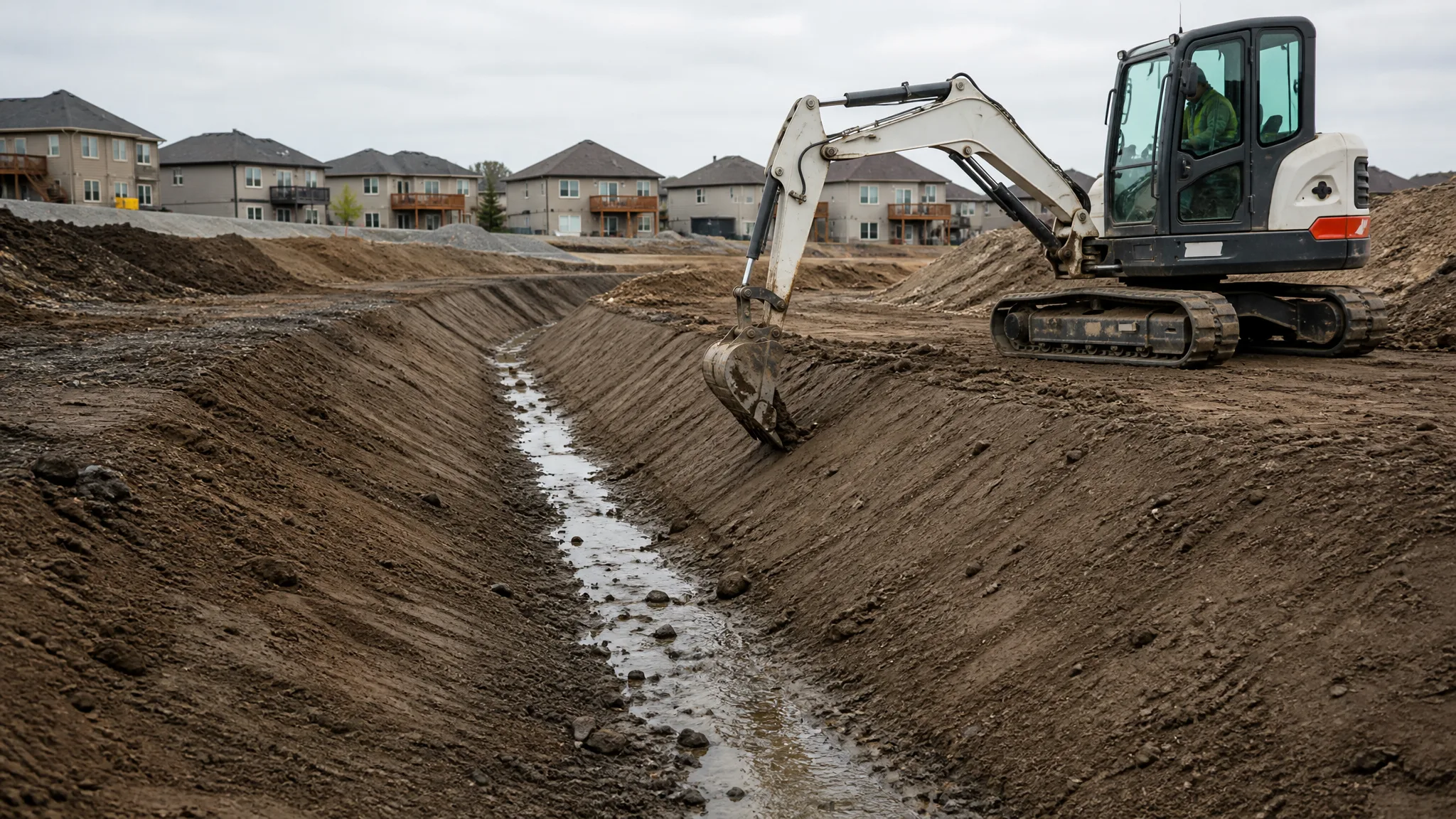
Excavated pond banks are not vertical walls. Side slopes must be stable when saturated, safe for people and animals, and — for wildlife ponds — gentle enough that animals can climb out. NRCS excavated pond standards cap design slopes at roughly 1:1 (horizontal to vertical) for stability, and most builders use gentler slopes: 2:1 to 3:1 is common for excavated ponds, and wildlife-oriented designs frequently specify much flatter slopes around a large portion of the perimeter.
Flatter slopes mean the surface area of the pond is much larger than its bottom footprint, and every foot of slope is a foot the excavator must reach and shape. This is why pond contractors talk about reach as much as dig depth: a long-reach stick lets the machine sit on stable ground and still shape the far bank and the deep center. For a small pond, a compact excavator may reach everything from one position; for anything larger, the machine works its way around the perimeter, digging and shaping in segments.
Match Machine Class to Pond Size
With pond dimensions and slopes defined, the machine sizing falls into rough bands that equipment rental yards use every day:
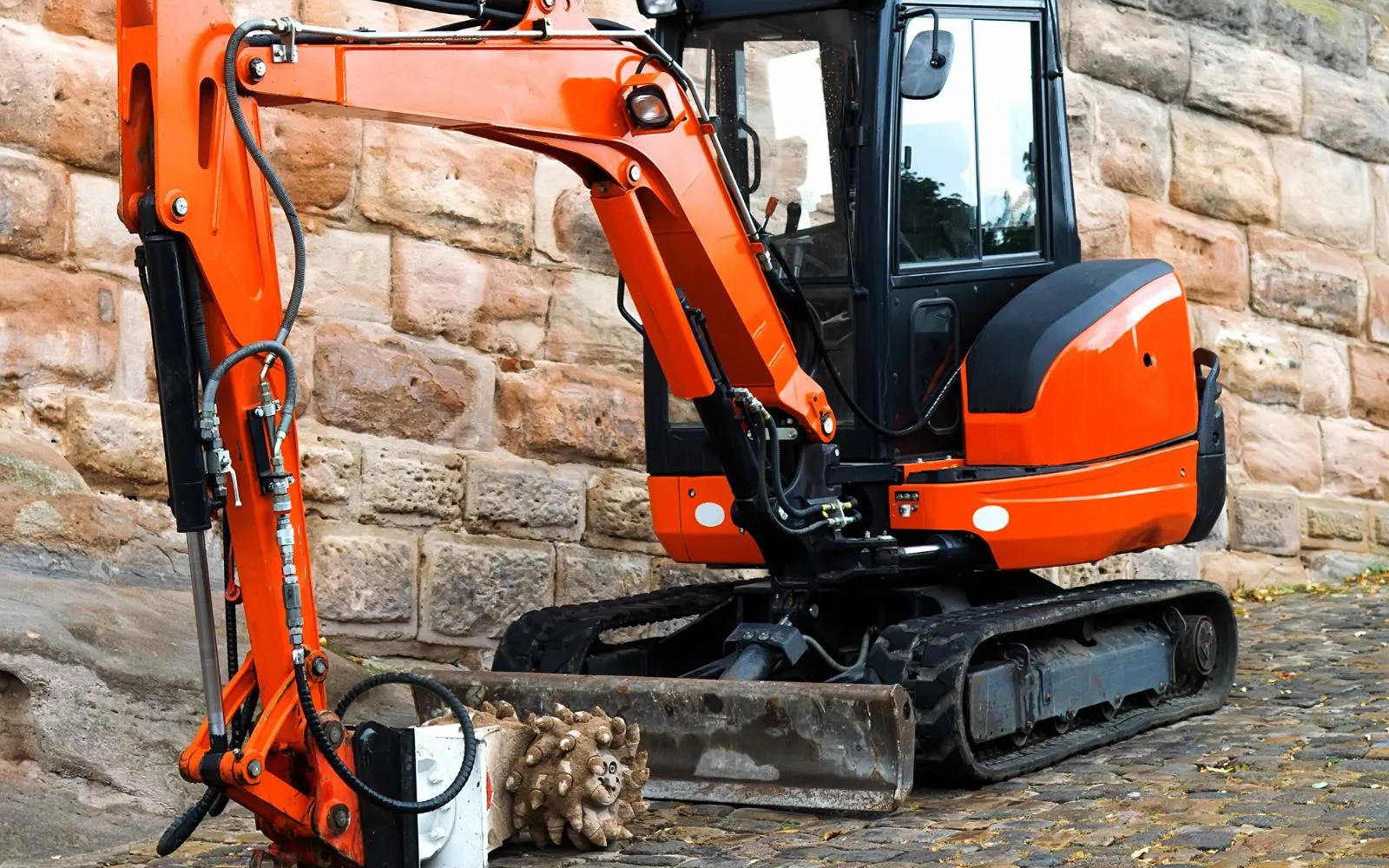
- Mini excavators (1 to 6 tons, roughly 7 to 12 ft dig depth): realistic for decorative and koi ponds up to about 20 by 20 feet, especially in backyards where access is tight. Depth capability is rarely the limiter at this scale — reach and spoil handling are.
- Compact and mid-size excavators (6 to 12 tons, roughly 12 to 16 ft dig depth): a practical range for small to medium ponds, streams, and water features where the machine can reach the whole excavation from the banks.
- Full-size excavators (20 to 30 tons, roughly 20 to 22 ft dig depth and 35 to 40 ft of reach): the standard choice for quarter-acre and larger farm and livestock ponds dug 8 to 10 feet deep. The reach and bucket capacity are what keep the job moving in days instead of weeks.
For pond cleaning, enlarging, or deepening an existing pond, the access question is different — the machine often works from the bank or from mats, which changes the reach math again.
Do the Dirt Math Before You Book the Machine
Every pond is a volume problem wearing a hole in the ground. A quarter-acre pond (about 10,890 square feet) averaging 6 feet deep produces roughly 65,000 cubic feet of excavation — around 2,400 bank cubic yards before swell. Dug soil swells as it is excavated, so that becomes closer to 3,000 loose cubic yards to place, spread, or haul. Knowing how to run that calculation is the difference between a smooth job and a surprise budget, and our guide to calculating excavated soil volume and truckloads walks through the exact math.
That volume also tells you how long the dig will take. A full-size excavator in average digging moves roughly 150 to 250 loose cubic yards per hour when it can swing freely — see our breakdown of how many yards an excavator can move per hour. At those rates, 3,000 loose yards is roughly 12 to 20 hours of pure digging. That assumes the excavator is not constantly stopping to move the dirt it just dug — which brings us to the part most first-time pond diggers underestimate.
Spoil: The Part Nobody Plans For
Excavated pond dirt has to go somewhere, and it cannot go back in the hole. If a single excavator digs and then re-handles its own spoil to spread it around the property, the job can easily take two to three times as long. Pond contractors routinely plan the spoil before the first bucket: topsoil set aside for final grading, subsoil placed for dam or berm construction, good fill stockpiled for other uses, and any surplus spread or hauled away.
For larger ponds, a second machine — a dozer or wheel loader — moving spoil clear of the excavation as it comes out keeps the excavator digging instead of shuffling dirt. When a pond is dug below the water table, seepage turns the floor into a mud fight, and dewatering planning matters more than machine size. Our article on managing spoil piles on a construction site covers placement, slope stability, and erosion control for large stockpiles.
Digging Depth Limits: Can a Mini Excavator Really Dig a Pond?
Mini excavators are genuinely capable machines, and a 5-ton model with a 10- to 12-foot dig depth can excavate a small pond — but only if the pond fits inside the machine's reach envelope and the spoil can be managed. The machine digs from the edge, reaches its maximum depth at the far limit of the stick, and has a smaller bucket, so production drops quickly once the excavation gets deeper than a few feet. For a backyard water feature up to roughly 20 feet across, a mini is often the right and only machine that fits through the gate. For anything measured in acres or feet of farm-pond depth, step up to a full-size excavator; the rental cost difference is small next to the extra days a mini will spend on the same hole.
If you already have a wheel loader sitting on the property rather than an excavator, loaders can dig ponds too — within real limits. Our article on digging a pond with a front-end loader covers when that works and where it falls short.
If you are deciding between renting and owning for pond work and other jobs, our renting vs. owning an excavator guide lays out the cost math.
Budget Reality Check
Excavator rental costs scale with size: compact machines rent for a fraction of a 30-ton class machine, but the cheaper machine is the expensive choice if it takes four times as long or cannot reach the pond's center. When contractors bid pond work, the line items are machine time, operator time, spoil handling, and haul-off — not just the hourly rate of the iron. If a pond is bigger than a weekend project, hiring an experienced excavation contractor with the right machine is often cheaper than renting the wrong one twice.
Work With the Ground, Not Against It
The right excavator for a pond is the one whose dig depth exceeds your deepest cut, whose reach lets it shape the whole basin from stable ground, and whose bucket keeps pace with a realistic schedule — paired with a plan for the thousands of yards of spoil. Define the pond, check the soil, do the volume math, and let those numbers pick the machine. When the machine fits the hole, pond excavation is a straightforward, satisfying job; when it does not, every foot of depth and every yard of spoil becomes a reminder of the sizing you skipped.