Tracked vs. Wheeled Excavators


Two excavators in the same size class, with the same digging capacity on paper, can behave like completely different machines on site. The difference is what carries them: steel tracks or rubber tires. That single design decision drives how fast the machine moves, how much ground it can cross without tearing it up, how deep it digs, how much it ruts a customer's yard or a fresh asphalt drive, and what it costs to keep running over thousands of hours.
The Core Difference: Two Ways to Carry the Same Machine
A conventional crawler excavator rides on two track assemblies with sprockets, idlers, rollers, and long track chains. A wheeled excavator uses four to six rubber tires on axles, with the same upper structure — cab, boom, arm, bucket — sitting on top of a car-style undercarriage. Because that upper structure is identical in principle, the digging tools and most attachments cross over between the two, and the operator's job looks similar from the seat.
What differs is how the machine meets the ground, and that cascades into traction, stability, travel speed, and maintenance. Usage patterns reflect the trade-off: wheeled excavators are common in Europe, where jobs are tightly packed in urban settings, while North American fleets skew heavily toward tracked machines that spend their lives in dirt, gravel, and open sites.
Traction, Ground Pressure, and Surface Conditions
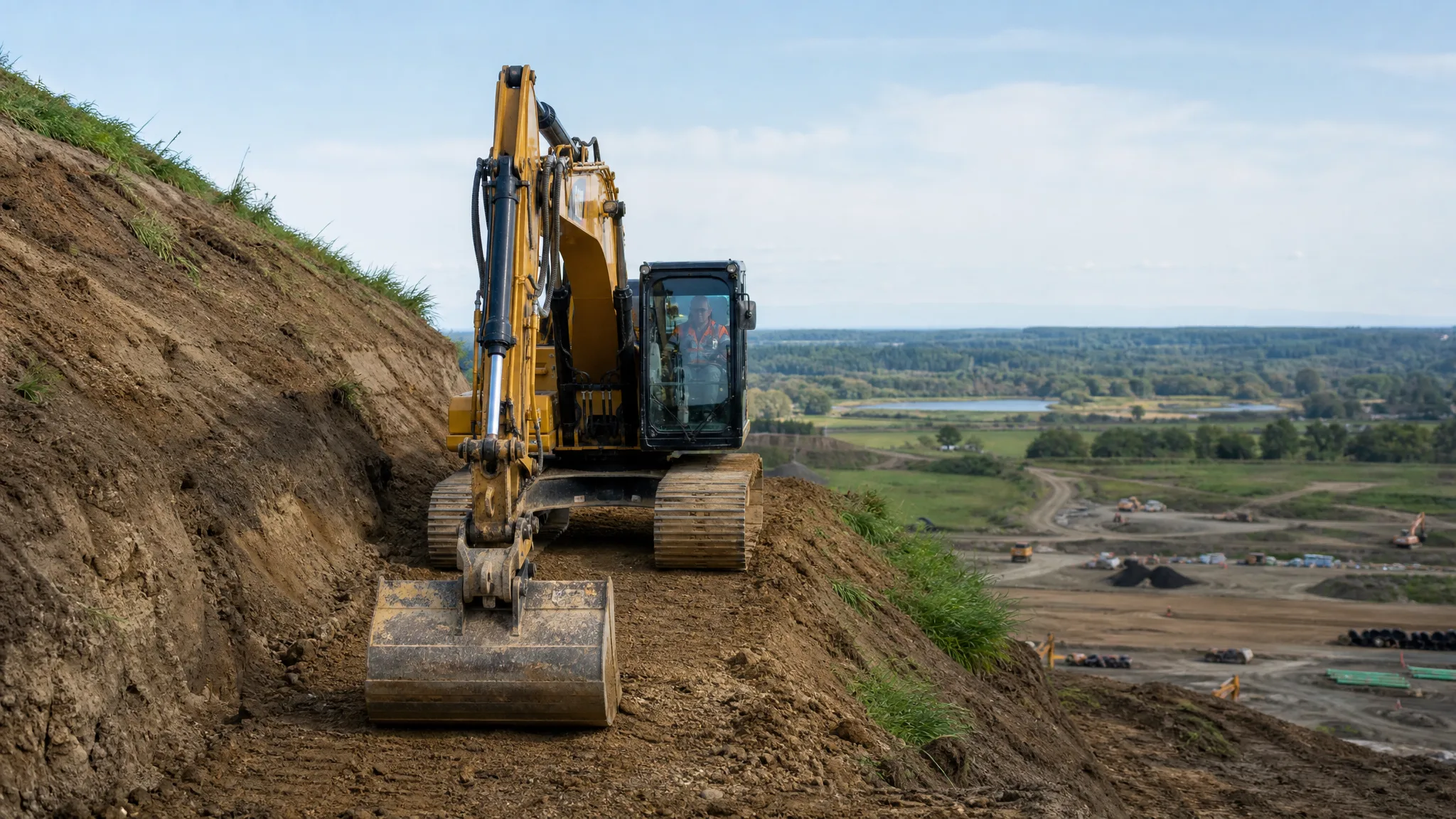
Tracks spread the machine's weight across a large footprint, which is why tracked excavators hold up on soft, loose, uneven, and hilly ground. Their lower center of gravity keeps them planted on slopes, and a rocky site will not puncture a track the way it can ruin a tire. For pioneering new ground, digging wet clay, or working a site that has not been stripped and stabilized, tracks are the safer bet.
Wheeled machines are happiest on hard surfaces. They work and travel on pavement, parking lots, and finished building slabs without chewing them up, which makes them practical in urban and municipal work. The trade-off shows up the moment the ground turns soft: rubber tires concentrate load into small contact patches, so wheeled excavators rut and lose traction in mud and loose fill, and they need mats or a competent travel path to protect finished lawns and drives.
Stability and Digging Depth
Left to sit freely on its tires, a wheeled excavator generally has less inherent stability than a comparable crawler, because tracks provide the larger, more stable footprint. Manufacturers solve this deliberately with axle locks, dozer blades, and outriggers. With the outriggers down and the blade on the ground, wheeled machines deliver stability that is broadly comparable to a tracked machine of similar size for ordinary digging.
The gap reappears in the extremes. Tracked excavators sit lower and carry a heavier undercarriage, so they typically dig deeper in a given size class and handle heavy lifting, long-reach trenching, and side-loading with trench boxes more comfortably. Wheeled machines sit higher off the ground, and that higher center of gravity becomes a real consideration on steeply sloped terrain and in deep, vertical digs. Sizing around excavator size classes matters here: a wheeled machine may need to be one class larger to match the depth and lift numbers of the crawler it is replacing.
Travel Speed, Roading, and Transport Logistics
This is where wheeled machines earn their money. Wheeled excavators can travel on roads at speeds up to roughly 22 mph, while tracked excavators crawl along at about 4 to 6 mph and generally need to be hauled. On a job with multiple sites a few miles apart — utility crews, municipal work, road and bridge projects — a machine that can drive itself is genuinely productive, and every hour not spent loading and chaining down a lowboy is billable time.
Tracked machines, by contrast, damage paved surfaces and wear their own undercarriage quickly when roaded any distance. Moving them between sites means a trailer and a truck, plus the loading, chaining, and permitting that goes with it. That mobilization cost belongs in the estimate, which is why rental and transport pricing is such a common source of surprise on small jobs. Road travel for a wheeled machine still has to be checked locally — lighting, plates, axle and weight limits, and travel permits vary by jurisdiction, so confirm the rules before planning a route.
Undercarriage and the Cost of Ownership
The financial argument is more even than it first appears. Crawler undercarriages are a major lifetime expense: pins, bushings, sprockets, rollers, idlers, and track chains add up, and undercarriage condition can account for a large share of a machine's total owning and operating cost. That is a big reason undercarriage inspection drives used-excavator pricing — a worn crawler undercarriage can cost five figures to bring back to spec.
Wheels and brakes cost less, tend to last longer, and are quicker and easier to replace, which lowers long-term maintenance on wheeled machines. The offset is at purchase: wheeled excavators generally carry a higher upfront price, and they are less common in rental fleets and used listings in many U.S. markets, which narrows your options and can push up rates. When you are comparing machines, factor in the undercarriage budget as well as the sticker, the way a full excavator cost analysis recommends.
Where Wheeled Excavators Win
If the machine spends its time on pavement, streets, and tight urban lots, a wheeled excavator is usually the better tool.
- Municipal and road work, where a crew digs along curbs, streets, and shoulders and moves constantly.
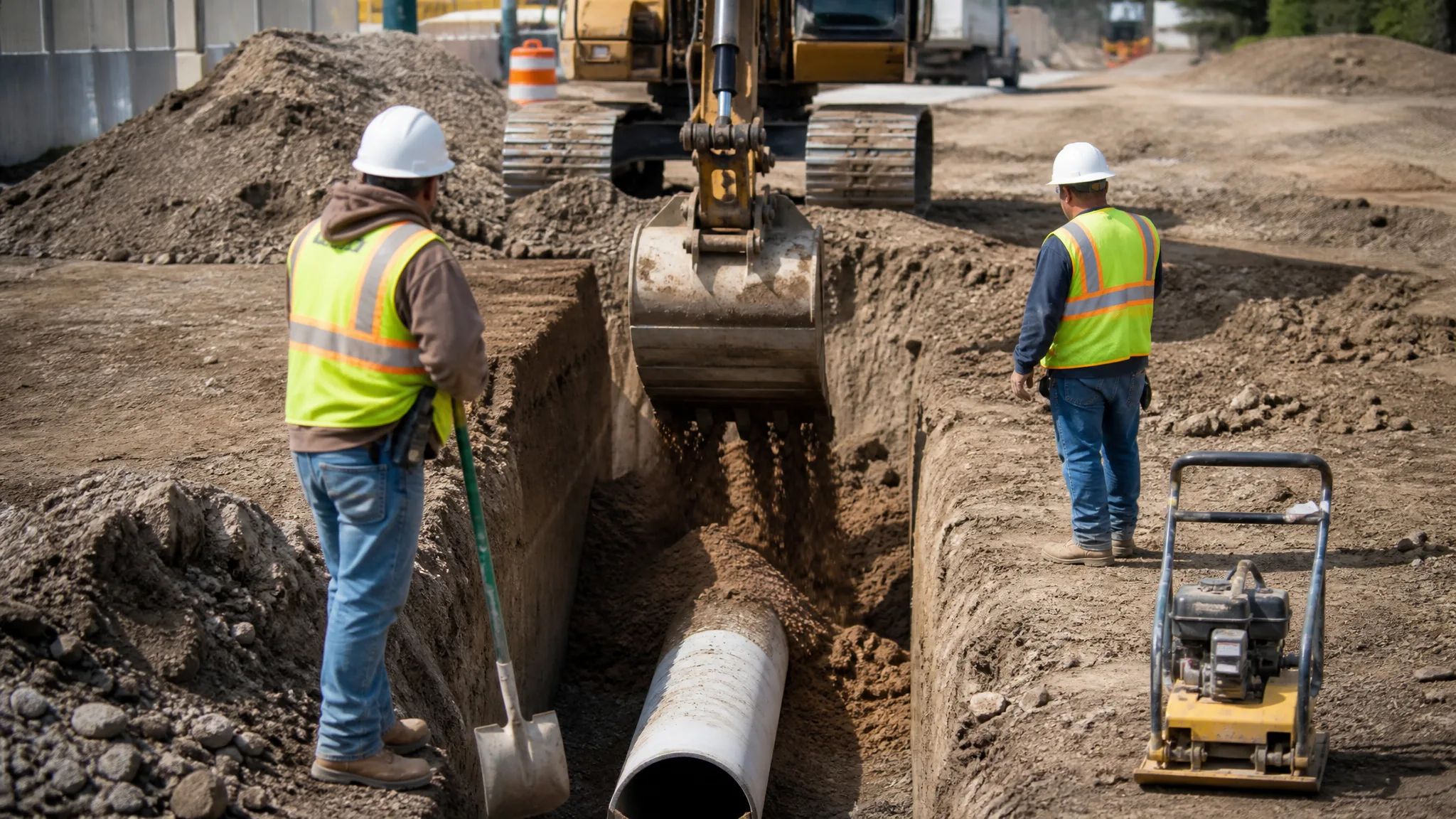
- Utility and pipe installation along established streets where the machine travels the road between dig locations.
- Sites with finished pavement, parking lots, or building slabs the customer expects to keep intact.
- Short-duration jobs spread across multiple locations where transport time dominates the schedule.
- Small fleets that need one machine to dig, trench, move barriers, and clean ditches rather than a specialized crawler for each task.
With a quick coupler and the right attachments, a wheeled excavator becomes a versatile tool carrier that can replace a backhoe in many urban applications — and if that is the comparison you are weighing, the differences between an excavator and a backhoe are worth a look before you commit.
Where Tracked Excavators Win
Tracks own the dirt. A tracked machine is the right answer when:
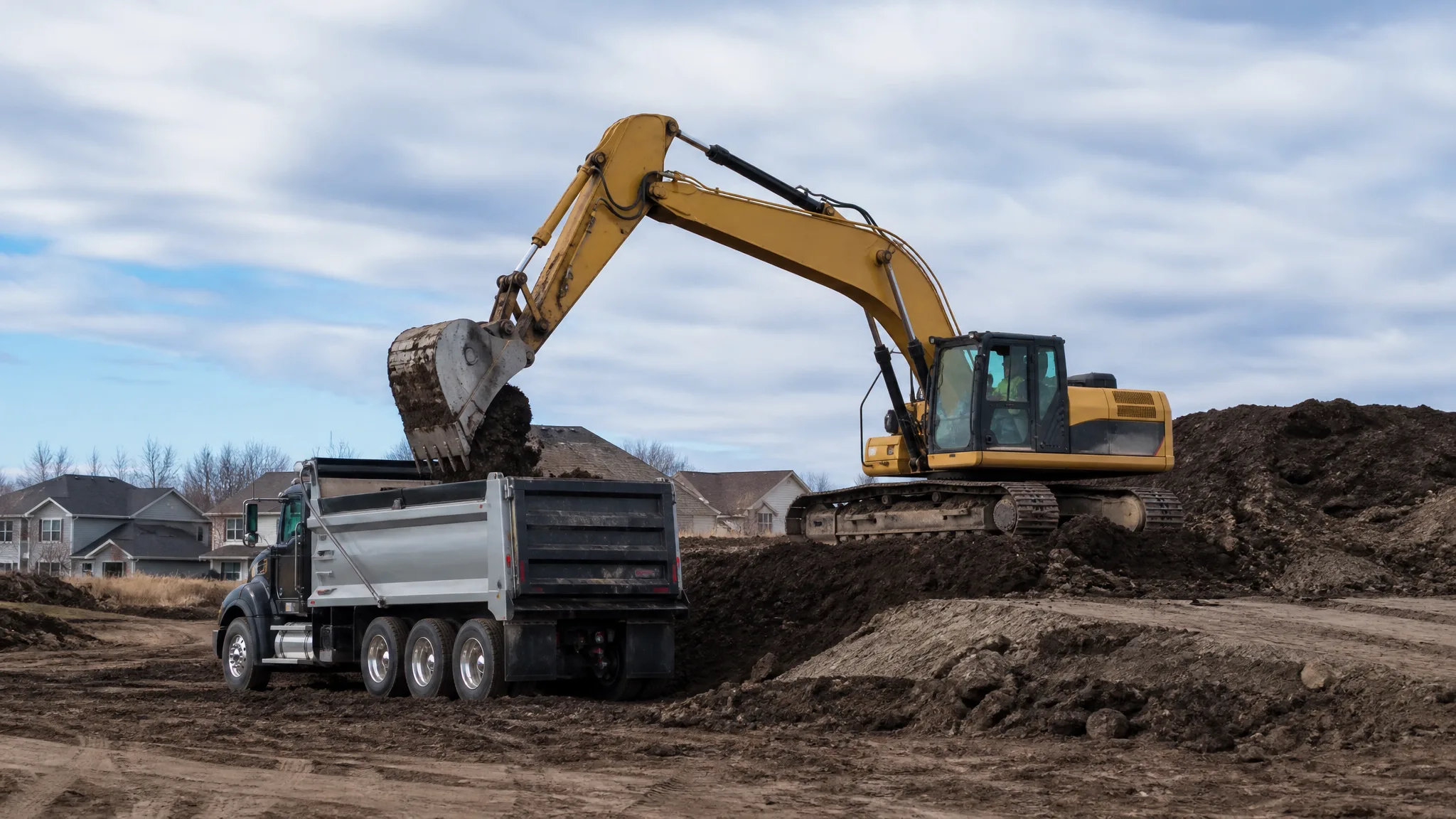
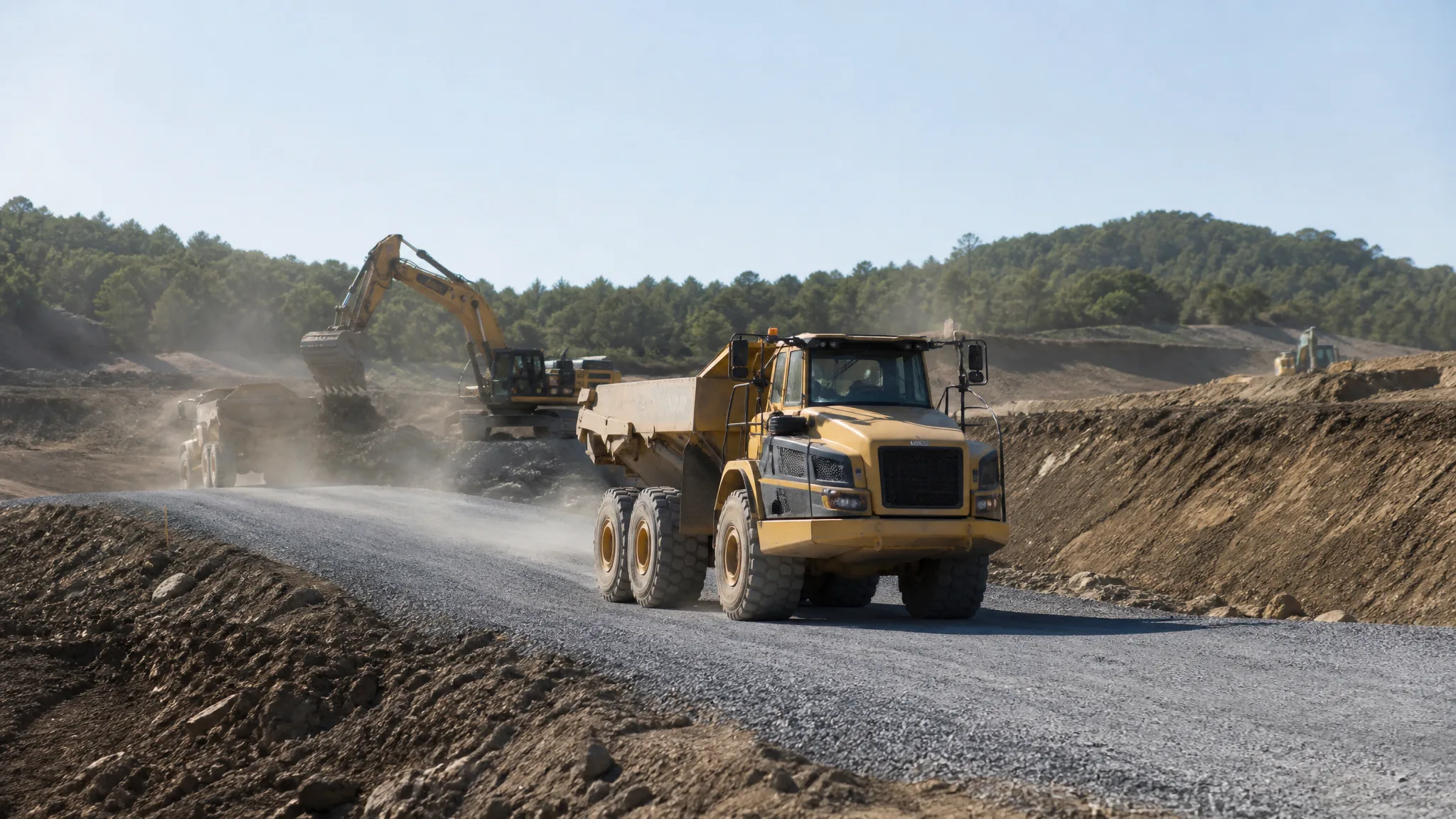
- The work is mass excavation or production digging with truck cycles to feed.
- The ground is soft, wet, or freshly filled and traction is uncertain.
- The site is sloped, uneven, or rocky.
- You are digging deep utilities, setting structures, or making heavy lifts over the side.
- The machine stays on one site for months, so transport speed is irrelevant.
Tracked machines are also the standard choice for demolition with a shear or breaker, and for long, uninterrupted trenching where stability and consistency matter more than mobility. When the whole job is on one property and the material has to move in volume, tracks usually win on production and on the yards-per-hour math that drives the schedule.
Attachments and Versatility
Both undercarriages accept the same families of attachments, so the decision rarely hinges on the tool. Buckets, thumbs, breakers, shears, grapples, and compaction wheels are available for either. The practical difference is where the machine can deploy them: a trenching bucket on a wheeled machine working a street cut is efficient; the same setup in wet clay on a graded pad is asking for trouble. A dozer blade is common on wheeled units and doubles as a backfill and cleanup tool, and tilt rotators are especially popular on wheeled machines doing utility work because they cut repositioning time in tight areas.
If you are building out a tool list, it helps to think about the machine and the attachment as one decision rather than two — the guidance in bucket selection by soil type applies equally to tracks and tires.
A Practical Decision Framework
When the choice is genuinely open, work through these questions in order:
- What surface will the machine work and travel on? Paved and finished surfaces point to tires; raw ground points to tracks.
- How many sites per week? Multiple locations with road travel favor a wheeled machine; one long-term site does not.
- What are the soil and season conditions? Wet, soft, or unstable ground favors tracks.
- How deep and how heavy? Deep trenching and heavy lifting favor tracks unless a larger wheeled machine with outriggers covers the numbers.
- Do you have transport for a crawler? A lowboy and a truck with capacity, plus the labor to load and chain down, are part of the cost of owning tracks.
- What is available and what does it cost? Wheeled units can be harder to rent, so lead time and rate matter.
For mixed workloads, some contractors run one of each and let utilization decide: wheels for street and urban work, tracks for production earthwork. That is a capital decision, not an operational one, and it only makes sense when both machines stay busy enough to justify their carrying costs. If utilization is the question, the rent-versus-own calculation is the place to start.
Before You Buy or Rent: What to Check
Whichever undercarriage you choose, inspect it against the work it will do. On a tracked machine, that means measuring the crawler undercarriage carefully — sprocket teeth, idler and roller condition, track pitch elongation, and grouser height. On a wheeled machine, check tire condition and matching, axle and oscillating-axle locks, steering modes, outrigger and blade function, and brake wear. Confirm that the quick coupler and attachment pattern match the buckets and tools you already own, because a coupler mismatch quietly doubles your attachment budget.
Then plan the maintenance. Tracks need pin and bushing care, correct tension, and even wear, which is why a structured pre-purchase inspection pays for itself. Wheeled machines need tire pressure discipline, axle and brake service, and attention to steering components. Both benefit from the same daily walk-around habits, and keeping a consistent daily maintenance routine is what keeps either undercarriage out of the shop. Get the machine choice right, and the rest of the job gets easier — the undercarriage is the part of an excavator you live with for the entire life of the machine.