T&M vs. Lump Sum Excavation Bids


Two excavation bids for the same building pad can land a hundred thousand dollars apart without either contractor being wrong or greedy. The difference is often the pricing structure underneath the number. A lump sum bid, a time and materials bid, and a unit price bid are not three ways of saying the same thing — they are three different ways of deciding who pays when the quantity turns out to be different from the estimate.
Understanding which structure you are being quoted, and what it does to risk on both sides, is the fastest way to compare bids honestly and to avoid the argument that shows up in month two.
The Three Pricing Structures You Will Actually See
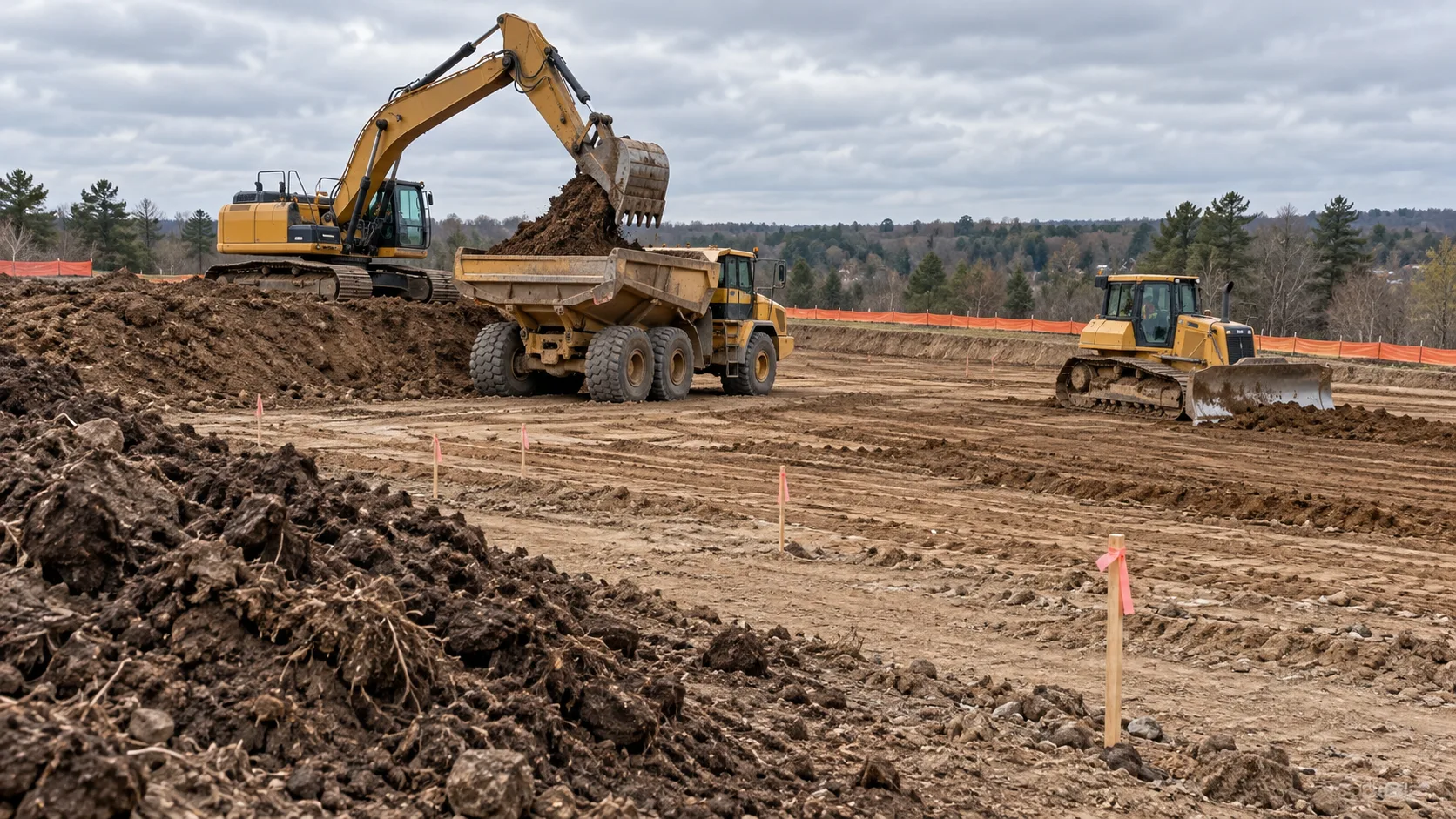
Dirt work is priced three ways. A lump sum (also called stipulated sum or fixed price) sets one number for a defined scope. Time and materials (T&M), a form of cost-plus, bills actual labor hours, equipment time, and materials plus a markup or fee. Unit price sets a rate per measurable unit — cubic yard excavated, cubic yard hauled, square foot graded, linear foot of trench — and the final total follows the measured quantity.
These map onto the standard owner-contractor forms: AIA A101 is the stipulated-sum agreement, while A102 and A103 are cost-of-the-work-plus-a-fee forms, with and without a guaranteed maximum price. Most residential and light commercial excavation lands somewhere between a unit-price schedule and T&M with a not-to-exceed number, even when the proposal looks like a flat price.
What a Lump Sum Bid Really Buys
A lump sum transfers quantity risk to the contractor. If the cut turns out to be 20 percent deeper than the plan suggested, or the fill needs twice the import the estimator assumed, the contractor absorbs the difference. That is the appeal for an owner: the number is the number.
The trade is that the contractor has to price the uncertainty somewhere. On a site with a real geotechnical report, complete plans, and a well-defined scope, that cushion is thin and the lump sum is usually the best value available. On a site with vague plans and unknown soil, the same contractor either adds a large contingency or qualifies the bid so heavily that the fixed price covers almost nothing. A lump sum on undefined work is not a guarantee; it is an argument waiting to happen, usually through a differing site conditions claim.
Read the exclusions before you compare totals. Rock, unsuitable material, groundwater, haul-off, topsoil, and permit fees are the usual carve-outs, and two bids that exclude different things are not comparable at all. More on that in differing site conditions and change orders.
How Time and Materials Pricing Works
T&M bills for what actually happens. The contractor quotes hourly rates for labor and for each machine, a markup on materials, and often a mobilization charge. Equipment rates should reflect both ownership cost and operating cost — depreciation, interest, insurance, and the wear-and-tear side of fuel and repairs — which is why a published rate can look high until it is compared with what the machine actually costs to own. The math is broken down in how much does heavy equipment cost per hour.
T&M is the right structure when the scope genuinely cannot be defined: a repair where nobody knows what is under the slab, a dig where the subsurface is a mystery, or work that has to proceed while conditions are still being discovered. It is the wrong structure when it has no ceiling. A well-written T&M proposal includes a not-to-exceed amount, a defined crew and equipment list, a standby rate, and a reporting interval so the owner sees hours accumulating before the invoice arrives.
Unit Price: The Middle Ground Most Dirt Work Uses
Unit pricing splits risk down the middle. The contractor carries the risk that its cost per cubic yard is higher than the rate it quoted; the owner carries the risk that more cubic yards are needed than the estimate assumed. That is why unit-price contracts work so well for excavation: the owner is not paying for a contingency on quantity, and the contractor is not gambling its margin on a takeoff performed from a two-dimensional plan.
The federal model shows how the split is normally managed. Under FAR 52.211-18, when a unit-priced item varies more than 15 percent above or below the estimated quantity, either party can demand an equitable adjustment to the price. Private contracts often use a similar variation clause, sometimes at a different threshold. If your contract has unit prices and no variation language, the contractor eats a windfall loss on a big overrun — and usually finds a change order instead.
Unit pricing only works when the measurement is agreed up front: who measures, with what method, at what point in the sequence, and whether the quantity is bank, loose, or compacted cubic yards. Those three numbers are not the same, and confusing them is one of the most common sources of disputes. The methods are covered in excavation takeoff methods and soil swell and shrinkage factors.
Who Carries Which Risk
The cleanest way to compare proposals is to ask what happens in each structure when reality differs from the plan.
- Quantity comes in higher: lump sum — contractor; unit price — owner; T&M — owner.
- Productivity comes in lower: lump sum — contractor; unit price — contractor (within the quoted rate); T&M — owner.
- Hidden rock or unsuitable soil: usually owner under a differing site conditions clause, but only if notice is given and the condition was not reasonably foreseeable.
- Weather downtime: generally the contractor's problem unless the contract says otherwise, which is why schedule float matters more than the rate.
- Measurement disputes: whoever the contract says measures, using the survey method it names — not whoever shouts first.
Where Each Structure Fails
Lump sum fails when the scope is undefined and the contractor priced it as if it were defined. The bid looks competitive, the job starts, the rock appears, and the change order restores the margin the contractor never really had. T&M fails when nobody watches the clock: hours accumulate, the owner loses the ability to compare alternatives, and the final number has no relationship to the market. Unit price fails when the measurement is sloppy or the estimated quantities were never independently checked, so the "low" bid wins on a quantity that turns out to be wrong in the owner's favor.
All three fail the same way when the bid is not itemized. A single total hides mobilization, hauling, disposal, topsoil, erosion controls, and contingency in one number that cannot be audited or compared.
What to Demand in Any Excavation Bid
Whatever structure you choose, the proposal should separate the pieces that behave differently:
- Mobilization and demobilization, as a separate line.
- Clearing, grubbing, and topsoil stripping, with depths and disposal stated.
- Excavation quantities with the basis of measurement named.
- Hauling and disposal, including where the material goes, who pays tipping fees, and how axle limits cap each load — see legal weight limits for hauling dirt.
- Fill and import, with source, compaction requirements, and testing responsibility.
- Rock, groundwater, and unsuitable material, priced as unit rates rather than lump-sum guesses.
- Erosion and sediment controls, and who maintains them.
- Payment schedule, retainage, and the change order process.
The assumptions a bid rests on start with what is actually underground, explained in what is a geotechnical report, and the contract side is covered in how to choose an excavation contractor.
Matching the Contract to the Job
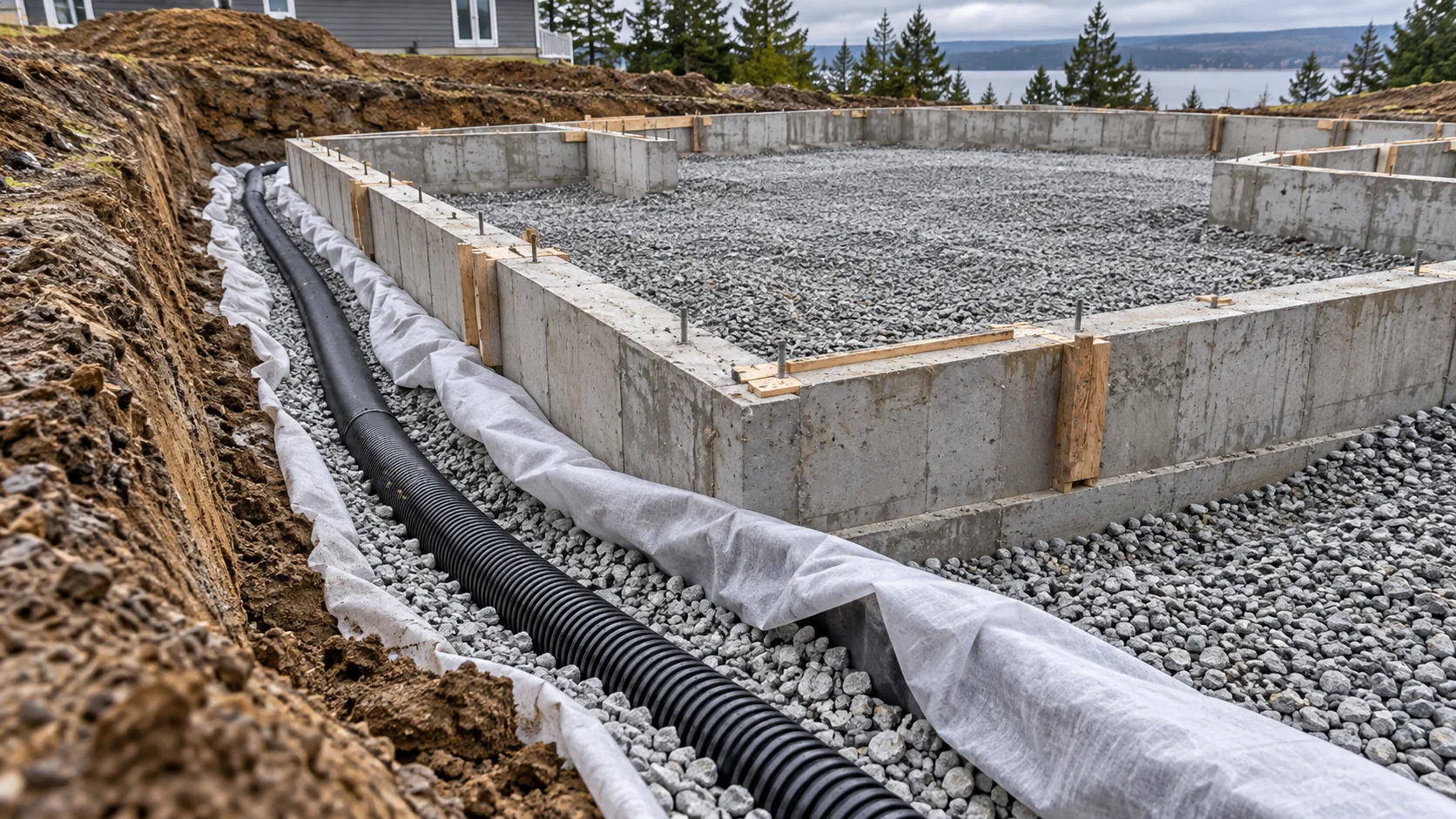
A small residential dig with a clear scope — a driveway culvert, a pool, a foundation — usually works best as a fixed price with unit rates for the unknowns. Production earthwork on a commercial site, where the plans are detailed and the quantities are large, usually works best as unit price with a variation clause. Remediation, emergency repair, and any job where the subsurface is genuinely unknown belongs on T&M with a not-to-exceed cap and weekly reporting.
The structure should follow the uncertainty, not the contractor's preference. When it does, the bid you compare is the bid you will actually pay, and the job stays a construction project instead of becoming a negotiation.
Reading the Bid Beyond the Total
Two bids with the same total can carry completely different risk. A bid with generous unit rates for rock and a firm lump sum for the known work is safer than a lower total that excludes rock entirely. A T&M proposal with a cap and a reporting requirement is safer than an open-ended hourly arrangement. And a bid that names its assumptions — moisture conditions, haul distance, working hours, access — is a bid you can hold someone to.
Track what actually gets spent against those assumptions once the job starts. Production rates and variance against the estimate are what turn a pricing structure into a management tool instead of a postmortem; the yard-by-yard cost benchmarks are in excavation cost per cubic yard.