Tiltrotator Attachments

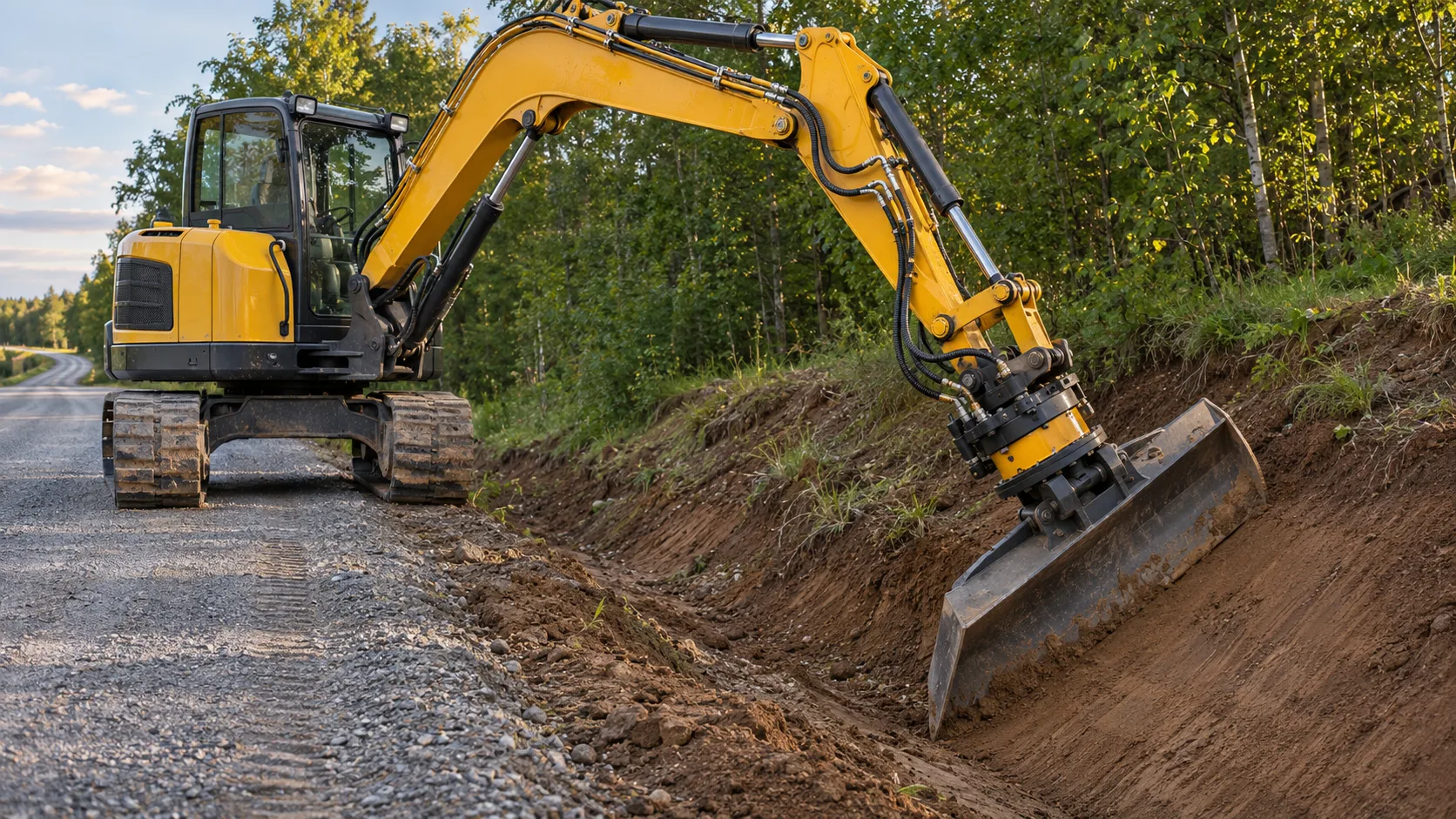
A tiltrotator is the attachment most North American excavator operators have seen in a video and few have run in person. It mounts between the stick and the bucket and adds two motions the machine never had: tilt and continuous rotation. That sounds like a convenience. In practice it changes what a single excavator can finish, how much the operator has to reposition, and how much hand work follows behind the machine.
What a Tiltrotator Actually Is
A tiltrotator is a rotary and tilting coupling that fits at the end of the excavator stick in place of, or in line with, the quick coupler. Steelwrist describes its units as providing 360-degree unrestricted rotation and 45-degree tilt in each direction. Engcon makes the comparison most operators understand fastest: it works like a wrist, letting the operator tilt up to 45 degrees and rotate the tool continuously in either direction.
Those two movements combine. The operator can roll the bucket to cut a backslope, tilt it to match a cross-slope, rotate it to reach around an obstacle, and then return to a square digging position without moving the machine. On a conventional excavator, each of those adjustments is a machine reposition, a bucket change, or a hand shovel.
How It Differs From a Quick Coupler or a Tilting Coupler
The confusion is understandable because the products overlap visually. A quick coupler changes tools: it lets the operator drop a digging bucket and pick up a breaker, a thumb-equipped bucket, or a ditching bucket. It does not add a new axis of motion.
A tilting coupler adds one axis of tilt, usually enough to dress a slope or clean a ditch, at much lower weight and cost than a full tiltrotator. A tiltrotator adds tilt plus continuous rotation, plus the control system needed to manage both. The practical dividing line is rotation: if the work requires the tool to swing around its own axis — cutting a ditch bank on both sides, working a corner, or orienting a bucket along a curb line — a tilt coupler cannot do it. It also differs from an excavator thumb, which is a gripping tool rather than a positioning tool. The two can be combined, but they solve different problems.
What It Changes in the Field
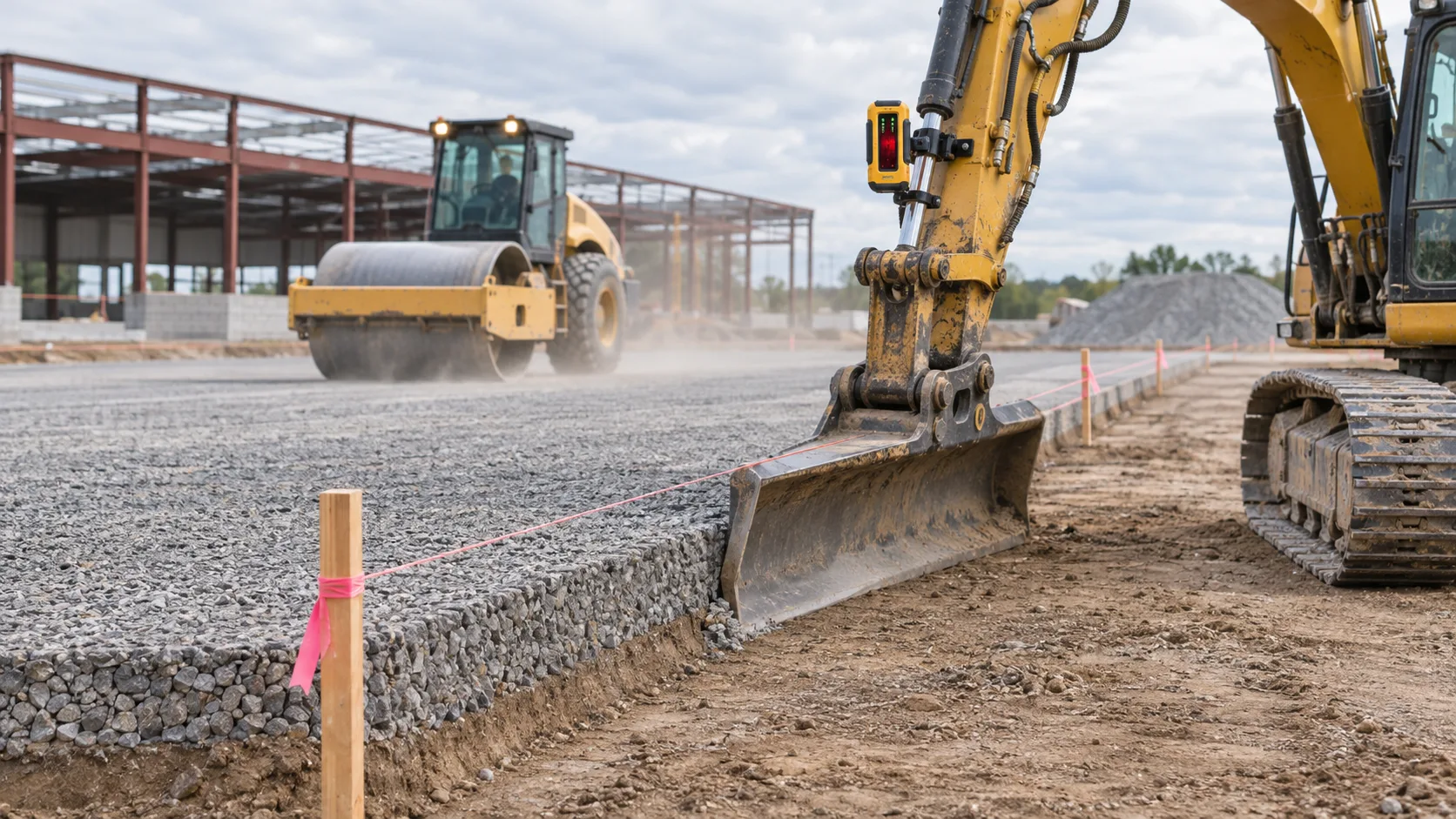
The clearest gains show up in grading and ditching. A motor grader is still the right machine for long, straight, high-production grading, and motor grader basics explains why its geometry is so effective. But a tiltrotator-equipped excavator can cut a ditch backslope, shape a swale, or trim a pad edge to line and grade while sitting in one position.
On a drainage swale, the operator can match the side slopes by tilting the bucket rather than benching the machine into the channel. On a road embankment, the same machine can cut the slope and trim the shoulder without tracking up and down the grade, which is both faster and safer than repeated repositioning on a slope.
In tight-access work, the advantage is more pronounced. A machine that can rotate and tilt the bucket can work around a corner, under an eave, or between a fence and a foundation without swinging the house. That reduces the number of machines on site and the amount of manual finishing.
Steelwrist states that experienced tiltrotator operators usually estimate a productivity improvement of 20 to 35 percent depending on the type of job. That is a manufacturer's figure drawn from operator experience, not a guaranteed number, and it will not hold on a mass excavation where the machine loads trucks all day. It is most credible on finishing, ditching, landscaping, and utility work with frequent changes in direction.
The Weight and Height Penalty
Every tiltrotator adds weight at the end of the stick, and that weight works against the machine's lifting capacity. Industry guidance from attachment suppliers is direct about it: adding weight to the end of an excavator stick decreases available lifting forces. The tiltrotator's own weight, plus the bucket, plus the load, all sit further from the boom pivot than a bare bucket would.
Building height matters too. A tiltrotator adds stack height between the stick and the bucket, which changes digging geometry and reduces maximum dig depth. Manufacturers compete hard on low building height for exactly this reason. The practical consequence is that the machine's published lift chart no longer describes the machine as configured. Before lifting pipe, precast, or a trench box, the operator needs a chart that accounts for the attachment, and the margin should be based on the worst radius and the worst ground condition. Lifting with an excavator covers how to read the chart and where the stability limit actually sits.
Hydraulics and Controls
A tiltrotator needs hydraulic flow and a control method the base machine may not have. Most installations require an additional circuit or a diverter, proportional control at the joystick, and a control unit that manages tilt and rotation inputs. Systems range from simple on-off control to load-sensing proportional control with auto-calibration and return-to-zero functions.
This is not a bolt-on accessory in the same category as a bucket. Engcon states plainly that installations by people it has not trained are not recommended, that each excavator is different, and that the installation must be completed and signed off by a qualified person to comply with its warranty conditions. That is a fair summary of the risk: incorrect flow, pressure, or hose routing can damage the attachment, the machine, or both. Oil cleanliness matters as much here as anywhere else in the system, because a rotary manifold and a tilting cylinder have small clearances that contaminated oil finds first. The discipline that keeps a hydraulic system healthy applies after installation.
Couplers and Tool Changes
Most tiltrotators include an integrated quick hitch, and that hitch is the safety-critical interface. Steelwrist offers front pin hook, front pin lock, and a lock-sensing option, and states that its safety solutions comply with standards including EN 474 and ISO 13031. Those are the same families of requirements that govern quick couplers generally.
Automatic hydraulic coupling is the other major convenience. Engcon's EC-Oil system lets the operator connect and disconnect hydraulic tools without leaving the cab, which removes a routine manual task that is easy to rush. The trade-off is more complexity in the coupler and more to inspect. Whatever the system, the daily habit does not change: engage the coupler, confirm the pins or locks are seated, lift the tool slightly, and bump it against the ground before trusting it. A tiltrotator adds joints, so there are more places for a partial engagement to hide.
Machine Size and Fit
Tiltrotators are available across a wide range. Steelwrist lists units for excavators from roughly 4,400 to 72,600 pounds, or 2 to 33 tonnes. Engcon splits its range into a Series 1 for machines around 1 to 6 tonnes, a Series 2 covering roughly 1.5 to 33 tonnes, and a Series 3 for 6 to 33 tonnes that the company says will be available in North America from 2027.
Machine class is the starting point, not the whole answer. Two machines of the same operating weight can have different stick geometry, hydraulic flow, and lift charts. The fit has to be checked against the specific machine, including the coupler standard it uses and the weight of the tools that will hang from it.
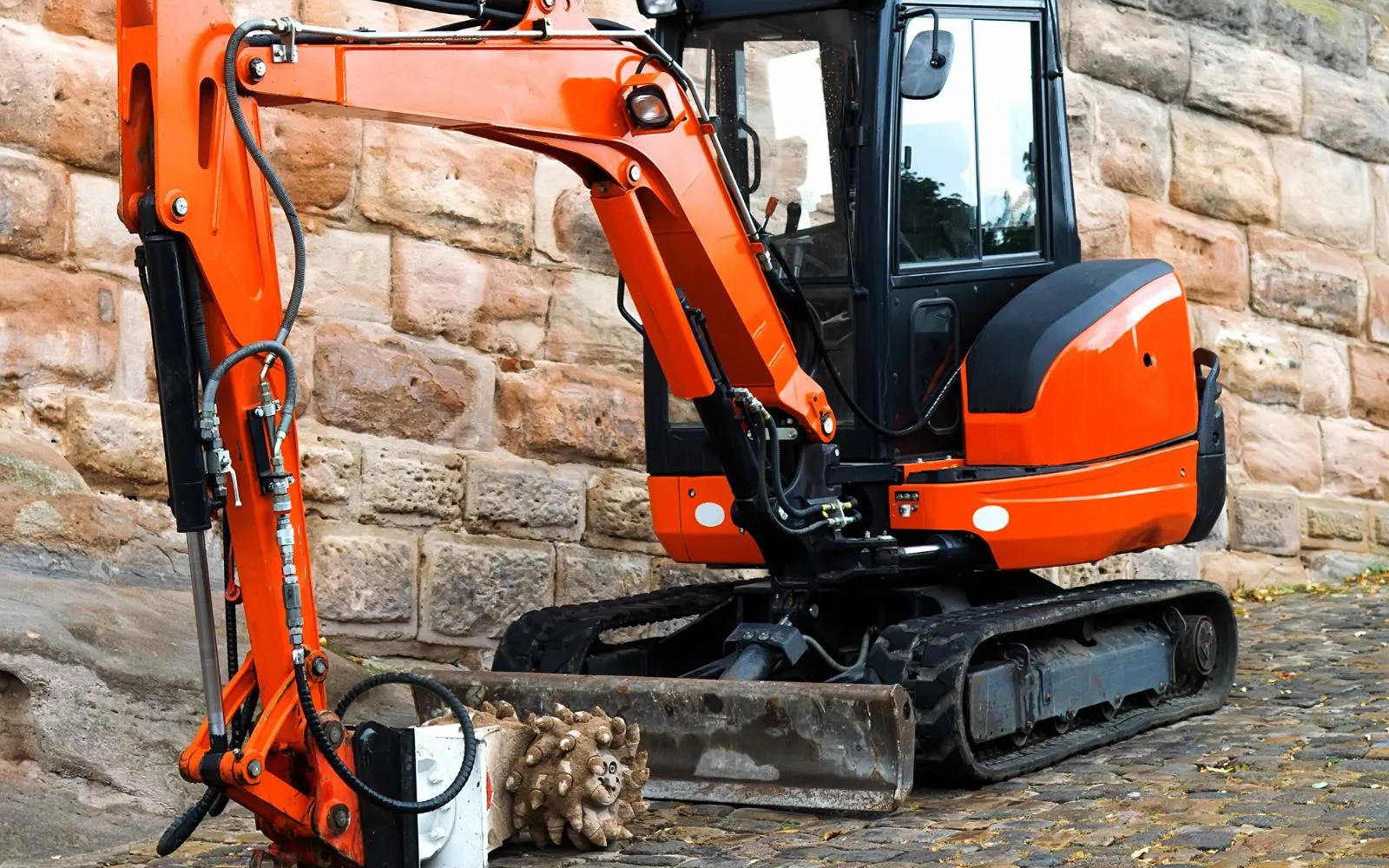
On very small excavators, the penalty is proportionally larger. A tiltrotator that is reasonable on a 10-tonne machine can consume a meaningful share of the capacity on a 2-tonne machine. That is why the market also offers lighter tilting couplers for small machines, and why the choice is not automatically “biggest unit that fits.” Tracked versus wheeled configuration also affects how much repositioning the attachment actually saves.
Where It Pays and Where It Does Not
A tiltrotator earns its cost on work with frequent changes in direction and a high finishing content: ditching, shoulder work, swales, grading around structures, landscaping, utility restoration, and tight sites where repositioning is expensive or impossible. It also reduces manual shovel and rake work, which is a labor cost and a safety exposure at the same time.
It is a poor fit for high-production mass excavation, where the machine's job is to dig and load in a straight cycle all day. The extra weight, height, and joints add nothing to a repeated loading pass. The same applies to heavy rock breaking and structural demolition, where the attachment is exposed to impact loads it was not designed to absorb. On those jobs, a plain coupler and the right tool are faster and cheaper.
The Operator Learning Curve
The controls are not difficult, but the habits take time. An experienced operator has spent years using the stick and bucket as a single rigid tool, and a tiltrotator breaks that assumption. The first weeks are usually marked by over-correction: too much tilt, rotation used where a simple curl would do, and grade checks made less often because the bucket looks right.
Two habits shorten the curve. First, set the tool square and confirm the reference before starting a pass, exactly as an operator would with a plain bucket. Second, use the tilt to match the grade rather than to chase it; a bucket tilted to the design slope will cut a consistent surface, while a bucket adjusted continuously will produce a wavy one. The fundamentals in how to operate an excavator still apply.
Buying Checklist
- Confirm the machine class and the actual machine. Model, stick length, coupler standard, and hydraulic flow — not just operating weight.
- Get the weight and building height in writing and compare them against the machine's lift chart and dig depth.
- Check the hydraulic requirement. Flow, pressure, number of circuits, and whether the base machine needs a valve or pump upgrade.
- Verify the coupler standard and safety features. EN 474 and ISO 13031 compliance, plus the locking method and any sensing.
- Decide direct connect versus sandwich mounting. A direct connect replaces the quick hitch; a sandwich unit mounts between the existing hitch and the tool and keeps the machine's original coupler.
- Confirm installation and sign-off. Use a qualified installer and keep the documentation for warranty and resale.
- Price the tools, not just the unit. Buckets, a grading bucket, a ditch bucket, and any hydraulic tools all need to be compatible.
- Check parts and service support before buying, not after the first seal fails.
On the cost side, a tiltrotator is a capital purchase that only makes sense against the hours it will save. The same utilization logic that governs renting versus owning an excavator applies here: if the machine runs finishing and ditching work most weeks, the attachment earns its place. If it loads trucks, it does not.
Buy it for the work it changes, not for the work it repeats. On ditching, grading, and tight-access finishing, it is one of the few attachments that genuinely replaces a second machine and a shovel hand. On a production loading cycle, it is expensive ballast.