Test Pits and Utility Potholing

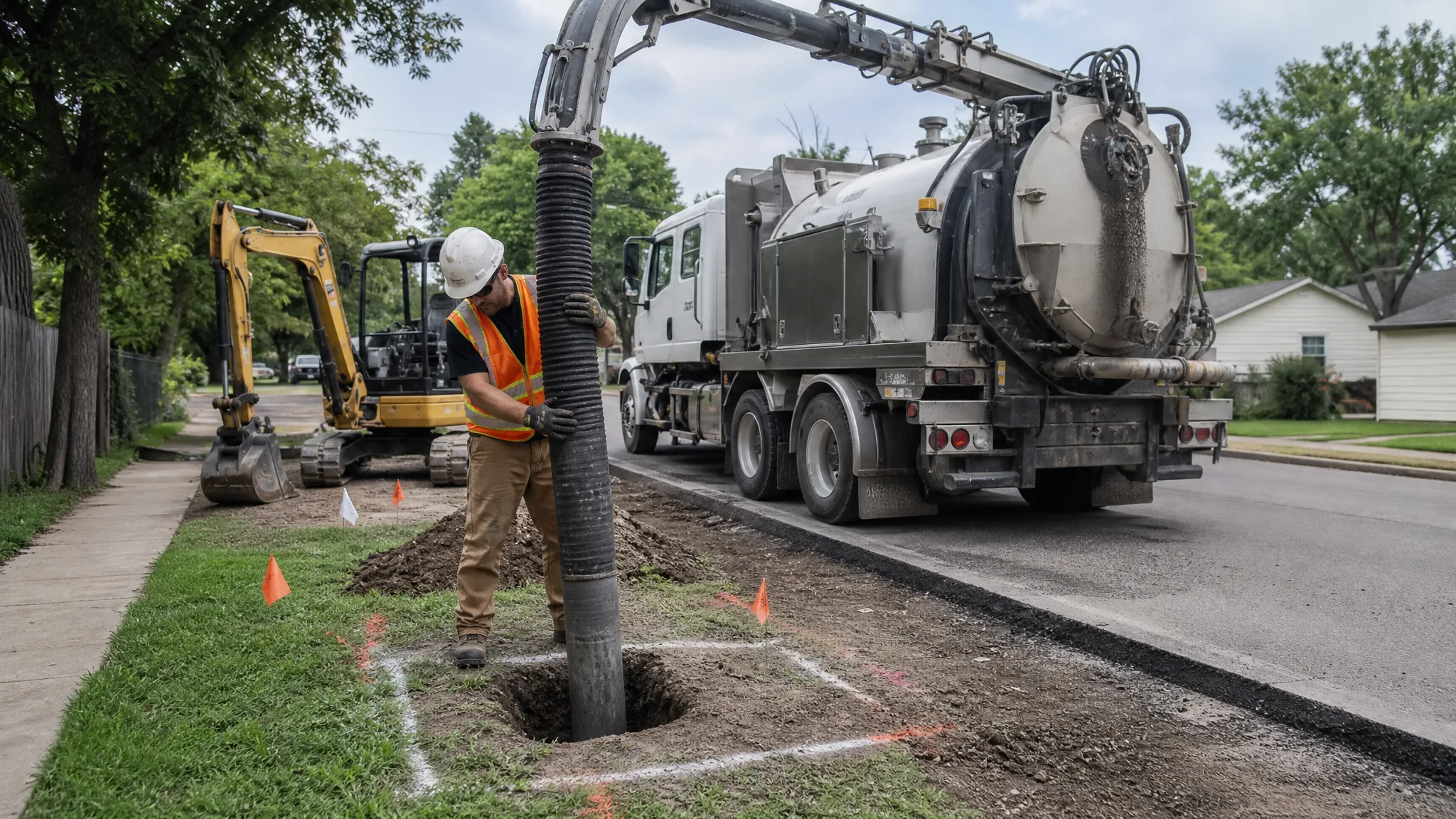
Every excavation starts with an estimate of where the utilities are, and every estimate has a margin of error. Potholing exists to close that gap: a small, deliberate hole dug with vacuum equipment or by hand until the line is visible, so the crew knows its exact position and depth before a machine bucket goes anywhere near it.
The practice goes by several names, and the work is often treated as an afterthought on the schedule. On jobs where a strike would mean an outage, a fine, or an injury, it is one of the cheapest risk transfers available.
What a pothole actually proves
Locate marks are an approximation. The 811 service marks the expected horizontal path of a buried line, usually to a stated tolerance, and it does not tell you the depth, the material, the condition of the pipe or cable, or whether a second line runs beside it. That is not a criticism of locating — it is a description of what a surface mark can do.
A pothole converts an estimate into a measurement. Once the line is exposed, a crew can see its horizontal position, its depth, its size and type, and any existing damage. That information is what lets a drill path, a trench line, or a foundation excavation be planned with real clearances instead of assumed ones.
If you have not worked through the locate process itself, the ground rules are in calling 811 before you dig.
A pothole is an excavation, and OSHA treats it that way
Small hole does not mean exempt hole. OSHA defines an excavation as any man-made cut, cavity, trench, or depression formed by earth removal, and a pothole meets that definition the moment soil comes out. That means the requirements in 29 CFR 1926.651 apply to it.
The clearest hook for potholing is paragraph (b)(3): when excavation operations approach the estimated location of underground installations, the exact location must be determined by safe and acceptable means. The same section requires the estimated location of utilities to be established before the excavation is opened, and requires installations to be protected or supported while the excavation is open.
The practical consequences are familiar to anyone who has run a trench crew. Any excavation five feet or deeper needs a protective system unless it is entirely in stable rock, per 29 CFR 1926.652(a)(1). Spoil and equipment stay back from the edge rather than piled beside the hole. Trenches four feet or deeper need a means of egress within 25 feet of lateral travel. Air monitoring is required before entry where a hazardous atmosphere exists or could reasonably be expected — worth remembering in landfill areas or around fuel lines.
Most utility potholes stay shallow and narrow, which is precisely why crews get casual about them. A one-foot-square hole two feet deep is a low-risk excavation; the same hole beside a gas main in saturated ground, with a worker kneeling at the edge, deserves the same planning as any other dig. Our guides to when trench protection is required and choosing a trench protective system cover the decision points.
Test pit, pothole, daylighting, keyhole: sorting out the terms
The vocabulary overlaps, and the overlap causes real confusion on job sites.
- Potholing is the task: excavating to expose a buried utility so its position can be verified.
- Daylighting means digging until the line is visible, or literally sees daylight. Crews use it interchangeably with potholing.
- Keyholing describes the small, precise hole the method leaves behind, the kind that can be restored with a patch rather than a repaving crew.
- Soft digging is the category: any method that loosens soil with water or air rather than a mechanical blade.
- Test pit usually means something different — a pit dug for geotechnical or design information, such as finding bearing soil, verifying fill depth, or checking for a buried foundation. It answers a soil question, not a utility question.
Both kinds of hole appear on the same project, and both need a plan for what happens after the information is collected. Soil test pits feed the geotechnical picture described in what a geotechnical report covers, while utility potholes feed the clearance plan.
Hydro or air: choosing the soft-dig method
Both methods expose a line without a metal edge touching it. The choice usually comes down to ground conditions and what you can do with the spoil.
Pressurized water cuts compacted soil, heavy clay, and cobble faster, which is why hydro excavation is the default for crews that pothole daily. The trade-offs are wet spoil that is heavier to handle and often has to leave the site, plus an onboard water supply that limits run time between refills.
Air excavation produces dry spoil that can frequently go straight back in the hole, and it displaces less soil — an advantage near roadbeds and structures where washout or overcut is a concern. It is generally slower in hard, compacted ground.
Either way, the machine is a vacuum first. Soil is loosened and then lifted to an onboard tank, so hose diameter, airflow, and suction have to match the material. A three-inch hose handles most utility potholing spoil; cobble and wet clay come out more easily with a four-inch hose and a larger blower. Our overview of air vacuum and suction excavation covers the equipment side in more depth.
How big and how deep to dig
Smaller is better, up to the point where the hole stops answering the question. A typical utility pothole runs about one foot by one foot, which exposes the line and leaves a patch instead of a repaving job.
Depth is set by purpose. To verify a crossing, dig until the utility is fully visible from above and, where a bore or trench will pass beneath it, until the bottom of the utility is exposed so the clearance below can be measured. A hole that stops at the top of a pipe tells you where the pipe is but not whether the drill will clear it.
Start small and expand only as needed. Enlarging a hole is cheap; filling a crater is not. And if the marks and the pothole disagree, stop and treat that as the finding — a mismatch is information, not an inconvenience.
Running the nozzle: the habits that protect the line
Damage during potholing usually comes from the tool, not the soil. A few operating habits prevent most of it:
- Keep the nozzle moving. Working one spot concentrates pressure and can cut into a coating or a conduit.
- Hold a standoff. Published guidance puts the nozzle roughly six to eight inches away from the utility rather than against it.
- Never use the nozzle as a shovel. Driving it into the ground clogs the tip and puts water pressure where it should not be.
- Use the right pattern. A rotating or oscillating nozzle and a wider spray cone cut soil without focusing a stream on the line.
- Warm the water for clay, carefully. Hot water helps break down heavy clay, but equipment guidance keeps the temperature below about 150 degrees Fahrenheit for the machine's sake.
Hand digging still has a place — inside the tolerance zone defined by state law, in tight spots the truck cannot reach, and where a vacuum unit cannot get water. State rules commonly require non-mechanical excavation within a set distance of the marks; confirm the number that applies to your state rather than assuming it matches the last one you worked in. Working carefully inside that zone is covered further in tight-access excavation.
Where potholes belong in the job plan
Potholing is cheapest when it is scheduled as a design and planning activity rather than an emergency. The usual places it earns its cost:
- Every crossing on a bore path. Expose the lines the new bore will pass under and confirm clearance before the drill head arrives.
- Tie-in points. Confirm the size, material, and depth of the existing main before ordering fittings.
- Before trenching near the edge of the tolerance zone. Prove the line's actual position so the trench can be laid out with a working clearance.
- Before foundations, pads, and utility work on developed sites. Old services, abandoned lines, and private utilities do not always appear on the ticket.
- At drainage crossings. Confirm what a new culvert or storm line will pass over, which is the same clearance logic used in installing storm drain pipe.
Private utilities — irrigation, landscape lighting, a shop feeder, a fuel line to an outbuilding — are the classic gap. They are not marked by 811 because they are not the utility's, and they are frequently the line that gets hit. Subsurface investigation for those is covered in subsurface mapping before excavation.
Spoil, water, and restoring the hole
Hydro spoil is a slurry that has to go somewhere legal. Onboard tanks handle small volumes; larger jobs need a dewatering or disposal plan, and muddy water never goes to a storm inlet. Dry air-excavated spoil is easier, but it still needs a place to sit while the hole is open.
Restoration is part of the job, not an afterthought. Backfill in shallow lifts and compact what will carry traffic or pavement, rather than dropping the spoil back and tamping the top inch. A pothole in asphalt wants a proper patch; a pothole in turf wants topsoil and seed. Either way, the hole should not be the thing the client remembers about the project.
Open holes left overnight need barricades, covers, or backfill. An unattended one-foot hole in a sidewalk or a driveway is a trip hazard with a predictable claim attached. General practice for spoil placement and protection is in managing spoil piles.
Documenting what the pothole found
The value of a pothole is the record it produces. Photograph the exposed line with a scale, note the surface elevation and the depth to the top and bottom of the utility, record the material, size, and condition, and tie the location to a station, offset, or GPS point that matches the project's coordinate system.
If the line is not where the ticket said, notify the utility owner and the designer before proceeding. Conflicting records are common, and the pothole is the evidence that resolves them. If the line is damaged — old coatings, exposed conductor, a cracked pipe — document that too, because the crew that finds it should not be the crew blamed for it. The response sequence when something is actually struck is covered in what to do if you hit a utility line.
Common potholing mistakes
Most potholing failures trace back to a short list:
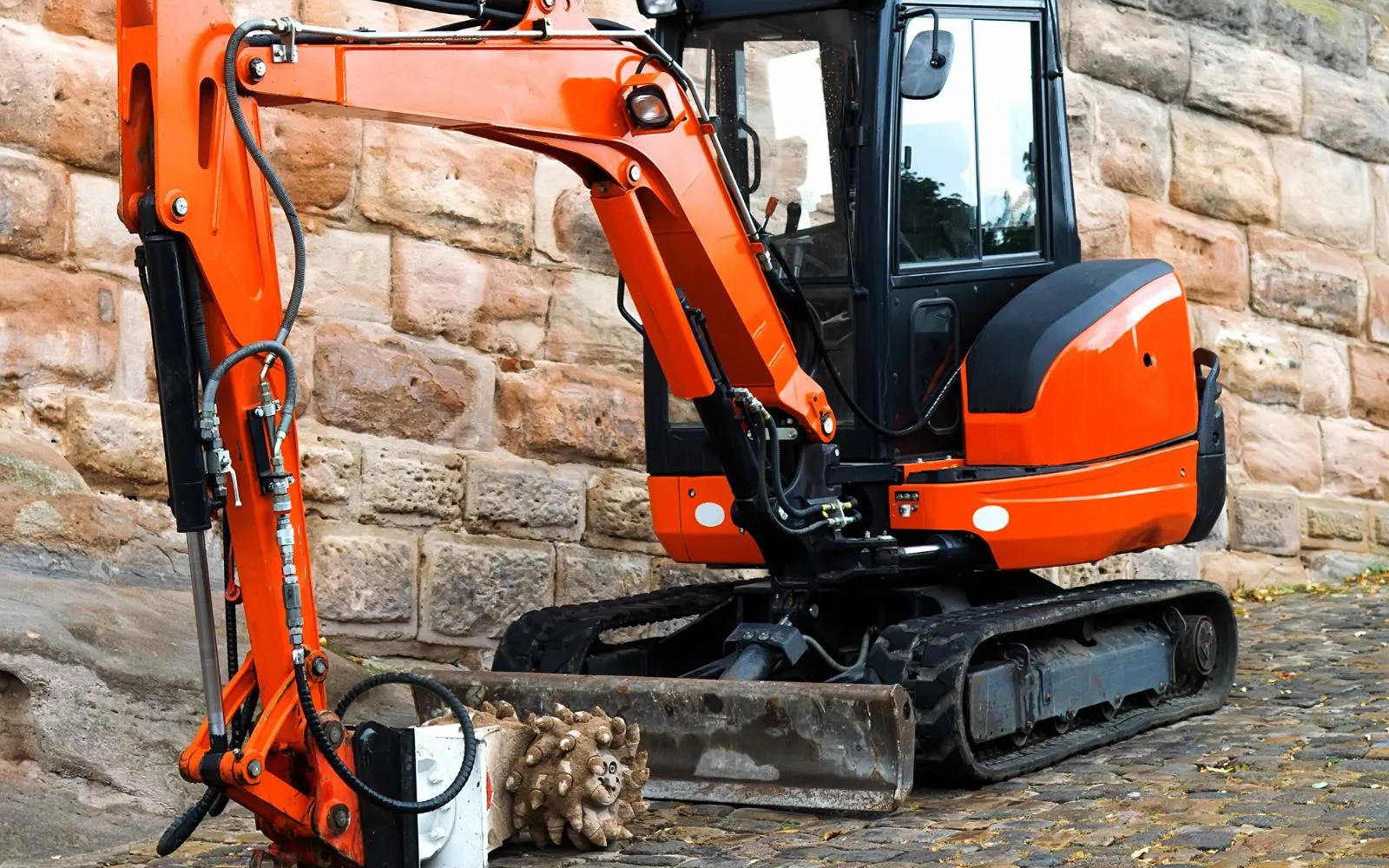
- Digging the hole with an excavator bucket because the vacuum truck is on another job.
- Trusting the marks and skipping the pothole on the crossings that matter most.
- Stopping at the top of the utility when the question was clearance below it.
- Holding the nozzle against the line to speed up the dig.
- Forgetting private utilities entirely.
- Leaving holes open overnight without protection.
- Backfilling without compaction under pavement.
- Recording nothing, so the next crew re-digs the same hole.
None of these cost much to avoid. A pothole is a small, boring piece of work that prevents the expensive, memorable kind — and on a congested corridor, the crew that digs the verification hole is usually the crew that finishes on schedule.