Temporary Construction Entrance


A temporary construction entrance is the stabilized pad where trucks and equipment leave a jobsite and enter a public road, driveway, or paved access route. Its job is simple: knock mud and sediment off tires before that material gets tracked into the street, storm drain, or neighboring property. On larger sites it can include geotextile fabric, large aggregate, wash-down areas, drainage controls, and scheduled maintenance.
The entrance is not just a convenience for clean pavement. Track-out is a stormwater issue, a public-road safety issue, and a sign that the site may not be controlling sediment well. EPA's construction stormwater BMP menu lists construction track-out controls as a sediment-control practice. The exact detail should follow the local permit, plan notes, or inspector's standard.
What a Construction Entrance Does
A construction entrance gives vehicles a stable transition from disturbed soil to pavement. The rock pad flexes and scrapes against tires, the fabric separates stone from soft subgrade, and the controlled path keeps drivers from making new exits through muddy edges. It turns one messy traffic point into a planned control point.
That matters because vehicle tracking can move soil off site. Once sediment reaches pavement, the next rain can carry it to a gutter, inlet, ditch, or waterway. It can also create slippery road conditions and complaints from neighbors. A good entrance supports the broader erosion-control system covered in how to install a silt fence.
The entrance does not replace perimeter controls, inlet protection, stabilization, or good grading. It works with them. If the rest of the site drains mud straight onto the entrance, the pad will clog quickly and stop working.
When You Need One
You need a temporary construction entrance when vehicles travel from disturbed soil onto a paved road, public right-of-way, shared driveway, or other surface where mud cannot be allowed to migrate. That includes residential building sites, demolition jobs, land clearing projects, utility work, commercial pads, road projects, and sites with repeated dump truck traffic.
On permitted construction sites, the entrance is usually shown on the erosion and sediment control plan. On smaller projects, it may still be required by a local building department, stormwater ordinance, driveway permit, or right-of-way permit. Even when it is not formally required, a simple pad may cost less than repeated sweeping and cleanup.
If the site has more than one access point, the contractor should either stabilize each active entrance or physically block unused exits. Drivers tend to take the shortest path unless the site layout makes the correct path obvious.
Where to Put the Entrance
The best entrance location is the one that gives trucks a straight, safe path with enough room to turn without cutting across soft shoulders. It should connect to the work area without forcing vehicles through drainage swales, stockpile runoff, open trenches, or steep slopes. If the entrance sits at the low point of the site, it may become a sump instead of a track-out control.
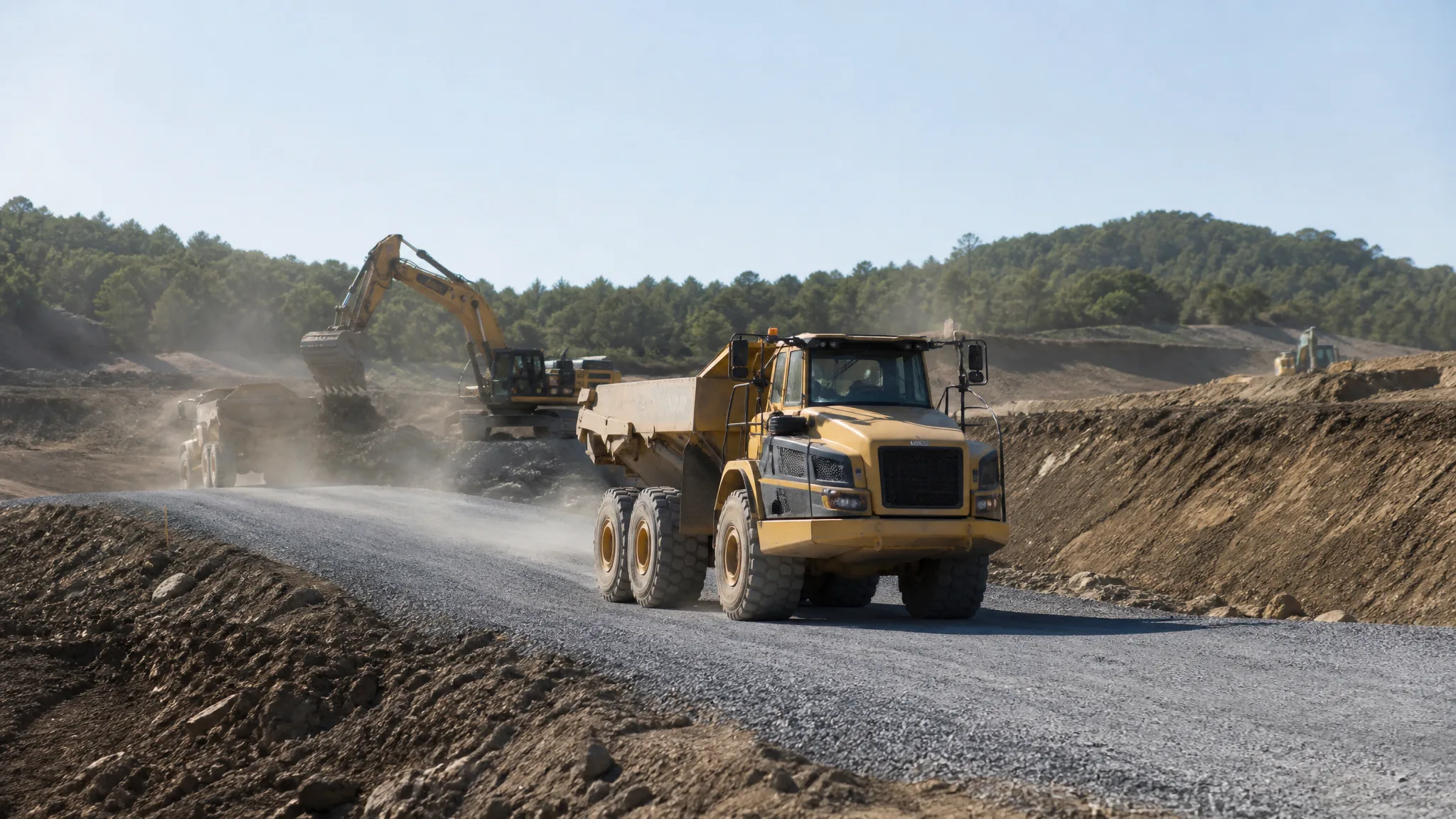
Think about traffic before placing it. Dump trucks need turning radius, sight distance, overhead clearance, and a firm approach. Concrete trucks, lowboys, and roll-off trucks may need more space than a pickup. CEX covered equipment flow in the role of logistics in construction projects.
Drainage is just as important. The entrance should not concentrate runoff into the street. If water runs across the pad, add upstream diversion, grading, or sediment controls so the stone stays open and does not become a mud conveyor.
Common Construction Entrance Details
Local drawings vary, so there is no single national dimension that fits every site. Many BMP manuals use a rock pad long enough for tires to make several rotations before reaching pavement, wide enough for expected traffic, and thick enough to stay stable over the subgrade. The plan may also call for geotextile, larger aggregate than driveway gravel, and flared approaches.
That combination matters. Small gravel can pack with mud quickly and ride out in tire treads. Round stone can roll and shove under turning traffic. A thin layer can disappear into soft soil. Geotextile helps keep the stone from punching into the subgrade, especially where the entrance is built over clay or wet fill.
The right detail depends on soil, traffic, site duration, local rules, and whether the entrance serves light pickups or loaded trucks. For a heavy-use site, the entrance may need a thicker section, undercutting of weak soil, larger stone, edge containment, drainage, or periodic top-dressing.
How to Build a Temporary Construction Entrance
Start by stripping topsoil, loose organics, and soft surface material from the entrance footprint. The goal is to build on firm subgrade, not vegetation or mud. If the subgrade pumps under equipment, dig out the soft area before placing fabric or stone.
Next, shape the entrance so water does not pond in the wheel path. Install geotextile if the plan calls for it or if separation is needed. Place the specified aggregate in a uniform layer and compact it enough that loaded traffic will not immediately rut it.
Finally, block bypass routes. If trucks can drive around the entrance, they will. Berms, fencing, cones, barricades, spoil placement, or clear haul-road layout can force traffic across the stabilized pad. That same traffic plan should account for spoil handling, which CEX discusses in managing spoil piles on a construction site.
Stone, Fabric, and Subgrade Choices
A construction entrance usually needs larger, cleaner aggregate than a finished driveway surface. The goal is not comfort or appearance; the goal is tire cleaning, stability, and drainage. Fine material fills voids and turns the pad into a muddy mat. Clean, angular stone is typically better for track-out control because it interlocks and leaves open space for mud to fall away from tires.
Geotextile is useful where the ground is soft, wet, or fine-grained. Without separation, truck traffic can knead stone into the soil until the entrance loses thickness. If the soil below is saturated and unstable, the contractor may still need undercutting, a thicker stone section, drainage, or a different access route.
Do not build the entrance out of topsoil, clay clods, crushed fines, or leftover mixed debris. Those materials will track out, rut, and hold water. If recycled concrete aggregate is allowed by the plan, it should be clean and appropriately sized. For base-material considerations, see is crushed concrete a good driveway base.
Maintenance Is What Makes It Work
A construction entrance is not a one-time install. It has to be inspected, cleaned, and refreshed as the job changes. Mud-packed stone cannot clean tires. Rutted wheel paths cannot drain. Stone kicked into the road can become a traffic hazard. If the entrance is doing its job, it will collect sediment and need attention.
Maintenance may include scraping mud off the surface, adding clean stone, regrading the pad, repairing fabric exposure, widening the entrance, sweeping the road, and removing sediment before it reaches inlets. If sweeping is needed, it should remove material rather than washing it into a storm drain.
After storms, the entrance should be checked along with silt fence, inlet protection, stockpiles, ditches, and disturbed slopes. If runoff crosses the pad, fix the drainage source. CEX's guide to creating effective drainage systems during excavation explains why controls fail when water is allowed to concentrate in the wrong place.
Track-Out Control and Street Cleanup
Even a well-built entrance may not remove every bit of mud during wet weather. That is why the site needs a cleanup plan. Mud tracked onto pavement should be removed promptly, especially near intersections, driveways, storm drains, and pedestrian areas. Waiting for traffic to grind it down only spreads the sediment farther.
Street cleanup should be paired with source control. If the same road section has to be swept every day, the entrance may be too short, too narrow, too muddy, poorly drained, or placed in the wrong location.
For projects with severe mud, some plans add tire wash stations or wash racks. Those systems need contained water, sediment management, and a legal discharge path. Washing tires into the street, ditch, or storm inlet defeats the purpose of the control.
Common Mistakes
The most common mistake is using ordinary driveway gravel as a thin dressing over mud. That creates a dirty access path, not a construction entrance. Another mistake is making the pad too narrow for turning trucks, so drivers track mud around the edges. A third is skipping geotextile on soft soil and watching the stone vanish into the subgrade.
Poor placement causes problems too. An entrance at the bottom of a muddy haul road will clog quickly. An entrance with no drainage will hold water. An entrance with no physical edge control will be bypassed. These mistakes usually cost more in maintenance than a better initial layout would have cost.
Do not forget utility and excavation safety near the entrance. If the access route crosses new utilities, culverts, trenches, septic work, or shallow drainage lines, protect them before heavy trucks use the route. For buried utility planning, read calling 811 before you dig and installing a driveway culvert.
How It Fits the Rest of the Site Plan
A temporary construction entrance is one part of a bigger jobsite plan. It should work with grading, drainage, silt fence, inlet protection, stabilized stockpiles, concrete washout, dumpster placement, and the sequence of work. If land clearing, excavation, and hauling are scheduled before access is stabilized, the site can make a mess before the real work even begins.
The entrance also helps with job costing. It takes material, labor, equipment time, and maintenance. On short jobs, it may be a small line item. On wet or long-duration jobs, it can become a recurring task. Contractors should include it in the bid instead of treating it as an afterthought. CEX's article on how to estimate an excavation job covers why small site controls still belong in the estimate.
The best temporary construction entrance is easy for drivers to use and hard for them to avoid. It starts on firm ground, uses the right stone, sheds water, gets maintained, and connects to a site layout that keeps muddy traffic under control. That is how a simple rock pad becomes a real sediment-control tool.