Subgrade, Subbase, and Base Course

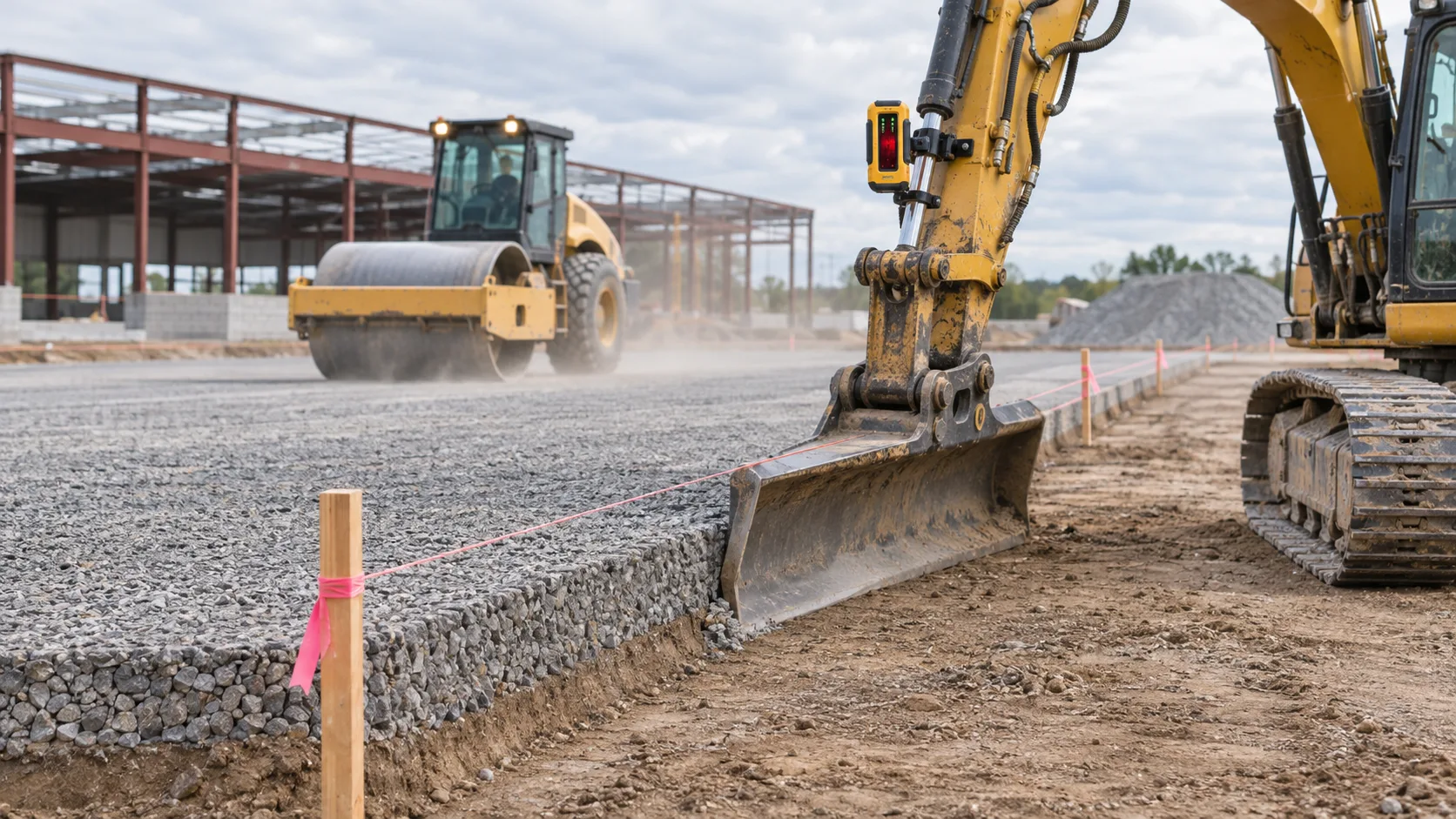
Most people judge a road, driveway, or parking lot by the surface they can see. The layers underneath decide whether that surface is still there in ten years. Subgrade, subbase, and base course are three different things doing three different jobs, and the words get used interchangeably on far too many jobsites. Getting them straight is the difference between a pavement that carries loads and one that ruts, pumps, and cracks while the contractor is still on site.
The Four Layers, Bottom to Top
The Federal Highway Administration's geotechnical reference manual, developed from the NCHRP 1-37A work, defines the components plainly. The subgrade is the top surface of the roadbed upon which the pavement structure and shoulders are built. The subbase is one or more layers of specified or selected material of designed thickness placed on the subgrade to support a base course. The base is the layer or layers placed on the subbase or subgrade to support a surface course. The surface course is the traffic-bearing layer at the top.
Two practical notes follow. A subbase is optional and a base is not. And the layer directly beneath a concrete slab is called the base layer, not the subbase, even though it may look like what an asphalt crew would call a subbase. If a plan set and a foreman disagree about which layer is which, the cross-section and the pay items settle it.
What the Subgrade Really Does
The subgrade is the soil that was already there, or the engineered fill that replaced it. FHWA's manual is blunt about why it matters: stiffness, not strength, is the most important mechanical property of unbound pavement materials, because the relative stiffness of each layer dictates how stresses and strains distribute through the system.
The manual shows the consequence directly. Subgrade stiffness influences the horizontal tensile strain at the bottom of the asphalt and the vertical compressive strain at the top of the subgrade. Those two numbers are tied to fatigue cracking and rutting respectively. A soft subgrade does not just settle a little; it changes the whole load path and shortens the pavement's life. It also has to carry every loaded truck and roller that crosses the site before paving, which makes it a construction platform as well as a foundation.
Preparing the Subgrade
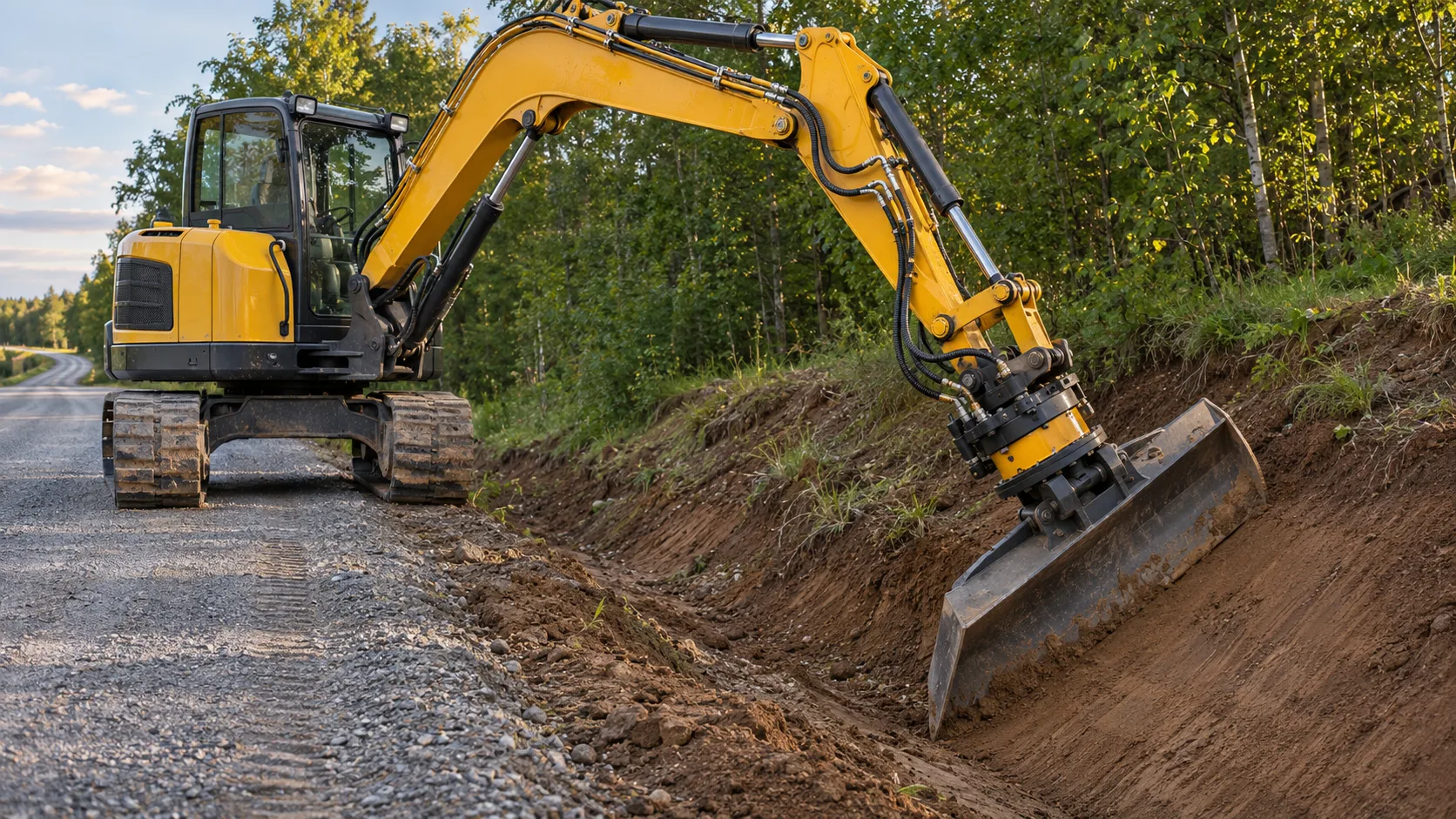
Preparation starts with removal. Organic material, roots, topsoil, old fill, and any soft or unsuitable soil come out before anything is placed. In cut areas, the exposed soil is then scarified, moisture-conditioned, and compacted.
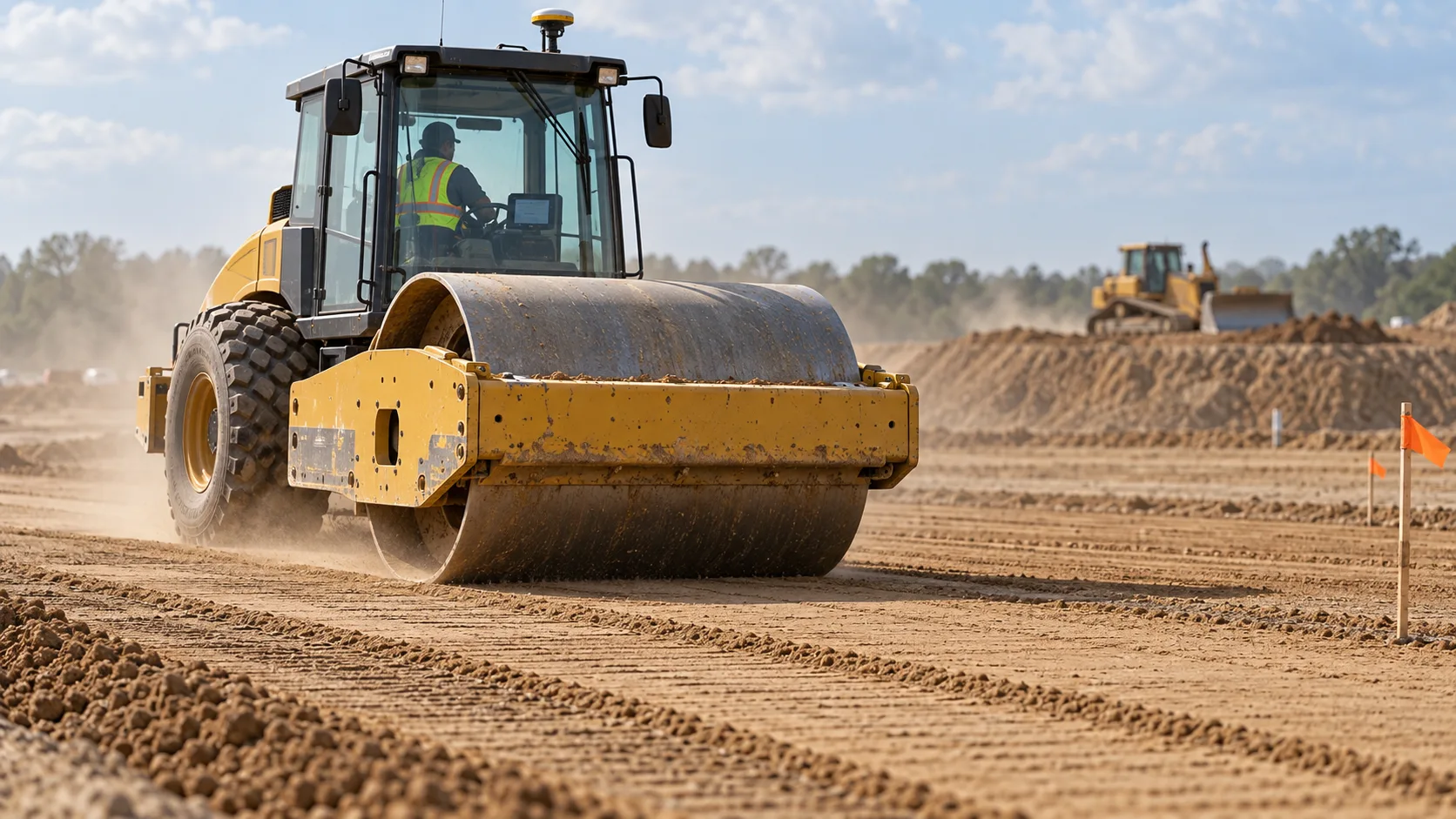
Compaction requirements come from the specification. FHWA notes that specifications commonly require a minimum relative compaction, with 95 percent of maximum dry density a typical figure for subgrades, subbases, bases, and embankments. That density is measured against a laboratory curve, usually AASHTO T-99 for standard Proctor or T-180 for modified. The number only means something when it is tied to the right curve and the right material.
Density tests do not find everything. A proof roll does. A loaded tandem-axle dump truck or a fully ballasted roller walked across the finished subgrade will reveal soft spots, pumping, and deflection that a passing gauge test missed. Proof rolling is the cheapest inspection on the job and the one most often skipped under schedule pressure.
The classic soft spot is a utility trench. A trench backfilled in thick lifts, or backfilled wet, will consolidate under the pavement and leave a longitudinal dip. That is why trench backfill under pavement needs the same compaction discipline as the rest of the subgrade, and why compaction testing matters more at a crossing than in an open field. When a test does fail, the cause is usually moisture, lift thickness, or material, not the roller operator — the usual reasons compaction tests fail are worth reading before blaming the machine.
When a Subbase Earns Its Place
A granular subbase sits between the subgrade and the base. Its purposes are to reduce the stress applied to the subgrade, provide drainage for the pavement structure, and act as a separation layer that keeps fine subgrade particles from migrating upward into the base.
It also lets an agency use a lower-quality material than the base course requires. The subbase is generally made of material better than the subgrade but not as select as the base. That cost gradient is the reason the layer exists: you do not pay base-course prices to build thickness that only needs to spread load and drain.
Not every job needs one. A strong, well-drained granular subgrade under light traffic may support a base directly. A fine-grained or wet subgrade under heavy traffic usually benefits from a subbase, and sometimes from a stabilised or geosynthetic-reinforced one. That decision belongs to whoever designed the section, not whoever is running the grader that morning.
What the Base Course Is For
FHWA lists the base course functions under rigid pavement as providing uniform and stable support, minimising frost effects, providing drainage, preventing pumping of fine-grained soils at joints, preventing volume change in the subgrade, increasing structural capacity, and expediting construction. Under flexible pavement, the prime function is structural: added stiffness, resistance to fatigue, and enough thickness to distribute load through a finite depth. The base may also drain and protect against frost where needed.
That list is a good checklist for judging a base under construction. If the material is contaminated with fines, it will not drain and it will pump. If it is placed too thin, it will not distribute load. If it is placed dry and loose, it will not have the stiffness the design assumed.
What Good Base Material Looks Like
Base aggregate has to be hard and durable, not just locally available. FHWA's minimum guidance calls for at least two fractured faces and preferably 98 percent crushed stone, a Los Angeles abrasion loss no greater than 45 percent under AASHTO T 96, and a soundness loss no greater than 12 percent in sodium sulfate or 18 percent in magnesium sulfate under AASHTO T 104. For a permeable base, the gradation must allow free water movement and the material passing the No. 40 sieve should be non-plastic under AASHTO T 90.
Dense-graded crushed stone is the default because it compacts into a tight, stiff matrix. Open-graded material drains better but depends on confinement. Aggregate size designations matter less than the gradation and fracture count behind them, which is why a cheap pit-run material can look right and test wrong. Recycled material can work: crushed concrete as a driveway base performs well when it is properly graded and free of deleterious material, but it generates more fines and paste than virgin stone, and a base that holds water is a base that moves under load.
How Thickness Gets Decided
Base thickness is an output of pavement design, not a rule of thumb. In the AASHTO framework, each layer is assigned a structural layer coefficient based on its stiffness, and the required structural number is built up from traffic and subgrade support. A stronger base material earns a higher coefficient, which means less thickness is needed to do the same structural work. A weaker subgrade demands more total structure.
That is why copying the section from the job across the street is a bad habit. The traffic may differ, the subgrade certainly does, and the drainage conditions are never identical. It is also why a grading plan and a pavement section drawing should be read together; reading a grading plan gives the elevations and limits, while the section tells you what fills the space between them.
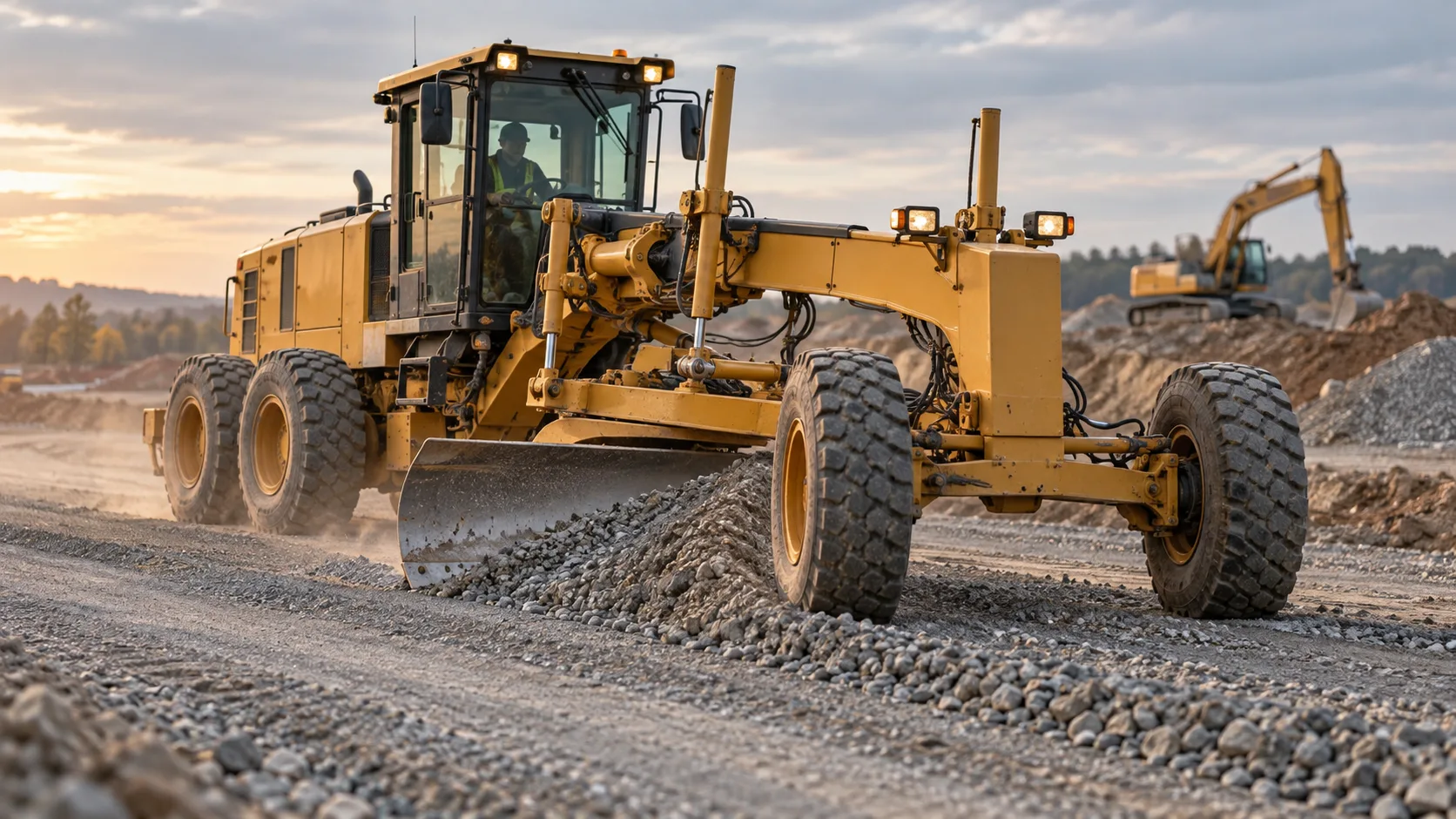
What the field controls is execution. Lifts go in at the thickness the specification allows, each lift gets the passes the test strip proved, and the moisture stays near optimum. The thickness that gets built is the thickness that was designed.
Drainage and Separation
Water is the mechanism behind most pavement distress. It softens the subgrade, carries fines into the base, and freezes and expands. Three details do most of the work: shape, separation, and outlet. The subgrade and each aggregate layer are shaped to shed water, the cross-section is crowned or sloped to an edge, and the edge has somewhere to discharge.
FHWA notes that geotextiles are used as separation layers to hold subgrade material in place and prevent it from contaminating the base. On a soft subgrade, a separator or a geogrid can also improve constructability by letting the first lift bridge rather than mix. The distinction matters: geogrid and geotextiles do different jobs, and using the wrong one wastes money without solving the problem.
Field Checks Before the Surface Goes On
Once the base is down, there is a short window to catch problems before they are buried. A practical sequence:
- Proof roll the subgrade before any aggregate is placed, and mark every soft spot for undercut or rework.
- Verify density at the specified frequency, and check that the test is running against the correct material curve.
- Check thickness by probing or by surveying before and after placement; a base that is an inch thin over a large area is a structural deficiency, not a rounding error.
- Check grade and crown against the plan, using the stakes and control set for the job rather than the operator's eye.
- Look for segregation and contamination — streaks of fines, clay smeared into the surface, or material trafficked wet.
- Photograph and record elevation, thickness, moisture condition, and test results for each area before the next layer covers it.
The Failures That Trace Back to These Layers
Rutting in the wheel paths usually means the subgrade or base was too weak or too wet for the load. Pumping at joints and edges means fines are moving under repeated loading, which points to a drainage or erodibility problem. Longitudinal cracking near the edge often follows a soft shoulder or a base that lost support. Settlement in a straight line across a pavement is almost always a trench. Frost heave shows up as a pattern of cracks and bumps that follows the soil, not the traffic. Expansive clay adds another mechanism entirely, because the subgrade itself changes volume with moisture; expansive clay and foundations covers how that behaviour is identified and managed.
A pavement is a load-distribution system, and every layer has a job: the subgrade supports, the subbase separates and spreads, the base stiffens and drains, and the surface wears. When one job is skipped, the others get overloaded and the failure appears at the top where everyone can see it. Strip what does not belong, compact the subgrade to the specified density, prove it with a loaded roll, place the right aggregate in the right lift thickness, and give the water a way out. The surface is the advertisement. The layers underneath are the product.