Soil Swell and Shrinkage Factors Explained


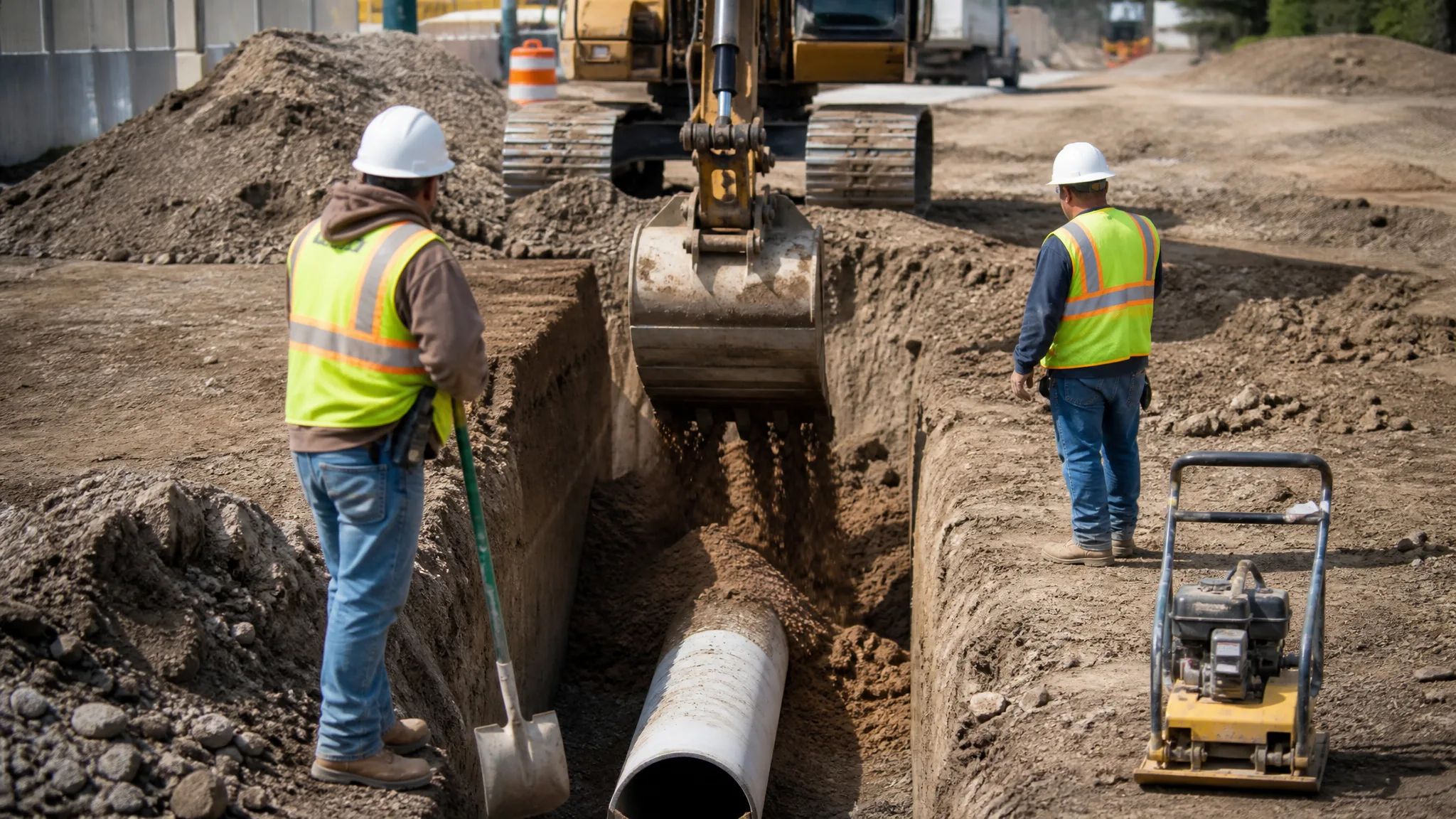
Ask three people on the same jobsite how much dirt a project will move and you can get three different answers. The math is usually fine. The problem is that soil changes volume every time it is handled: it measures one way in the ground, another way in the truck, and a third way after it is compacted. Swell and shrink factors are the bridge between those numbers, and on a dirt job they are the difference between a bid that holds and one that bleeds money.
Why One Cubic Yard Isn't Always One Cubic Yard
A cubic yard is a fixed amount of space, but a cubic yard of soil is not a fixed amount of soil. Dig it out and it fluffs up, because the digging breaks apart the packed structure and adds air voids. Put it back and roll it, and it gets denser than it was in some cases and still looser in others. Every quantity on an earthwork plan has to be labeled with the condition it was measured in, or nobody knows what they are really talking about.
That ambiguity is expensive. A bid that says "10,000 cubic yards of fill" without saying whether that is in-place, loose, or compacted can swing 10 to 30 percent in cost depending on how the contractor reads it. The fix is to learn the three states and always state which one you mean.
Bank, Loose, and Compacted: The Three Volume States
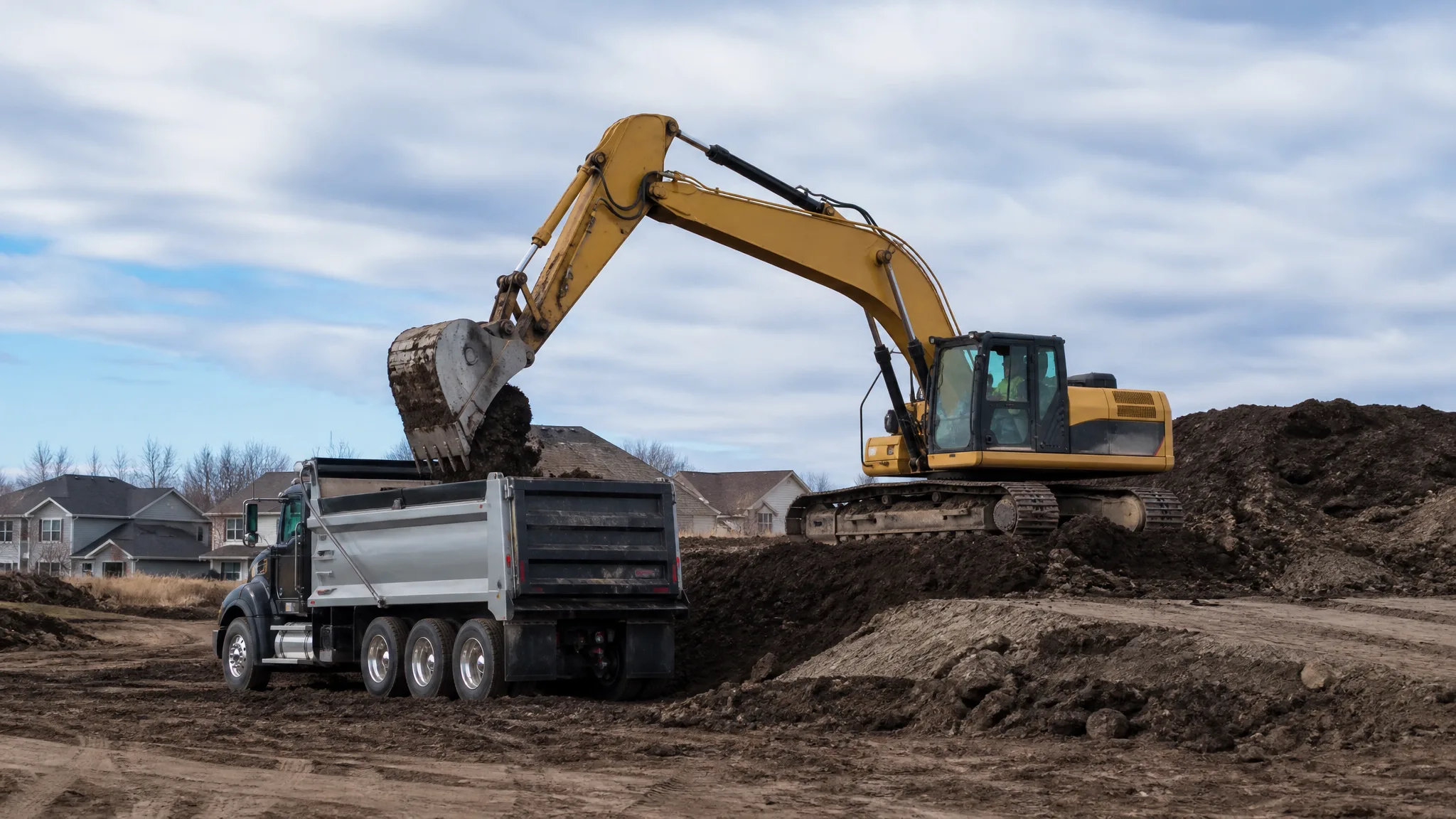
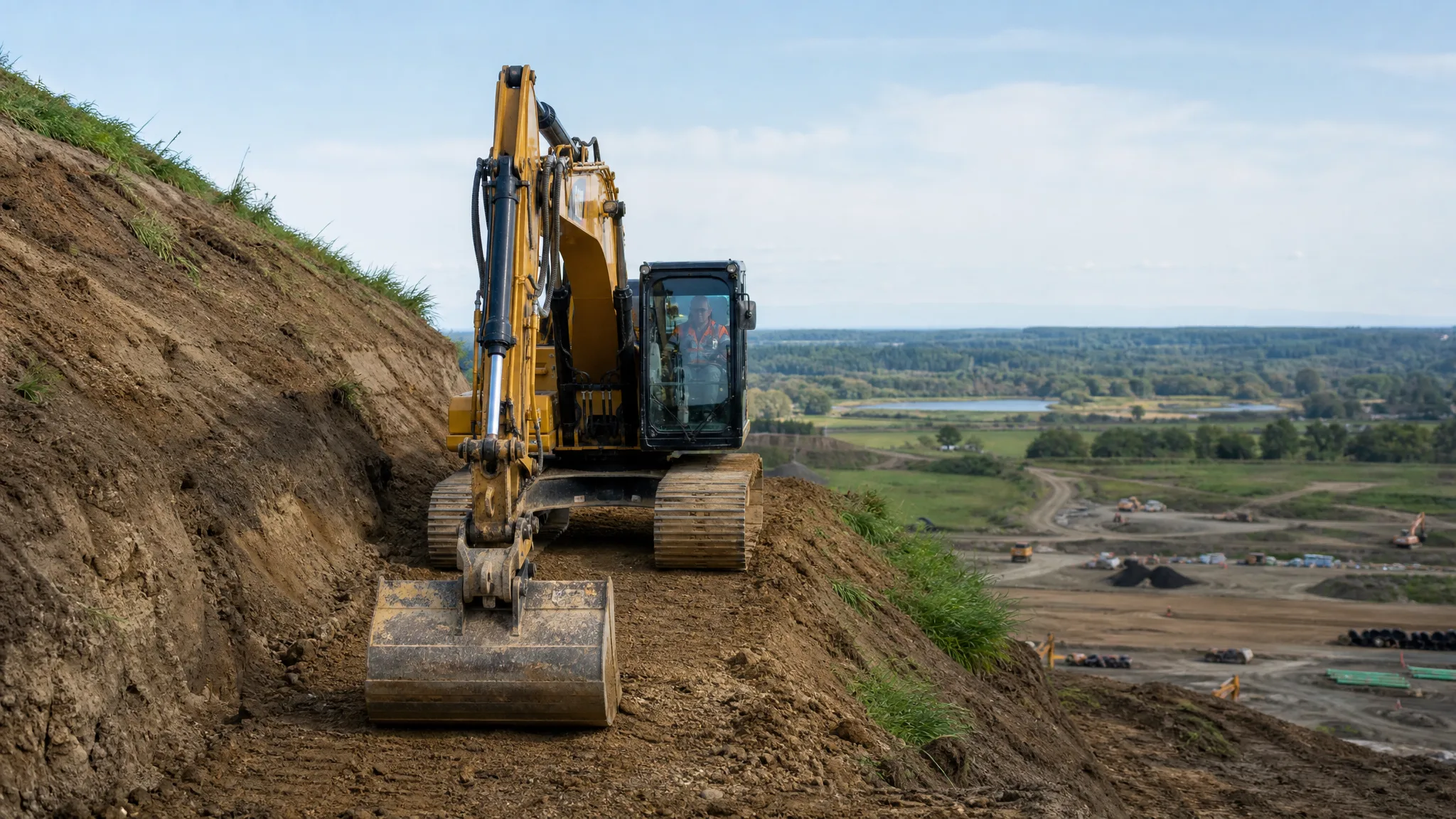
Bank cubic yards (BCY) are soil in its natural, undisturbed state in the ground. This is what a takeoff measures in a cut area. Loose cubic yards (LCY) are soil after excavation, sitting in a truck bed or a stockpile. Compacted cubic yards (CCY) are soil after it has been placed in a fill and rolled to the density the spec requires.
One bank yard becomes more than one loose yard when you dig it, and it becomes less than one bank yard when you compact it to specification. Those two conversions are what swell and shrink describe.
What Swell Actually Measures
Swell is the percentage volume increase from bank to loose. If 10 cubic yards in the ground become 13 cubic yards in the pile, the swell is 30 percent. The formula is simple:
- Swell % = (loose volume − bank volume) ÷ bank volume × 100
- Swell factor (also called the bulking factor) = loose volume ÷ bank volume = 1 + swell%
A 30 percent swell gives a swell factor of 1.30. Multiply bank yards by the swell factor and you have loose yards. That is the number that matters when you are loading trucks or sizing a stockpile, because a truck carries loose material.
Typical Swell Percentages by Soil Type
Published reference values give a reliable starting range. Sandy soils and clean gravel swell the least — roughly 10 to 15 percent — because their particles are already close to their loosest packed arrangement. Common earth such as loam and sandy clay swells about 20 to 30 percent. Heavy plastic clay swells 30 to 40 percent. Blasted or ripped rock swells the most, commonly 40 to 65 percent, because solid rock starts with almost no voids and a pile of broken fragments is full of them.
Wider reference tables break it down by material. Common published figures include sand around 11 to 12 percent, gravel about 12 to 15 percent, earth or loam about 25 percent, clay about 35 to 50 percent, hardpan about 50 percent, and well-blasted rock around 65 percent.
Load Factor: The Number You Multiply By
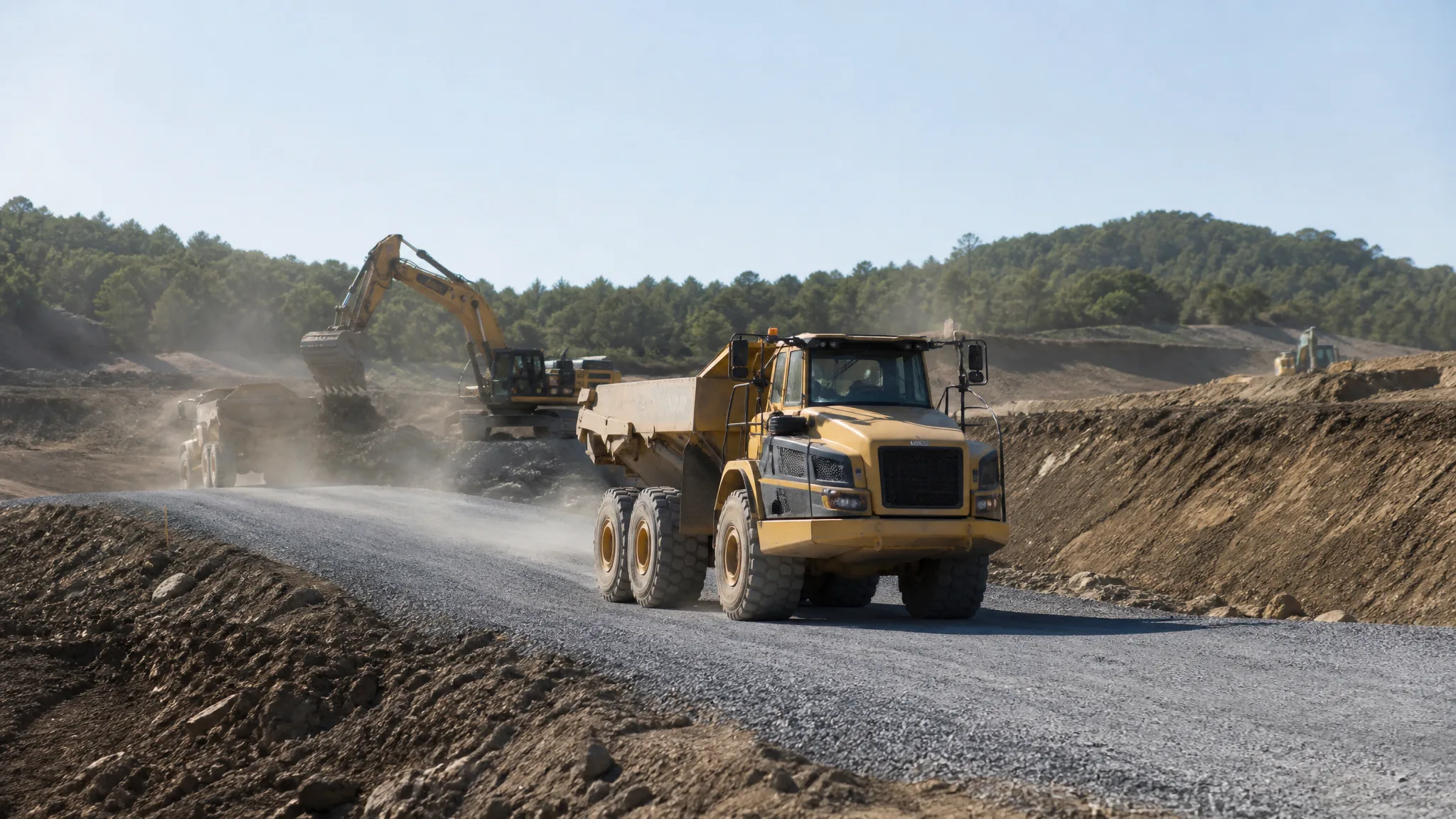
The load factor is the reciprocal of the swell factor: bank volume divided by loose volume. A 25 percent swell gives a load factor of 0.80. If a dump truck is rated to hold 20 loose cubic yards, it actually hauls only 16 bank cubic yards per load (20 × 0.80).
Load factor exists so estimators can convert a truck's loose capacity into the bank yards that show up on the plan. Skip it and you will undercount loads every time, because a truck that looks like it holds 20 yards of "dirt" is only carrying about 16 yards of the ground you were paid to move.
Shrinkage and the Shrink Factor
Shrink is the other direction. When excavated soil is placed in lifts and compacted, it can end up with less volume than it had in the bank, because the compaction drives out the voids the excavation created. The shrink factor is compacted volume divided by bank volume, written as a decimal.
- Shrink factor = compacted volume ÷ bank volume (for example, 0.90)
- Bank yards needed per compacted yard = 1 ÷ shrink factor (1 ÷ 0.90 = 1.11 BCY per CCY)
Typical published shrink ranges are about 5 to 12 percent for sand and gravel, 10 to 15 percent for common earth, and 15 to 25 percent for heavy plastic clay. The reverse of shrink is why a cut area rarely produces as much fill as its bank yardage suggests.
Worked Example: From Cut to Truck to Fill
Say a contractor excavates 2,000 bank cubic yards of common earth with a 25 percent swell. The loose volume is 2,000 × 1.25 = 2,500 loose cubic yards. If the trucks carry 20 loose yards each, the haul is 125 loads — not the 100 loads someone would guess from the bank number alone.
Now the other half. That same 2,000 bank yards, compacted with a 12 percent shrink, produces about 1,760 compacted yards of fill (2,000 × 0.88). If the site needs 2,000 compacted yards, the cut falls roughly 240 yards short, and that shortfall has to come from somewhere — extra cut, or imported borrow. This is exactly why a cut-and-fill balance has to be checked in compacted yards, not bank yards. For the full method, see cut and fill explained.
Flip it around to size a fill. To build 1,000 compacted yards of fill at 10 percent shrink, divide by 0.90: you need about 1,111 bank cubic yards of borrow. If you order fill by the loose yard from a supplier, convert that through the swell factor again so the delivery tickets match what the site actually needs.
Topsoil, Rock, and Other Special Cases
Topsoil plays by different rules because it is normally not compacted at all. It is stripped, stockpiled, and respread at the end, so it swells roughly 15 to 25 percent when handled and settles back close to its original volume over time. Budget for some loss to handling, wind, and mixing at the subsoil line, and remember that a stockpile left through a rainy season can lose more. The stripping and storage side is covered in topsoil stripping and stockpiling.
Rock is the opposite extreme. Blasted rock swells a lot and never returns to its original volume, even after compaction, so rock fill is typically a net volume gain on the site. If a plan treats rock like soil, the fill quantities will be wrong in both directions.
Where to Get Real Numbers for Your Site
Reference tables are for planning, not for bidding. The accurate numbers come from the site. A geotechnical report gives the maximum dry density from the Proctor test (ASTM D698 for standard, D1557 for modified). Compare that to the in-situ density of the material being excavated and you can back out a real shrink factor. The testing side is described in how is soil compaction tested.
When there is no geotech data, use the middle of the standard range and carry a contingency. A 10 to 15 percent volume allowance in the estimate is normal, cheap insurance against being wrong on a heavy, slow, one-way operation. Moisture matters too — dry clay may swell 25 percent while wet clay of the same type swells 40 percent, so use the high end of the range for wet ground and the low end for dry.
The Estimating Mistakes That Cost Real Money
- Mixing bank, loose, and compacted yards. Label every quantity with its state, and convert before you compare or you are comparing apples to wheelbarrows.
- Checking cut-and-fill balance in bank yards. Fill has to be balanced in compacted yards after shrink, or the site imports dirt it thought it already had.
- Forgetting that trucks carry loose yards. Load count equals loose volume divided by truck capacity, not bank volume divided by truck capacity.
- Treating swell as shrink. They are different percentages in different directions. Swell is bank to loose; shrink is bank to compacted.
- Ignoring topsoil as a separate quantity. Strip it, stockpile it, and count it separately from structural fill.
- Skipping the contingency. Without a volume allowance, a normal soil-behavior surprise turns into a lost job.
Putting the Factors to Work
Swell and shrink are not academic. They set the truck count that drives hauling cost, the borrow volume that drives material cost, and the balance that decides whether a site can stay self-contained. Once you can move between bank, loose, and compacted yards without thinking, estimating gets more accurate and surprises get smaller. For the surrounding math, pair this with calculating excavated soil volume and truckloads, how much a yard of dirt weighs, how many yards a dump truck holds, and the wider excavation estimating process. Choose your fill wisely with select fill versus native soil, plan where the surplus goes with managing spoil piles, and if productivity is the question, start with how many yards an excavator moves per hour.