How to Estimate an Excavation Job


Excavation is one of the few trades where a contractor can win a job at what looks like a healthy price and still lose money. Dirt is heavy, variable, and unforgiving: a cut that runs a few hundred cubic yards long, a haul that adds ten minutes per load, or a spring that shows up in a footing can erase a margin in a single week. Profitable earthwork starts long before the first bucket hits the ground, with an estimate built from quantities, rates, and real costs instead of a gut feeling.
Why Excavation Estimating Is Really About Pricing Risk
An excavation estimate is a stack of assumptions about soil, access, weather, utilities, and productivity, and every one of them can be wrong. The contractor who prices those risks deliberately, rather than assuming ideal conditions, is the one who survives the job. That is why a consistent estimating process matters more in earthwork than in almost any other trade: the quantities are large, the equipment is expensive, and the consequences of a bad assumption compound every day the job runs.
Estimating is not about submitting the lowest number. It is about knowing what the work will actually cost before your machines leave the yard. Contractors who treat profit as an intentional line item, not whatever happens to be left over, stay in business; those who bid to win and plan to recover on change orders usually do not.
Gather the Right Documents First
Before you touch a number, collect the documents that define the scope: the grading plan, the project specifications, the utility plan, and any geotechnical or soil report. The grading plan shows existing and proposed elevations plus cut and fill areas; the specs define compaction requirements and material standards; the utility plan tells you what is already underground. If a job has no grading plan, you are estimating blind, which is tolerable on a small residential dig you can walk yourself but dangerous on anything larger.
Read the notes, not just the drawings. Requirements for imported fill, density testing, rock excavation, or special disposal are often buried in a single specification line, and missing one of them can move the bid by thousands of dollars. Cross-check the scope against the general conditions too, so you are not pricing work that belongs to another trade or committing to a schedule you cannot meet.
Walk the Site Before You Price Anything
A 30-minute site visit is one of the best returns in this business, because plans do not show access constraints, soft spots, or the neighbor's fence line. Look at how much clearing and grubbing is involved, what the soil feels like underfoot, and whether a full-size excavator and loaded dump trucks can move in and out cleanly. Tight access changes equipment selection, cycle times, and hauling cost all at once.
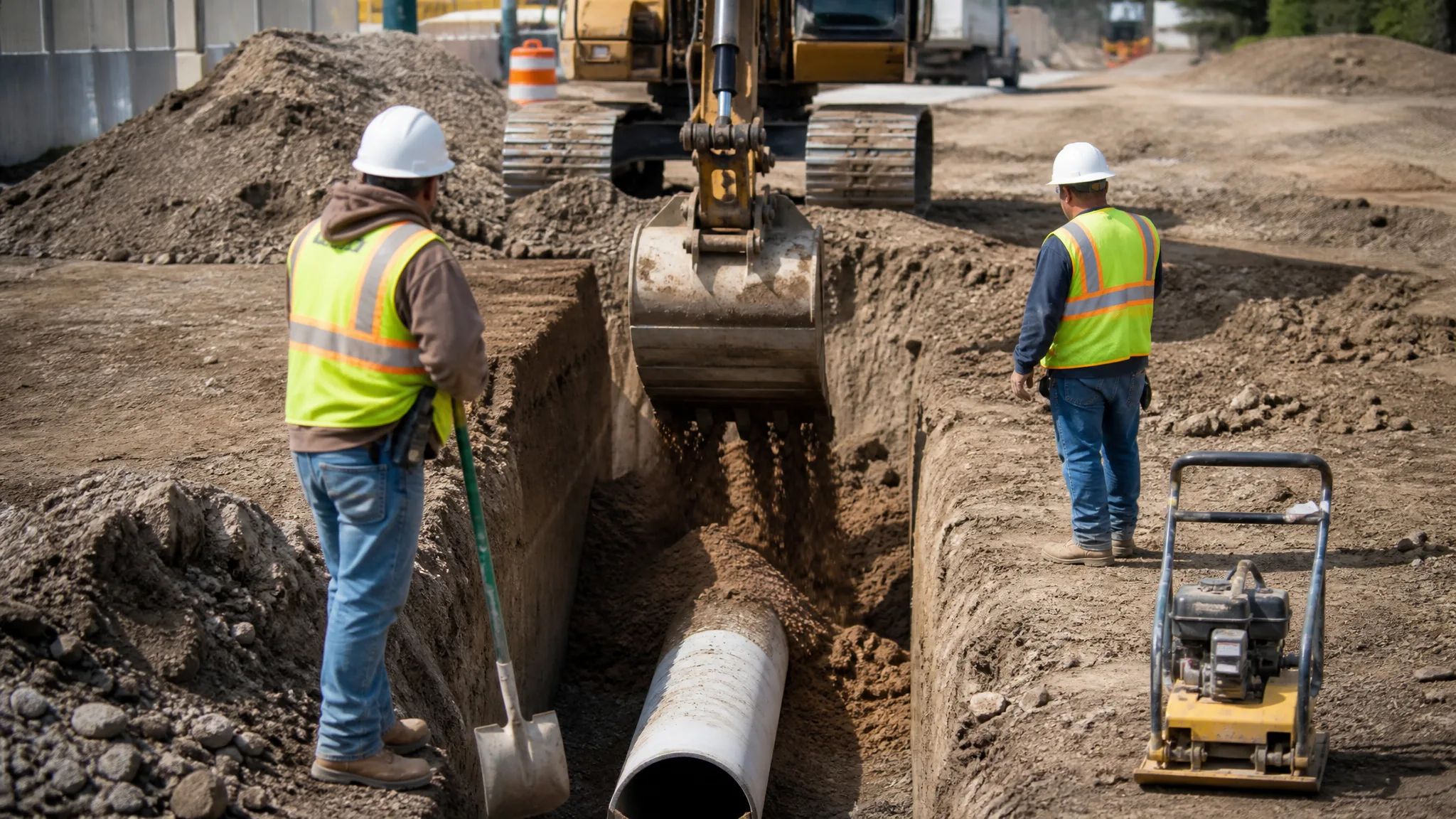
Check where water goes during construction, since poor drainage turns into delays and delays burn equipment hours. Note any existing structures, old foundations, buried debris, or underground tanks, because these are scope killers when they surface mid-job. And always request utility locates through your state's 811 service before digging, so a strike does not become a delay, a repair bill, or a liability claim.
Do the Earthwork Takeoff in Cubic Yards
Quantity takeoff is the core of the estimate: how much material gets cut, how much gets filled, and how much has to move across the site. Pull existing and proposed grades from the plan, then compute volumes in cubic yards using a grid method or the average end area method. Double-check the math, because a small measurement error multiplied across thousands of cubic yards is a serious number.
Break the takeoff into the categories that price differently: topsoil stripping, structural excavation, trench excavation, backfill, imported material, and exported material. If you are new to the math, our walkthrough on how to calculate excavated soil volume and truckloads is a good refresher. Getting the takeoff right is what makes every downstream number, from equipment hours to hauling, trustworthy.
Account for Swell and Shrinkage
Soil does not keep the same volume as it moves. When you excavate, the material swells, typically by 10 to 30 percent depending on soil type, with clay and rock swelling more than sand. When you compact fill, it shrinks back and then some, so a bank cubic yard never equals a compacted cubic yard. As a rule of thumb, a bank cubic yard of common earth becomes roughly 1.25 loose cubic yards in a truck and compacts back to about 0.90 cubic yards in place.
Ignore those factors and your haul counts, import volumes, and trucking budget will all be wrong. That is also why cut and fill rarely balance perfectly: you either haul excess material off site or import fill to cover a shortfall, and both outcomes cost real money. Deciding early whether native soil can serve as fill, or whether you need select fill instead of native soil, prevents a costly mid-job surprise.
Convert Quantities Into Equipment Hours
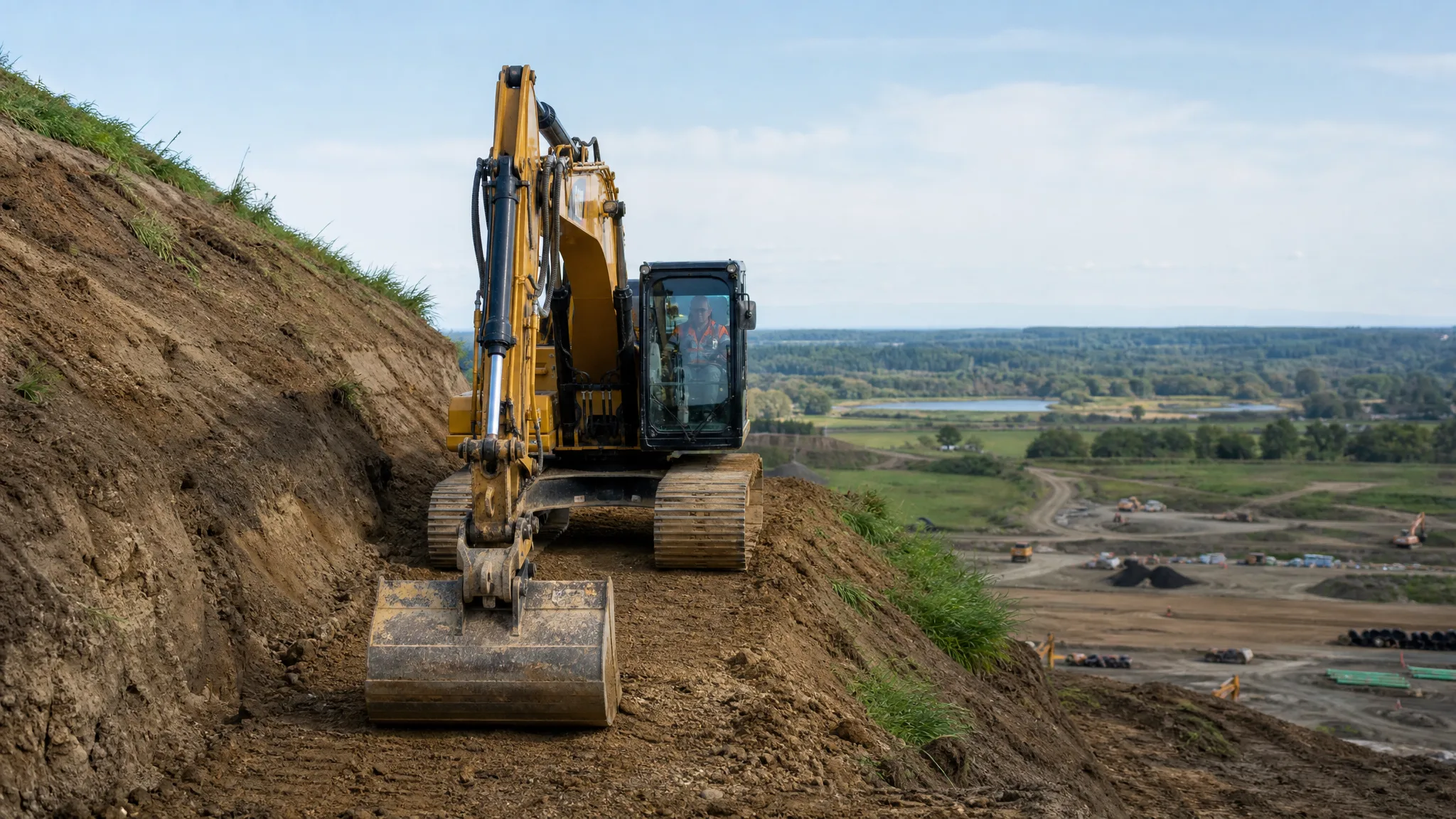
With quantities in hand, estimate how long the work takes by dividing quantity by a realistic production rate. Production varies widely with machine size, soil, and operator skill, so use ranges and pick based on the job. Reasonable starting points are 150 to 300 cubic yards per hour for a 20-ton excavator, 200 to 400 cubic yards per hour for a D6-class dozer, and 4 to 6 loads per hour for a 14-cubic-yard dump truck depending on cycle time.
Then add a buffer of roughly 10 to 15 percent for mobilization, moving between work areas, and setup, because a machine only produces while it is working. Our article on how many yards an excavator can move per hour shows how cycle time, bucket fill, and job efficiency combine, and it is a useful sanity check on your own numbers.
Price Equipment at Full Ownership and Operating Cost
A common mistake is to price a machine at its rental rate and forget that iron costs money whether it is producing or sitting. Build an all-in hourly cost for each piece: ownership costs such as depreciation, interest, and insurance, plus operating costs for fuel, oil, maintenance, tires, and undercarriage wear. Add the operator's wage with burden on top, since payroll taxes, benefits, and workers' compensation are real costs, not rounding errors.
If you are weighing whether to buy or rent for a job, the math is not simply about the daily rate. Our breakdown of renting vs. owning an excavator covers utilization and the break-even point, and rental pricing conventions are explained in what it costs to rent an excavator. Whatever path you choose, the estimate should recover the full cost of the machine, not just the sticker rate.
Labor, Hauling, Materials, and Indirect Costs
Labor is often the largest line on a sitework job, so estimate every role involved: operators, laborers, foremen, truck drivers, grade checkers, and supervision. Price labor at a fully burdened rate, not a bare wage, and be honest about productivity when soil is difficult, access is tight, or inspections interrupt the flow.
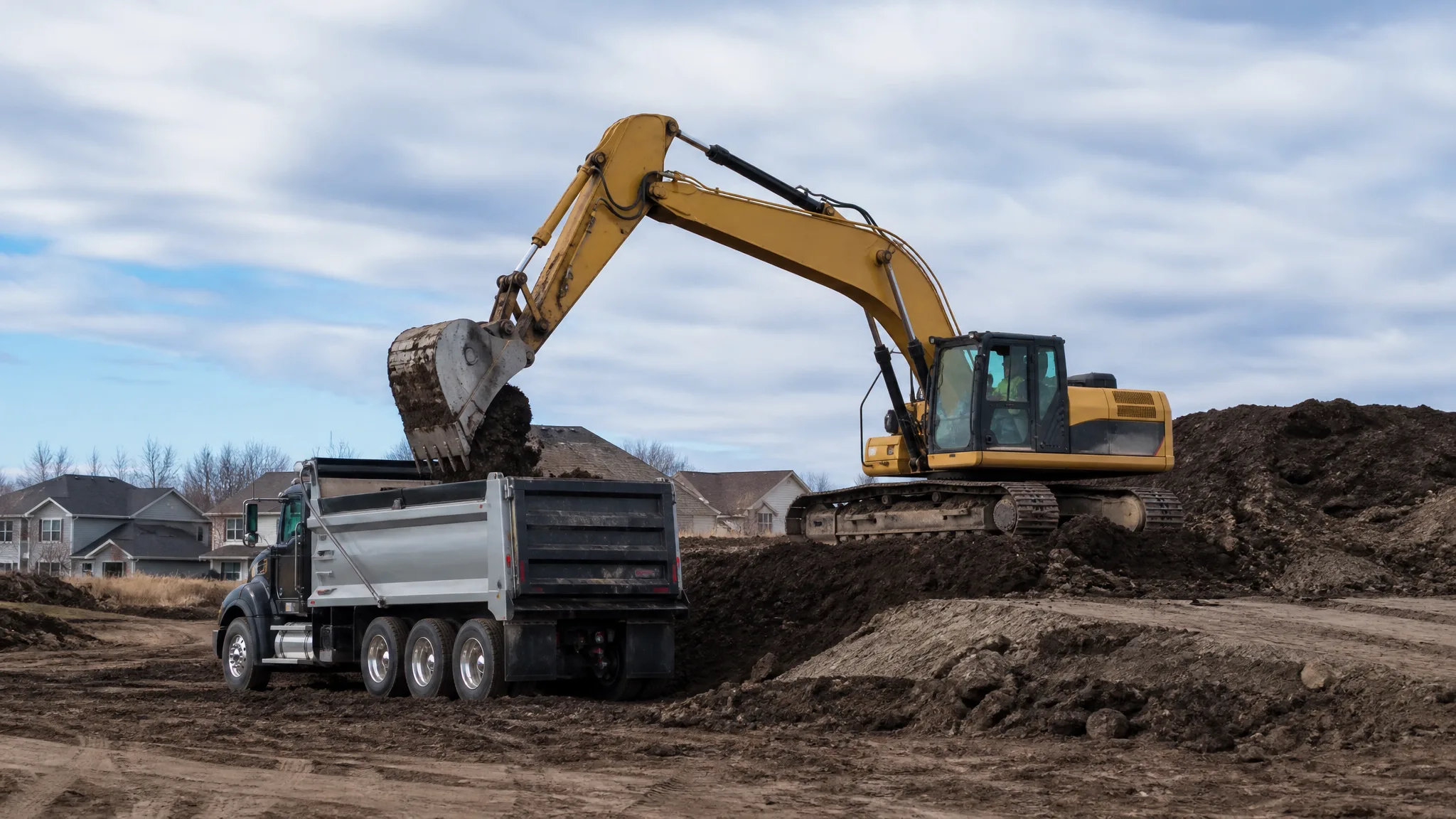
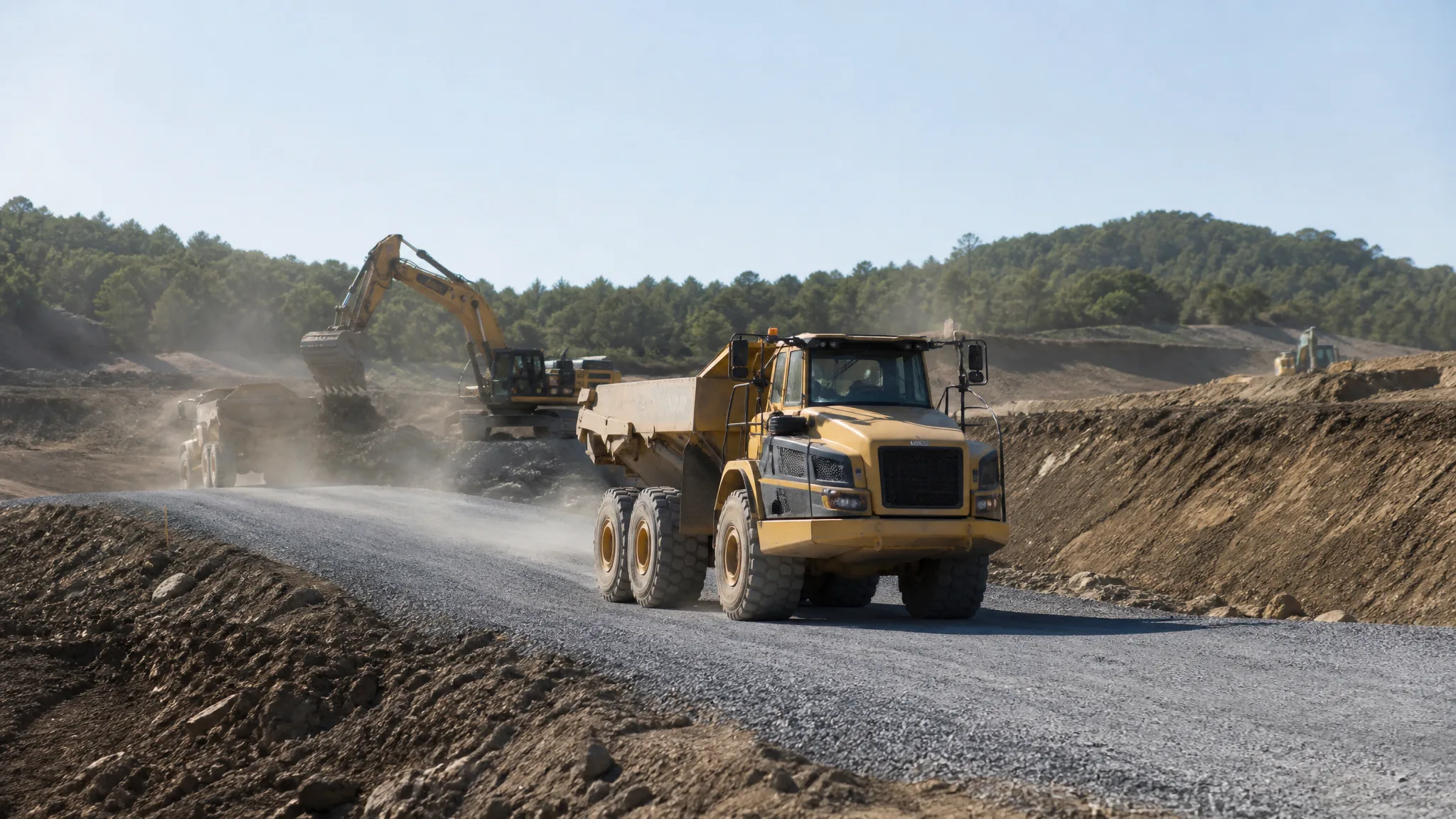
Hauling deserves its own line because it is where bids quietly die. Figure the number of loads from your swell-adjusted loose volume, the cycle time based on haul distance and dump time, and the number of trucks needed to keep the loader productive. A truck waiting in line is a truck costing you money, and a long haul that was underestimated at bid time can erase the whole margin, as covered in our look at how many yards a dump truck holds.
Do not forget materials and indirects: gravel, sand, stone, pipe bedding, geotextile, erosion-control products, and any subcontracted surveying or testing. Add mobilization and demobilization, erosion and sediment control, dewatering, surveying and staking, project management time, permits, and any bonding or special insurance the contract requires. Erosion control is not optional filler; on larger sites it is specified, inspected, and part of the spoil and site management plan, so it belongs in the bid.
Overhead, Profit, and Contingency
Once direct costs are totaled, apply your overhead markup and profit deliberately. Overhead covers the costs of staying in business, such as office, insurance, truck payments, software, and administrative staff, and it should be recovered on every job, not just the big ones. Profit is what pays you for risk and funds the next machine, so build it in from the start rather than treating it as leftovers; many small sitework contractors use a rough starting target of about 10 to 20 percent combined overhead and profit on top of direct costs, though the right figure depends on your own overhead rate and market.
Carry a contingency for the risks you cannot see: unexpected rock, groundwater, weather delays, utility conflicts, permit delays, and poor soil. A contingency is not padding; it is the price of uncertainty in a trade where uncertainty is guaranteed. If you are formalizing your rates for the first time, the field guide on starting an excavating business covers how these numbers fit together, and our cost management and budgeting overview shows how they carry through the life of a job.
Common Estimating Mistakes and a Pre-Bid Checklist
Most losing bids fail for the same handful of reasons: underestimating labor hours, forgetting mobilization, ignoring weather delays, missing a specification requirement, underpricing equipment, never visiting the site, omitting permits and insurance, assuming ideal production rates, and leaving no profit. Standardizing a checklist is the cheapest way to stop repeating them.
Before you submit, check the arithmetic on your takeoffs, re-read the scope for anything missed or double-counted, and confirm the schedule works with any liquidated damages. Write down your assumptions so you can defend the number, and make sure compaction, testing, and stabilization work is priced to spec; if fill is involved, the density requirements behind soil compaction can add real cost.
Finally, remember that winning unprofitable work creates cash-flow problems that are hard to recover from. A disciplined estimate that protects your margin is worth more than a low bid that wins the job and loses the company.