How Much Does It Cost to Dig a Pond?


Digging a pond looks like one of the simplest dirt jobs there is: dig a hole, pile the dirt, let it fill. Then two quotes come back thousands apart, and the landowner has no idea which one is real. The gap is almost always in the parts nobody sees on the plan — how much dirt leaves the property, whether a dam has to be built and compacted, and what the local rules require. Here is what actually drives the cost of digging a pond, and how to read a quote in plain numbers.
What "Digging a Pond" Actually Includes
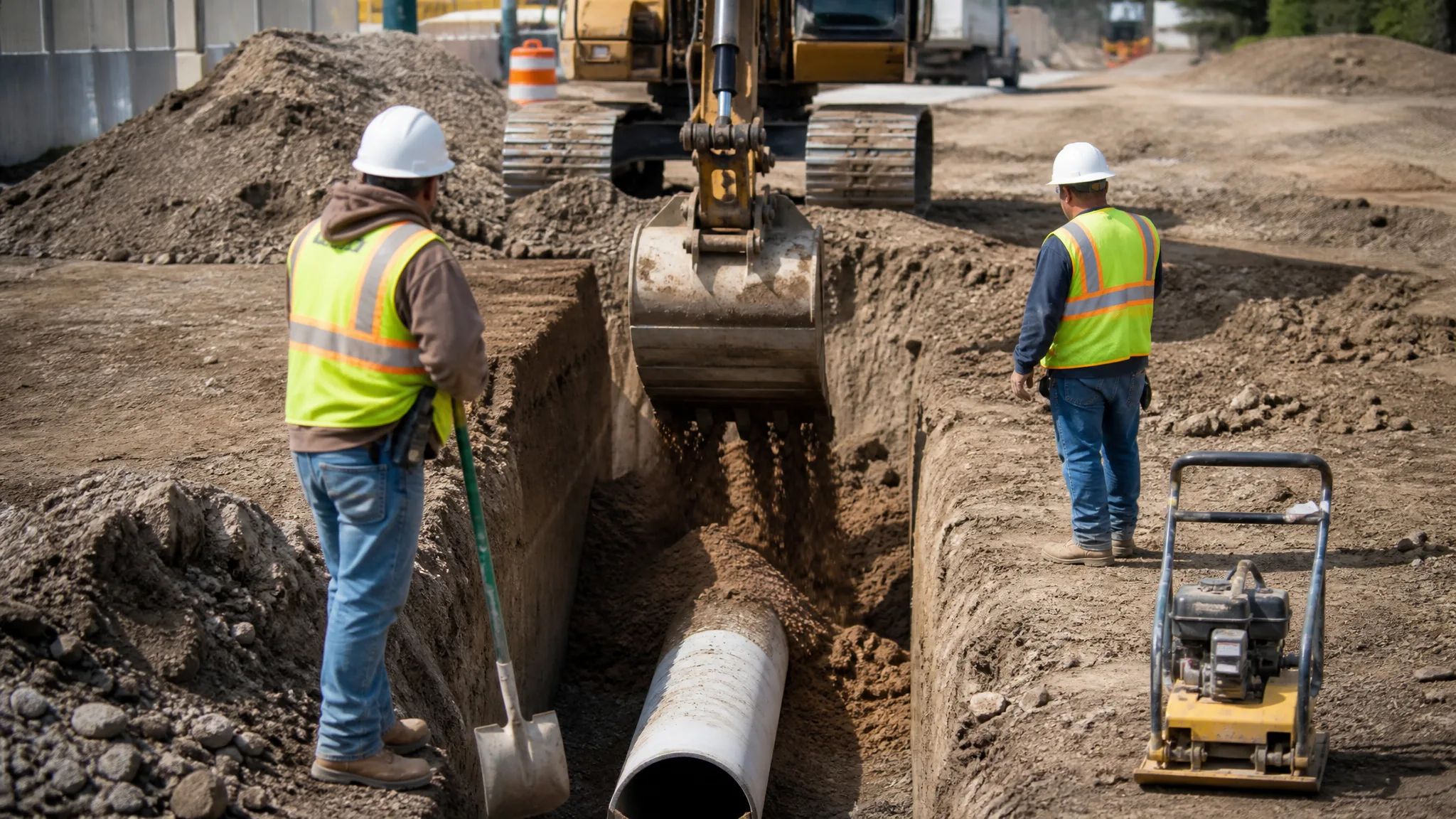
A pond is a small construction project, not a single earthmoving move. A complete job usually covers evaluating the site and setting the size and depth, clearing and grubbing vegetation, stripping and stockpiling topsoil, excavating to the designed grade, shaping the banks to a slope that will hold, building and compacting an embankment if the pond needs one, installing an overflow or spillway, spreading or hauling off the spoil, and stabilizing the disturbed ground with seed or other cover. Price out only the excavation and you will be comparing quotes that are not describing the same job.
Two Ways to Build a Pond, and Why It Changes the Price
A dug-out basin is excavated below existing grade. It is simple to build, but every yard that comes out has to go somewhere — spread on site, used to raise a pad, or hauled away. The farther the spoil has to travel, the more the job costs.
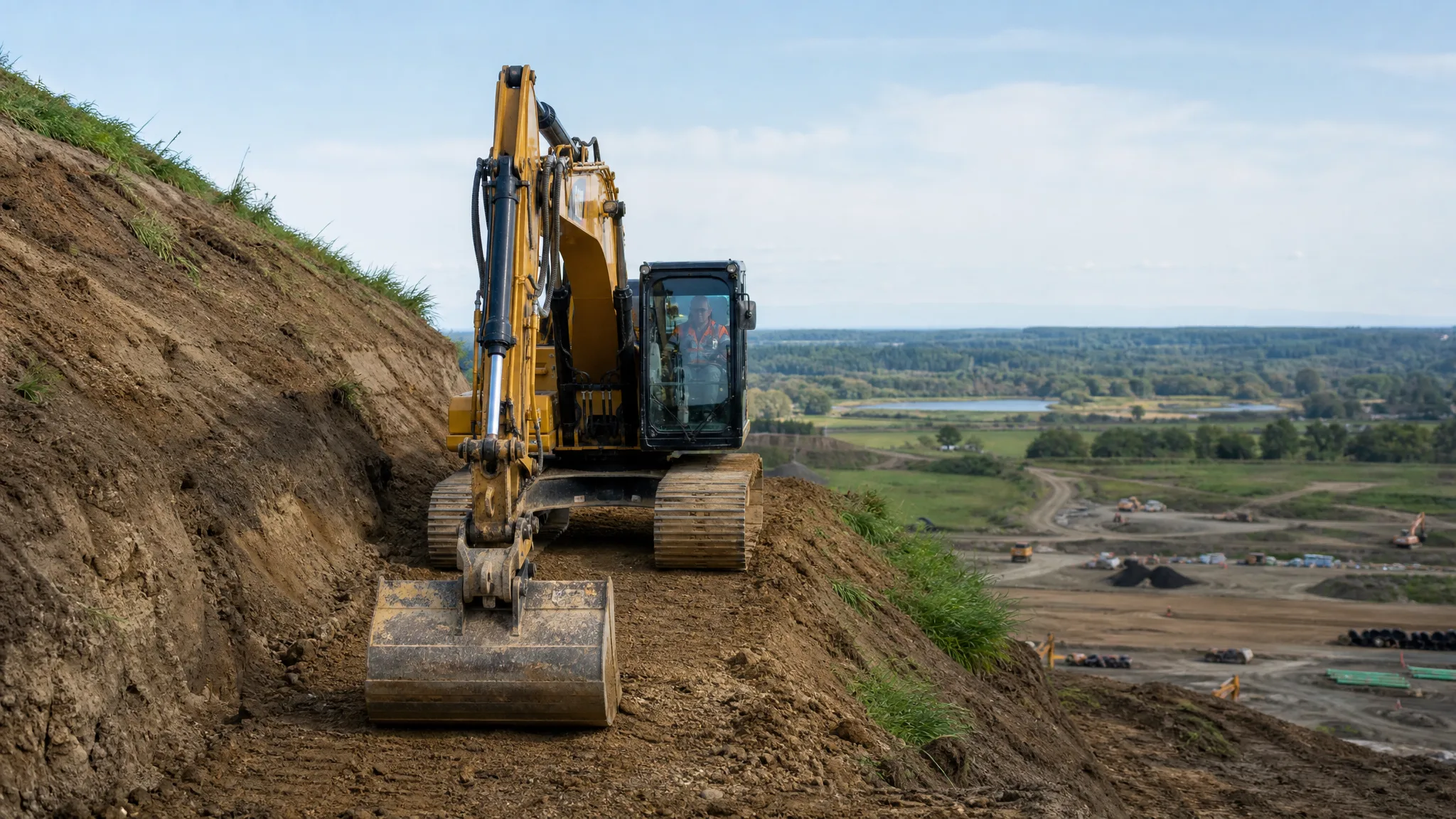
An embankment or dam pond is created by building up a wall of compacted fill across a low area or drainage, usually using soil from the pond bottom itself. If the dirt balance works out, much less material leaves the site and the haul bill drops accordingly. The trade-off is that an embankment has to be built and compacted in lifts to a real density standard, and a failed dam drains the whole project — sometimes literally, downstream.
How Pond Volume Sets the Price
Pond excavation is priced by the yard moved, so the first step is always volume. A rough estimate is surface area times average depth. A quarter-acre pond (about 10,890 square feet) with an average depth of 6 feet holds roughly 65,000 cubic feet, or about 2,420 bank cubic yards. Add topsoil stripping on top of that, and add swell when the material goes into trucks.
That last conversion is where estimates go wrong. Excavated soil fluffs up, so 2,420 bank yards of common earth can become more than 3,000 loose yards to haul. If you want the math behind it, see soil swell and shrinkage factors and calculating excavated soil volume and truckloads.
Pond Excavation Cost Ranges
Published cost guides put pond excavation in a wide band because conditions vary so much:
- Per cubic yard, larger ponds: roughly $1.50 to $3.50 per cubic yard, with $2.50 a common mid-range figure.
- Per cubic yard, small backyard digs: roughly $2.50 to $15 per cubic yard, because small jobs carry mobilization and minimum charges against little volume.
- Per square foot: about $2.50 to $7.15 per square foot for a small pond, with national average estimates running higher once grading and finishing are included.
- Minimum job fees: many excavators have a $500 to $800 minimum even for a small pond.
Working the quarter-acre example at $2.50 to $3.50 per cubic yard puts excavation alone somewhere around $6,000 to $8,500, before topsoil, spoil handling, a dam, or permits.
Cost by Pond Size and Type
Whole-project numbers look different again because they fold in everything else. Published ranges include backyard ponds from about $500 to $25,000 with most homeowners landing near $3,400, farm ponds commonly $5,000 to $20,000 and up to $70,000 in tougher ground, and larger ponds and lakes priced per acre in the range of $2,000 to $25,000 per acre. A professionally built one-acre farm pond with a compacted dam, grading, and an overflow system is often quoted around $45,000 all-in. Larger acreage gets cheaper per acre as the work scales, while small ornamental ponds get more expensive per square foot because of liner and feature work.
What Drives the Price Up
Two ponds of the same size can differ sharply in cost because of the ground and the site, not the plan.
- Soil and rock. Loose soil digs cheap. Clay, rock, and heavy tree cover add significant cost — published guides cite $1,200 or more for difficult soil and clearing conditions alone.
- Groundwater and seepage. If the excavation keeps filling with water, the crew has to dewater it and the production rate drops.
- Depth and side slopes. Deeper ponds move more dirt, and gentle banks push the footprint wider than the water surface suggests.
- Access and mobilization. A pond on a tight, steep, or remote lot costs more to reach and work.
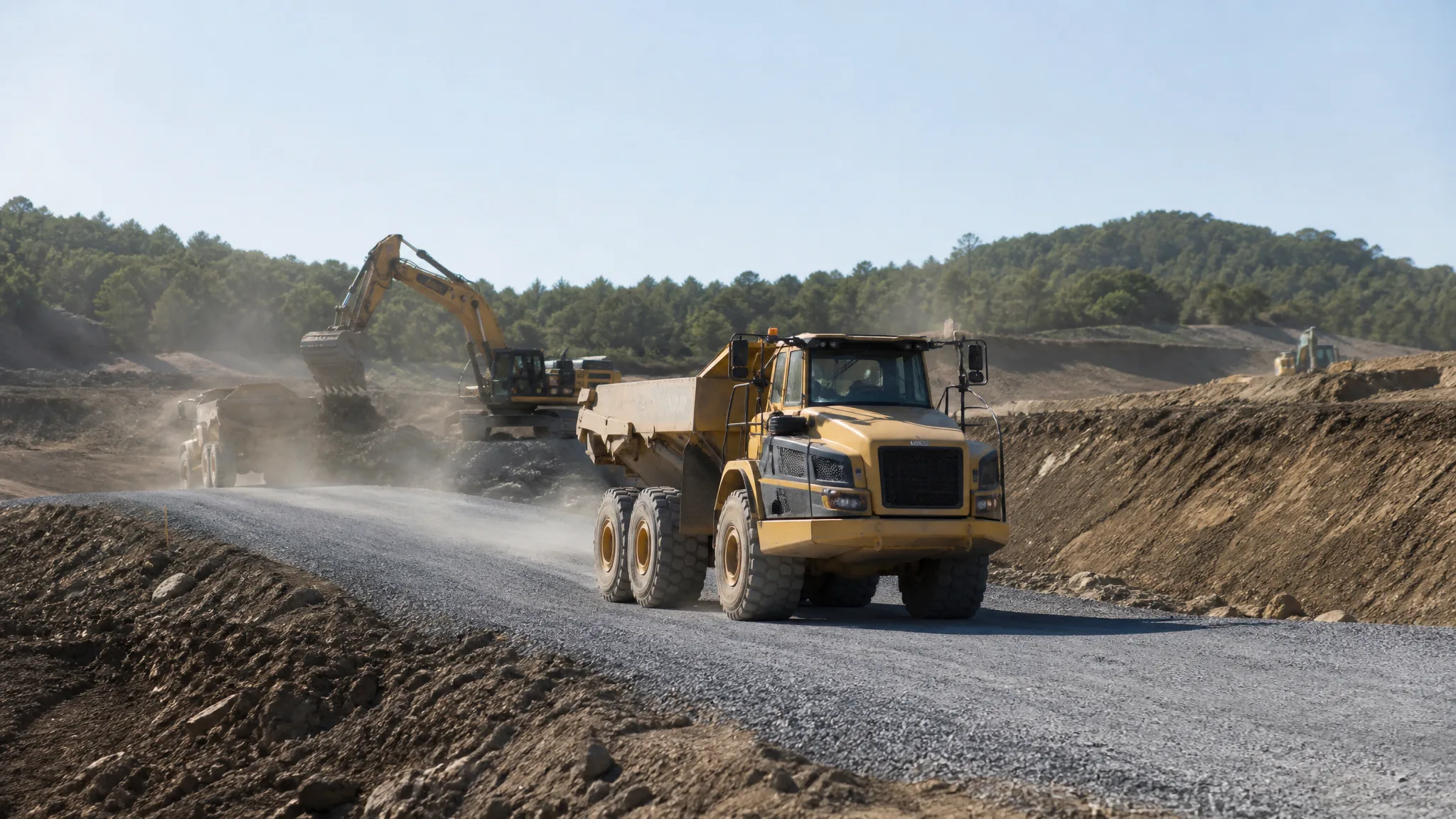
- Hauling distance. The farther the spoil has to go, the more the truck time costs.
- Finishing. Liners, fish habitat, aeration, beaches, and landscaping all sit on top of the base excavation price.
Spoil Removal: The Hidden Half of the Bill
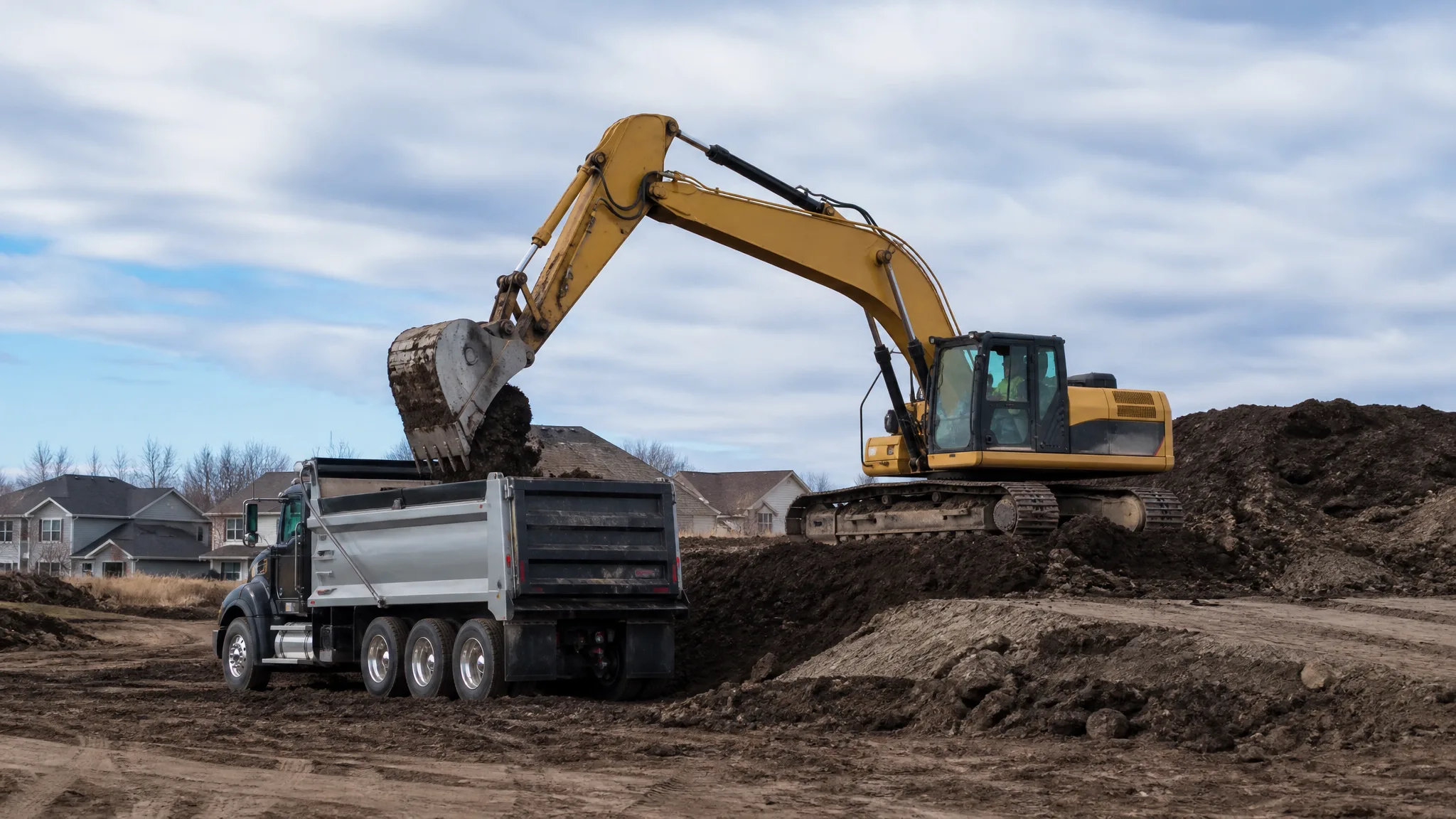
The dirt that leaves the pond has to go somewhere, and how that is handled can rival the excavation cost. Spreading spoil on site — used to build up a low area, a driveway, or a pad — is the cheapest option because there is no trucking. Hauling off site adds trucking cost per load, and if hauling is quoted by the yard it should be checked against the loose volume, not the bank volume.
Spoil also has to be managed like any other stockpile: kept out of drainage ways, stabilized against erosion, and placed where it will not slide or block water. See managing spoil piles for what good practice looks like. For reference, the weight and truck math behind a haul is covered in how much a yard of dirt weighs and how many yards a dump truck holds.
Liners, Dams, and Overflow Structures
If the native soil does not seal well, the pond may need a clay or bentonite liner, or a synthetic membrane. Published liner prices run from roughly $0.35 to $0.70 per square foot for flexible HDPE up through much higher figures for fiberglass and concrete, and liner area is bigger than the water surface once the slopes are included. An embankment pond needs a dam built in compacted lifts, a spillway sized to pass storm flows, and often a drain or overflow pipe. Those items are structural, and they are where a cheap pond quote usually becomes an expensive repair.
Permits, Exemptions, and Dam Safety
Pond rules are local, but a few federal and state layers come up again and again. Construction and maintenance of farm or stock ponds and irrigation ditches is generally exempt from federal Clean Water Act Section 404 permits under 33 CFR 323.4(a)(3) — but that exemption does not cover everything. It can be lost where a toxic pollutant discharge is involved, or where the pond is part of converting a water body to a new use that impairs flow, and separate state water-quality certification or state permits may still apply.
Dam safety is the other common gate. Many states require a permit, and often a professional engineer's design, once an embankment pond exceeds a certain height or impoundment volume; the NRCS pond practice standard itself is written for dams up to 35 feet of effective height. Beyond that, expect local grading or land-disturbance permits with setbacks from property lines and buildings, rules in floodplains or wetlands, and HOA restrictions. Budget at least $150 to $500 for permits and confirm requirements with the local authority before anyone breaks ground. And always call 811 before digging — see calling 811 before you dig.
How to Compare Pond Quotes
The only way to know whether two quotes are comparable is to see them broken into the same pieces. Ask for the volume to be excavated in bank yards, the topsoil stripping as a separate line, the spoil plan (spread on site or hauled, and how far), the embankment and spillway scope if there is one, the compaction standard for any dam, the liner or sealing method, the stabilization and seeding, and the permit responsibility. A quote that lists a single "dig pond" number is hiding the variables that decide the final bill.
It also helps to know what the machine and the schedule look like, since both feed the price. The dig depth and reach requirements are covered in what size excavator you need to dig a pond, an existing pond that has filled with silt is a different job covered in dredging a pond, engineered basins are described in building a stormwater detention pond, and the clearing that comes first is priced in how much land clearing costs. For the estimating method behind any of it, start with how to estimate an excavation job.