How Many Yards Can an Excavator Move Per Hour?


Ask ten operators how many yards an excavator can move in an hour and you will get ten different answers, because the honest answer is always "it depends." A mini excavator in tight residential dirt moves a fraction of what a 40-ton machine loading trucks from a wide-open cut will handle. The good news is that excavator production is not a mystery. Contractors and estimators estimate hourly output with one standard formula that combines bucket size, cycle time, fill factor, and job efficiency. This guide walks through that formula, the real-world numbers that go into it, and worked examples for common machine classes so you can estimate yards per hour with confidence.
The Standard Excavator Production Formula
The formula used for production estimating is straightforward: multiply the bucket's heaped capacity by how many times the machine cycles in an hour, then adjust for how full the bucket actually gets and how many minutes of the hour are productive.
Q (loose yd³/hr) = (Bucket capacity in yd³ × Fill factor × Job efficiency × 3,600) ÷ Cycle time in seconds
The 3,600 converts seconds to hours. The result is loose cubic yards per hour (LCY/hr) — the volume as it sits in the bucket and the truck, which is always larger than the in-ground "bank" volume because digging expands the soil. For a deeper look at that difference and the swell factors that drive it, see our guide to calculating excavated soil volume and truckloads.
Cycle Time: The Biggest Swing in the Numbers
Cycle time is the seconds it takes to dig, swing loaded, dump, and swing back to the digging face. Everything else in the formula is fairly stable; cycle time is where production is won or lost. Typical excavator cycles run from about 15 seconds in easy digging with a short swing to 35 seconds or more in tough material with a long swing.
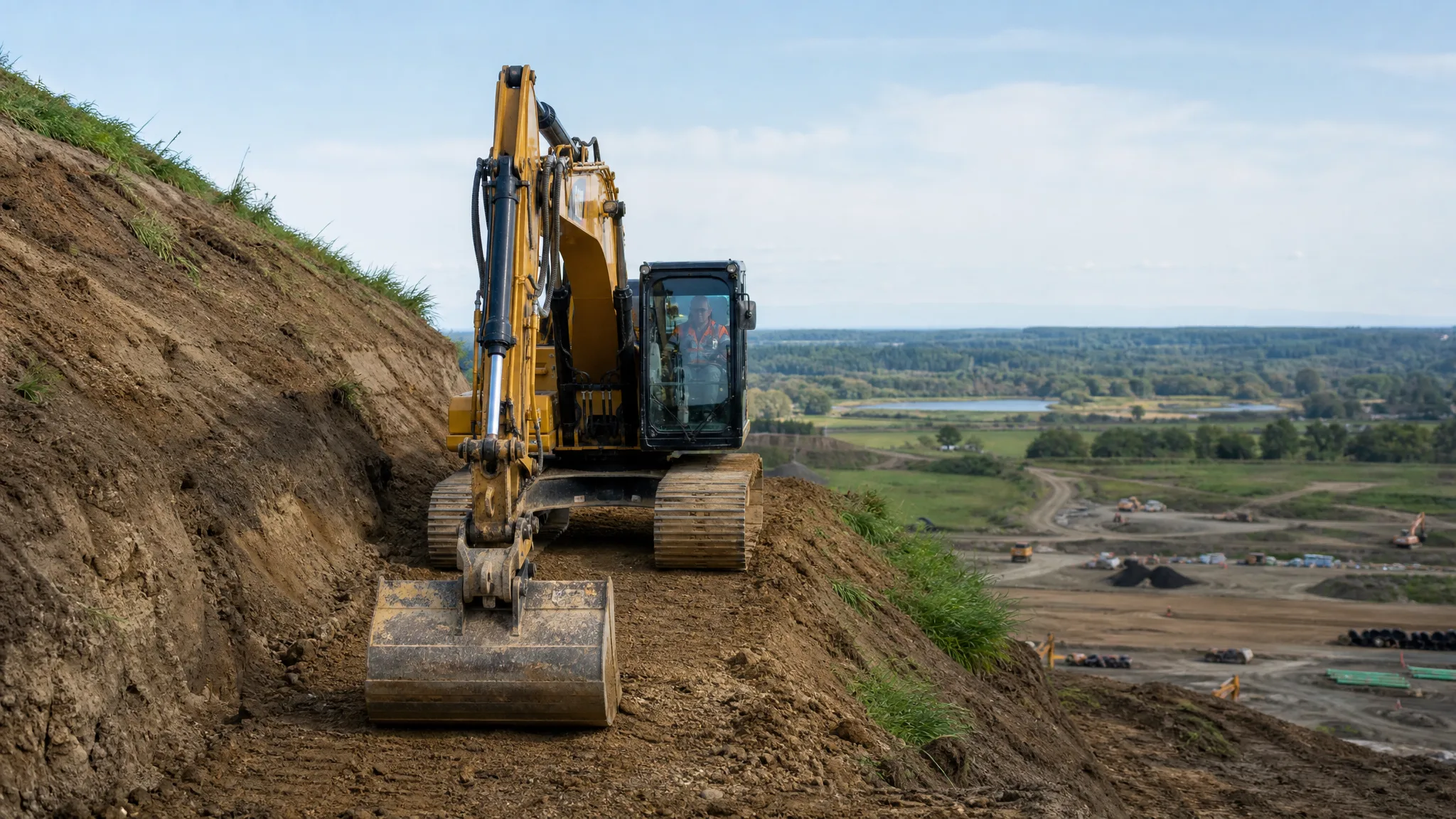
The single most controllable factor is swing angle. Positioning the truck or spoil area at 60 to 90 degrees from the digging face keeps the cycle short, while dumping 180 degrees behind the machine can add roughly 40 to 50 percent to cycle time. Dig depth also matters: the ideal working bench keeps the bucket in the strongest part of the machine's digging envelope, roughly 60 to 75 percent of maximum dig depth, instead of forcing the operator to reach to full depth on every pass.
Bucket Fill Factors by Material
A bucket rated for one cubic yard heaped does not carry a full yard in every material. Fill factor is the ratio of what the bucket actually carries to its rated heaped capacity, and it varies with how easily the material flows into the bucket. Typical fill factors used in estimating:
- Sand and gravel: 0.95 to 1.10 — free-flowing material fills the bucket quickly and completely.
- Common earth and loam: 0.80 to 1.00 — the everyday range for most excavation.
- Hard, dense clay: 0.65 to 0.85 — tough digging that resists the bucket.
- Well-blasted rock: 0.60 to 0.75 — fragmented but heavy and hard to penetrate.
- Poorly blasted rock or large fragments: 0.40 to 0.60 — oversized pieces leave voids in the bucket.
Wet, sticky clay can actually exceed 100 percent fill factor because material clings above the heaped line — but that extra "free" dirt is heavy, slows the cycle, and is a large part of why wet material kills hourly production. Choosing the right bucket for the material matters as much as the machine itself; see our breakdown of excavator bucket selection for different soil types.
Job Efficiency: The 50-Minute Hour
No excavator digs 60 minutes out of every 60. Operators reposition, trucks change out, blades get greased, and the water truck makes a pass. Estimators account for this with an efficiency factor based on a productive working hour:
- 0.83 — a 50-minute hour, the standard for well-managed jobs in good conditions.
- 0.75 — a 45-minute hour, realistic for average conditions with normal delays.
- 0.67 — a 40-minute hour, for congested sites, poor weather, or inexperienced operators.
Using 50 minutes instead of a full 60 is the difference between a production estimate that holds up on bid day and one that quietly loses money. That margin is also why the best crews obsess over keeping trucks staged close, positioning the machine to minimize repositioning, and running the excavator as efficiently as the rest of the cost plan.
Worked Examples: Yards Per Hour by Machine Class
Putting the formula to work, here are realistic production estimates for three common excavator classes in average digging (common earth, 90-degree swing, 0.83 efficiency). Change any assumption and the answer changes — that is the point of the formula.
Mini excavator (3 to 6 tons), 0.25 yd³ bucket, 20-second cycle: 0.25 × 0.85 × 0.83 × 3,600 ÷ 20 = about 32 loose yd³/hr. In a 50-minute hour that works out to roughly 25 to 30 bank yards of in-ground earth moved.
Mid-size excavator (20 to 25 tons), 1.25 yd³ bucket, 22-second cycle: 1.25 × 0.90 × 0.83 × 3,600 ÷ 22 = about 153 loose yd³/hr. This is the classic utility-and-sitework machine, and most crews see 120 to 180 loose yards per hour in average conditions with a good truck rotation.
Large excavator (35 to 45 tons), 2.5 yd³ bucket, 25-second cycle: 2.5 × 0.85 × 0.83 × 3,600 ÷ 25 = about 254 loose yd³/hr. With larger buckets and short swings in mass excavation, 300-plus loose yards per hour is achievable.
For context on where these machines fit in the size spectrum, see our guide to excavator sizes.
Bank Yards vs. Loose Yards: What You Get Paid For
Estimates are measured in bank cubic yards — the volume in the ground before digging. Trucks and buckets, however, carry loose yards. Soil expands by 10 to 40 percent or more once excavated depending on material: sand and gravel swell the least, common earth 25 to 30 percent, and heavy clay even more.
In the examples above, a mid-size excavator producing 153 loose yd³/hr in soil with a 25 percent swell factor is moving about 122 bank yd³/hr — and roughly 1,220 bank yards in a 10-hour day. That is the number to use when quoting by the yard and when matching haul trucks. If you are working through how much dirt a job produces and how many loads it takes to move it, our dump truck capacity guide pairs directly with this math.
Loading Trucks: Matching the Haul Fleet to the Excavator
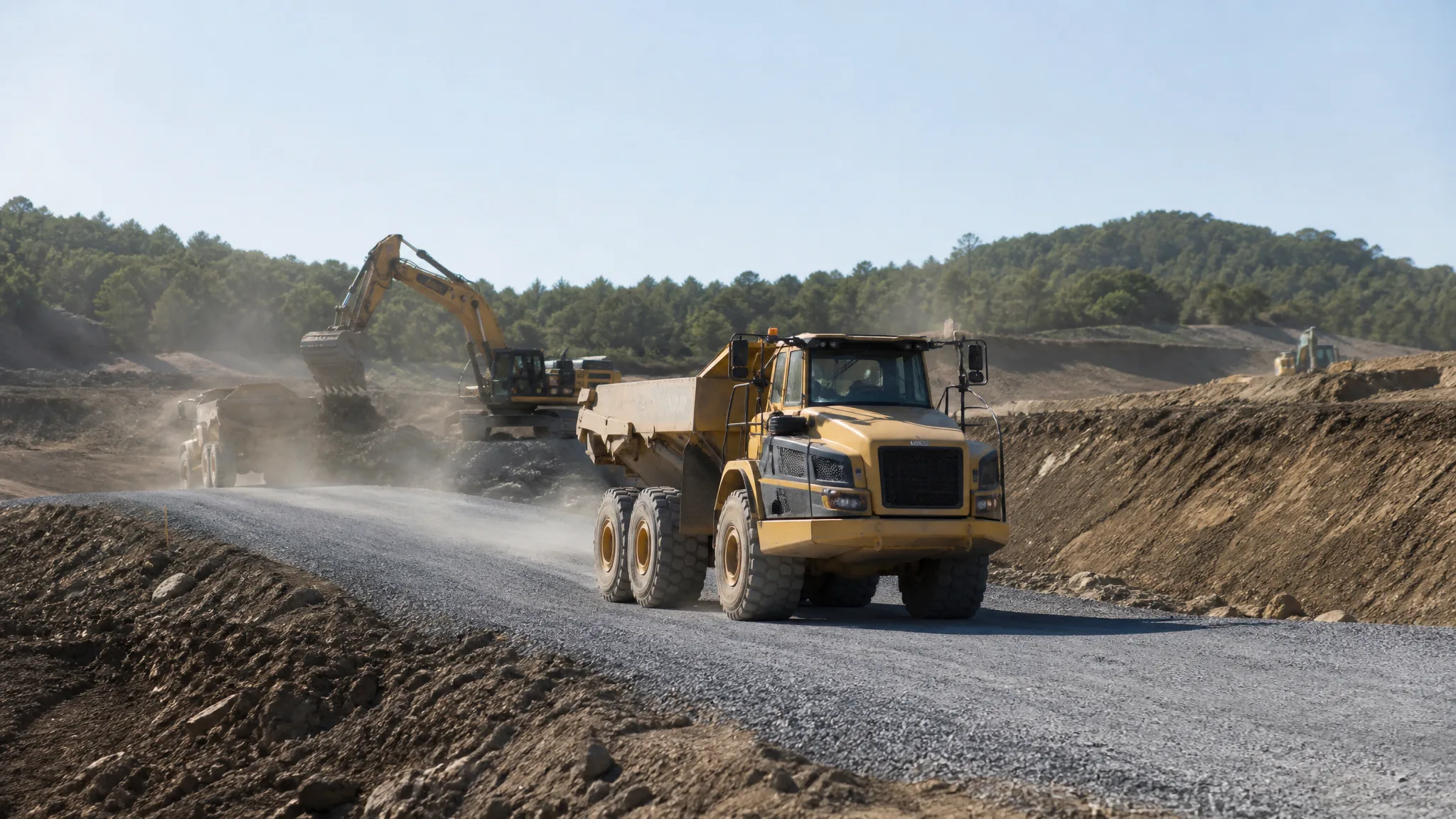
An excavator's production only matters if the trucks can carry it away. The rule of thumb used in fleet planning is that a truck body should hold roughly four to six heaped bucket loads. Fewer than three passes and the truck is too small for the excavator; more than seven and loading takes so long that the excavator starves the haul cycle.
To figure out how many trucks a single excavator can keep busy, divide the truck's full cycle time (load, haul, dump, return) by the time the excavator takes to fill it. If a truck completes a round trip in 15 minutes and the excavator fills it in 3 minutes — five passes at 36 seconds each — the job needs about five trucks to keep the excavator swinging continuously. The article on yards in an excavator bucket explains the struck-versus-heaped capacity difference that makes those pass counts accurate.
What Slows an Excavator Down in the Real World
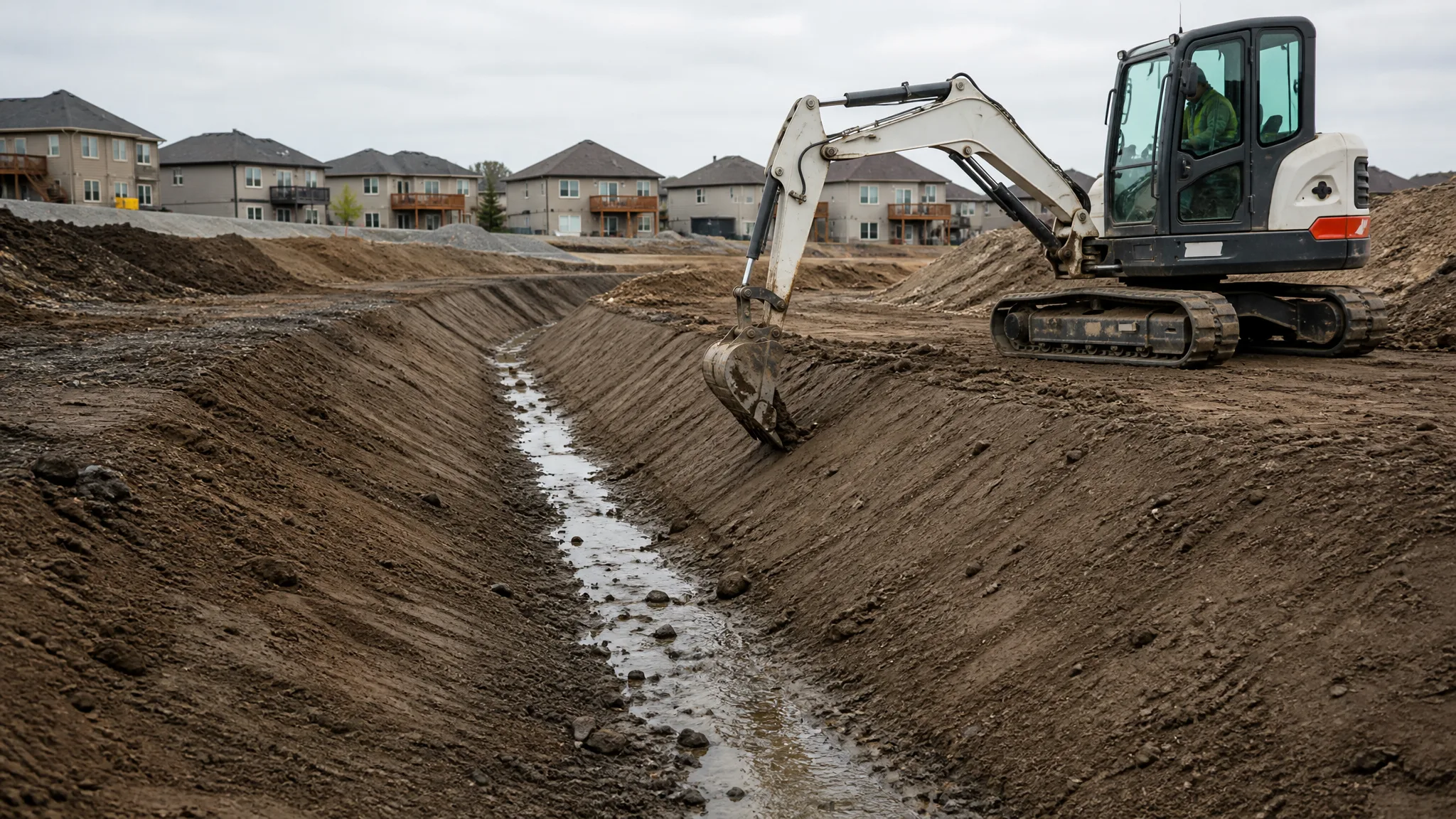
Beyond the formula's inputs, field conditions push production around every day. Deep digs slow cycle times because the machine works at the far end of its envelope. Long haul roads or poor truck staging create gaps where the excavator waits. Wet weather turns loaders into mud wrestlers and cuts efficiency well below the 50-minute hour. Overbreak in sloped excavations adds volume nobody planned for, and spoil placed too close to the trench edge creates spoil-handling and stability problems that cost rehandle time.
Operator skill is the multiplier on all of it. An experienced hand fills the bucket in fewer passes, keeps the swing tight, and reads the face so the machine never waits. The same excavator with the same bucket can produce 20 to 30 percent more in a skilled operator's hands — which is why production estimates should always carry an operator-quality adjustment.
Estimating Fuel Burn Alongside Production
Production and fuel cost are two halves of the same estimate. A machine burning fuel at full production load spends meaningfully more per hour than the same machine in light digging, and fuel is one of the largest variable costs on an earthmoving job. If you are bidding by the yard, the fuel cost per yard is just as important as the hours — our guide to excavator fuel use per hour breaks down typical burn rates by machine class.
Turning Estimates Into Reality
The formula gives you a defensible starting number, but the field always gets the final vote. On the first day of a job, time a few actual cycles, watch how full the bucket really loads, and count the productive minutes in the hour. Adjust your estimate to what the machine actually delivers and you will know — within a few percent — how many yards that excavator moves per hour on your site, your material, and your truck rotation.