Excavation and Grading Permits


Earthwork feels like the most straightforward part of a project: move dirt from here to there. In practice, excavation, grading, filling, and clearing are among the most regulated activities on a site, because what happens to soil determines how water drains, whether slopes hold, and whether neighboring property is damaged. Most jurisdictions handle that oversight through a permit.
This guide explains which permits can apply to an excavation or grading job, what triggers them, what an application has to contain, how inspections work, and how to avoid the stop-work orders and fines that come with digging first and asking later.
Why Earthwork Is Regulated at All
A grading permit authorizes the excavation, filling, and recontouring of land, and it is separate from the building permit that authorizes construction. The reason is that earthwork has public consequences. Regrading can change where stormwater flows, cut off drainage a neighbor relied on, undercut the support beneath an adjacent foundation, or create an unstable slope. Add sediment washing into creeks and storm sewers, and it is easy to see why regulators care about dirt.
The model building code addresses it in Appendix J (Grading), which many jurisdictions adopt. When adopted, it states plainly that grading is not performed without a permit unless exempted, and it makes clear that permits issued under it do not authorize work done in violation of state or federal regulations. Local grading ordinances, stormwater rules, and state environmental laws stack on top of that.
The Permits That Can Apply to One Excavation Job
There is rarely a single permit for a site-work job. Depending on the project, the approvals can include:
- A building permit for the structure — often with site work, footings, and foundations included or tied to it.
- A grading or earthwork permit for clearing, cutting, filling, and recontouring.
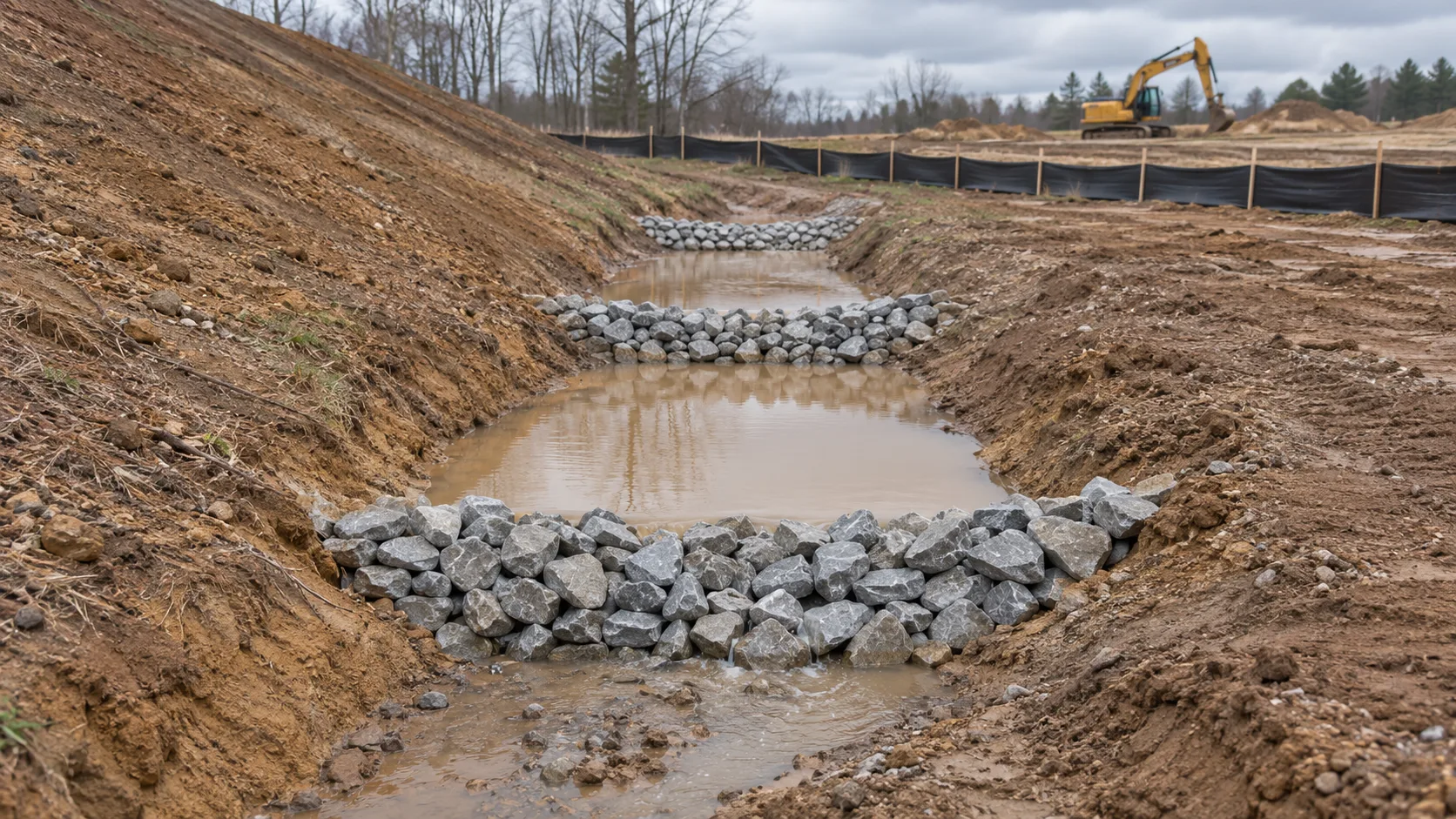
- A stormwater permit (NPDES and a SWPPP) once land disturbance hits the federal trigger.
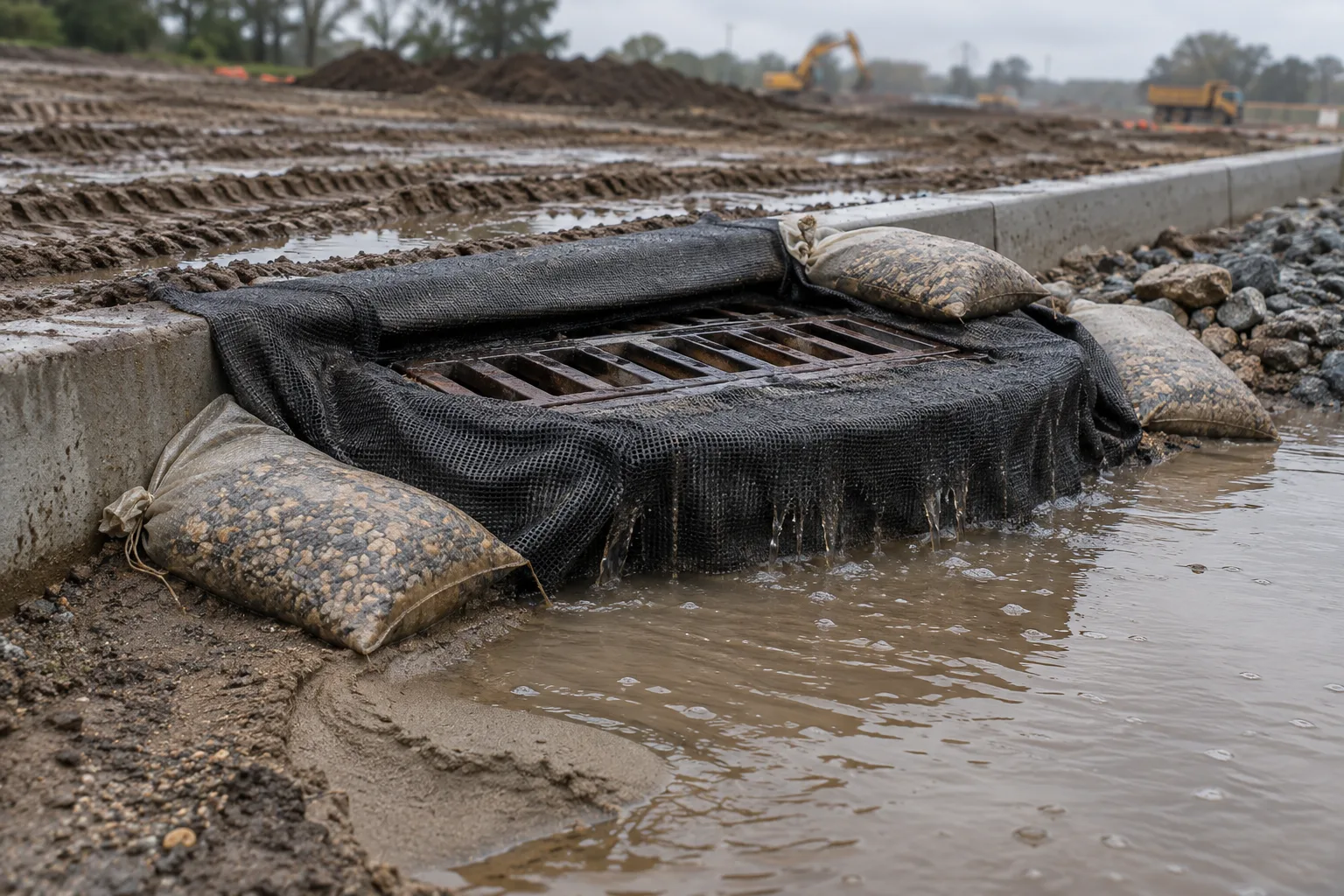
- An erosion and sediment control plan approval, sometimes rolled into the grading or stormwater permit.
- Right-of-way, driveway, or culvert permits where work touches a public road or its drainage.
- Floodplain development permits in mapped flood hazard areas.
- Utility and tap permits for water, sewer, gas, and power connections, plus an 811 locate ticket before any dig.
- Septic, well, and (for ponds) dam-safety permits where those features are part of the plan.
The practical lesson: identify every layered approval before mobilization. A utility trench that is fine under a grading permit can still violate a right-of-way permit if the crew never pulled one, and a land-clearing job that removes trees may trigger separate tree or land-clearing rules.
What Triggers a Grading Permit
Whether a grading permit is required usually comes down to one or more of five factors, and the thresholds vary widely between jurisdictions:
- Volume of cut and fill. Common thresholds range from about 50 cubic yards in restrictive jurisdictions to thousands of cubic yards in permissive ones.
- Depth of cut or fill. A cut or fill deeper than a set depth — typically three to five feet — often triggers a permit regardless of volume.
- Area of disturbance. Thresholds commonly run from a few hundred square feet up to one acre.
- Slope steepness. Grading on steep ground, often steeper than a 3:1 slope, can require a permit even below the volume threshold.
- Proximity to water. Work near creeks, wetlands, or floodplains frequently triggers a permit on its own.
Because the numbers differ so much from place to place, a plan that needs no permit in one county may need an engineered permit in the next. Confirm the local thresholds, then compare them to your cut-and-fill quantities — the same volume math covered in how to estimate an excavation job.
Exemptions You Might Not Expect
Most grading ordinances exempt a set of common activities. Under the model Appendix J, a grading permit is not required for, among other things, grading in an approved isolated, self-contained area that endangers no one and does not adversely affect adjoining property; excavation below finished grade for basements and footings of a structure that is itself permitted; cemetery graves; refuse disposal sites controlled by other rules; excavations for wells, tunnels, or utility trenches; mining and quarrying controlled by other regulations; and exploratory excavations performed under the direction of a soil engineer or engineering geologist.
Two traps sit inside those exemptions. First, the basement-and-footings exemption covers the dig, not the fill placed with the excavated material and not an excavation leaving an unsupported cut more than five feet tall once the structure is complete. Second, an exemption from the grading permit is not an exemption from everything else — stormwater, erosion control, and utility-locate rules still apply. In the code's own words, exemptions do not authorize work done in violation of other laws or ordinances.
The Stormwater Trigger: One Acre and the CGP
Separate from the local grading permit, federal Clean Water Act rules require a permit for stormwater discharges from construction that disturbs one acre or more of land — or less than an acre when it is part of a common plan of development that will ultimately disturb an acre or more. Earth-disturbing activity means exactly what it sounds like: clearing, grading, and excavating.
In areas where the EPA is the permitting authority, that permit is the Construction General Permit, and it requires a Stormwater Pollution Prevention Plan, routine inspections, and stabilization of disturbed areas when work pauses. The federal floor also limits dewatering discharges and prohibits concrete washout and fuel releases unless they are properly controlled. For the site-level view, see what a SWPPP is, installing a silt fence, and seeding and stabilization after grading.
What Goes in a Grading Permit Application
The application package usually asks for far more than a sketch, especially above minor thresholds:
- A grading plan showing existing and proposed contours, cut and fill depths and volumes, proposed slopes and drainage channels, retaining walls, and erosion-control measures.
- A geotechnical or soils engineering report covering existing soil conditions, slope stability, and recommendations the plans must incorporate.
- A stormwater control plan or SWPPP when land disturbance reaches the stormwater trigger.
- An erosion and sediment control plan showing the temporary best-management practices for construction.
- An engineering geology report on hillside or geologically sensitive sites, in addition to the geotechnical report.
The geotechnical piece is often the long pole in the schedule, so start it early. If you are new to it, what a geotechnical report contains explains what the engineer delivers and why the plans must follow it.
Engineered Grading vs. Regular Grading
Many ordinances draw a line between regular grading, which can be permitted with a simpler plan, and engineered grading, which requires plans, specifications, and reports prepared and signed by a licensed engineer. Where the line falls is jurisdiction-specific — in one large-city code, grading in excess of 1,000 cubic yards must follow an approved engineered grading plan, while anything at or below that may proceed as regular grading.
Above the line, expect a soils engineering report and often a separate engineering geology report, with the specific recommendations from those reports written into the plans. That is also where reading the drawing correctly matters; the symbols and callouts are covered in how to read a grading plan.
Inspections and the Construction Sequence
A grading permit is not a one-time approval; it sets inspection hold points where work cannot proceed until it has been checked. A typical sequence runs: inspect the erosion and sediment controls before and during the earthwork; inspect excavation and bearing soils before footings; inspect drainage and backfill; and inspect final grades and stabilization before closeout. Never cover work that is scheduled for inspection, and keep the approved plans and permit on site, not in a truck three towns away.
The handoff between the excavation crew and the next trade is where inspections cluster, which is why a written jobsite handoff checklist and the temporary construction entrance requirements both show up in the same permit conditions.
Who Pulls the Permit — Owner or Contractor
On most projects the property owner is the permit holder of record, with the contractor authorized to apply and to act as the on-site agent. Some jurisdictions allow a homeowner to pull a permit for their own residence; commercial and new-construction work generally must be performed by a licensed contractor. Whoever holds the permit also holds the responsibility for compliance, so the contract should say plainly who applies, who pays fees, who calls inspections, and what happens if the scope changes. A scope change that adds grading usually means a revised permit, not a phone call.
Timelines, Fees, and Penalties
Permit fees are typically scaled to the volume of earthwork or to the project valuation, so they are usually a small share of the job cost. The bigger cost is time: grading permit review commonly runs four to twelve weeks in busy jurisdictions, and the permit must be in hand before the contractor mobilizes. That makes the permit a critical-path item, not paperwork to chase the week before the machines arrive.
The penalty for skipping it is where things get expensive. Unpermitted earthwork can draw a stop-work order, fines, double or retroactive permit fees, mandatory restoration, and, in the worst cases, removal of what was built. A stop-work order also stops every downstream trade, turning a small permit shortcut into a schedule problem for the whole project.
How to Avoid Permit Problems
- Call the local building department before the first bucket of dirt, not after.
- Add up your cut and fill volumes so you know which threshold you are near.
- Start the geotechnical report and engineering early — they gate everything else.
- Apply for every layered approval (grading, stormwater, right-of-way, floodplain, utility).
- Confirm the acreage of disturbance against the stormwater trigger before clearing.
- Keep approved plans and permit conditions on site, and follow the inspection sequence.
- Re-permit when the scope changes; do not treat the original permit as open-ended.
Permits are not an obstacle to excavation work; they are the mechanism that keeps a dirt job from becoming a drainage dispute, a slope failure, or a stop-work order. Understanding the triggers, the plan requirements, and the inspection sequence turns the permitting phase from a surprise into a scheduled step — and keeps the earthwork moving.