Excavating for an In-Ground Pool


An in-ground pool is one of the largest excavations a residential contractor will ever dig, and it is one of the least forgiving. Unlike a foundation or a driveway, a pool has to be dug to a shape, a depth, and a tolerance that the finished shell must fit exactly. Get the dimensions right and the rest of the build proceeds on schedule. Get them wrong and every trade that follows pays for it. This guide explains what a pool excavation actually involves and what homeowners and builders should expect before the first bucket breaks ground.
What a Pool Excavation Actually Involves
Pool excavation is not simply digging a hole and hauling away dirt. It is a controlled cut that removes soil, roots, and debris to create an accurately shaped, level cavity that matches the pool design. The work includes site assessment, layout marking, digging and shaping the cavity, managing soil removal, and preparing a stable base at the correct elevation.
Because most pools are built from a design that was drawn long before anyone touched the ground, the excavation sets the template for everything else — steel, plumbing, the shell, the tile, and the deck. Accuracy at this stage is what keeps the later trades from fighting the hole.
How Deep and How Wide a Pool Dig Runs
Depth is driven by the design, but the basics are predictable. A typical residential pool has a shallow end in the range of about 3.5 to 4 feet and a deep end that can run from roughly 6 to 8 feet. Diving pools, pools with attached spas, and freeform designs push the deep end and the overall footprint further.
Width and length are the finished interior dimensions plus the room the shell and crew need. That is where the over-dig allowance comes in: contractors excavate wider and slightly deeper than the finished pool so there is space for the wall thickness, a gravel base, and working room around the shell. That extra margin is small on paper and large in volume once you multiply it across the whole pool.
The Over-Dig Allowance: Why You Dig Bigger Than the Pool
Over-dig clearance is typically on the order of 1.5 feet, and it is common to see allowances anywhere from 1 to 2 feet depending on the pool type and the method. The allowance is added to each side, so a 16-foot-wide pool can become an 18- to 19-foot-wide excavation once over-dig and shell thickness are folded in.
For a gunite or shotcrete pool, the shell itself is also part of the math. Residential gunite shells are commonly in the range of 6 to 9 inches thick, with some builds running thicker. A thicker shell does not just mean more concrete — it means a bigger hole to hold it, in both plan dimensions and depth. If you want to see how over-dig and shell thickness compound, a pool excavation volume calculator is a useful sanity check, but the contractor's field layout is what governs.
Soil Swell and Spoil Volume: How Much Dirt Leaves the Yard
Homeowners are almost always surprised by how much dirt a pool produces, and there are two reasons. First, the excavated box is bigger than the pool. Second, soil swells when it is dug. Loosened earth takes up more room than it did in the ground — roughly 12 percent more for sand, about 22 percent for common earth, around 30 percent for clay, and 50 percent or more for rock.
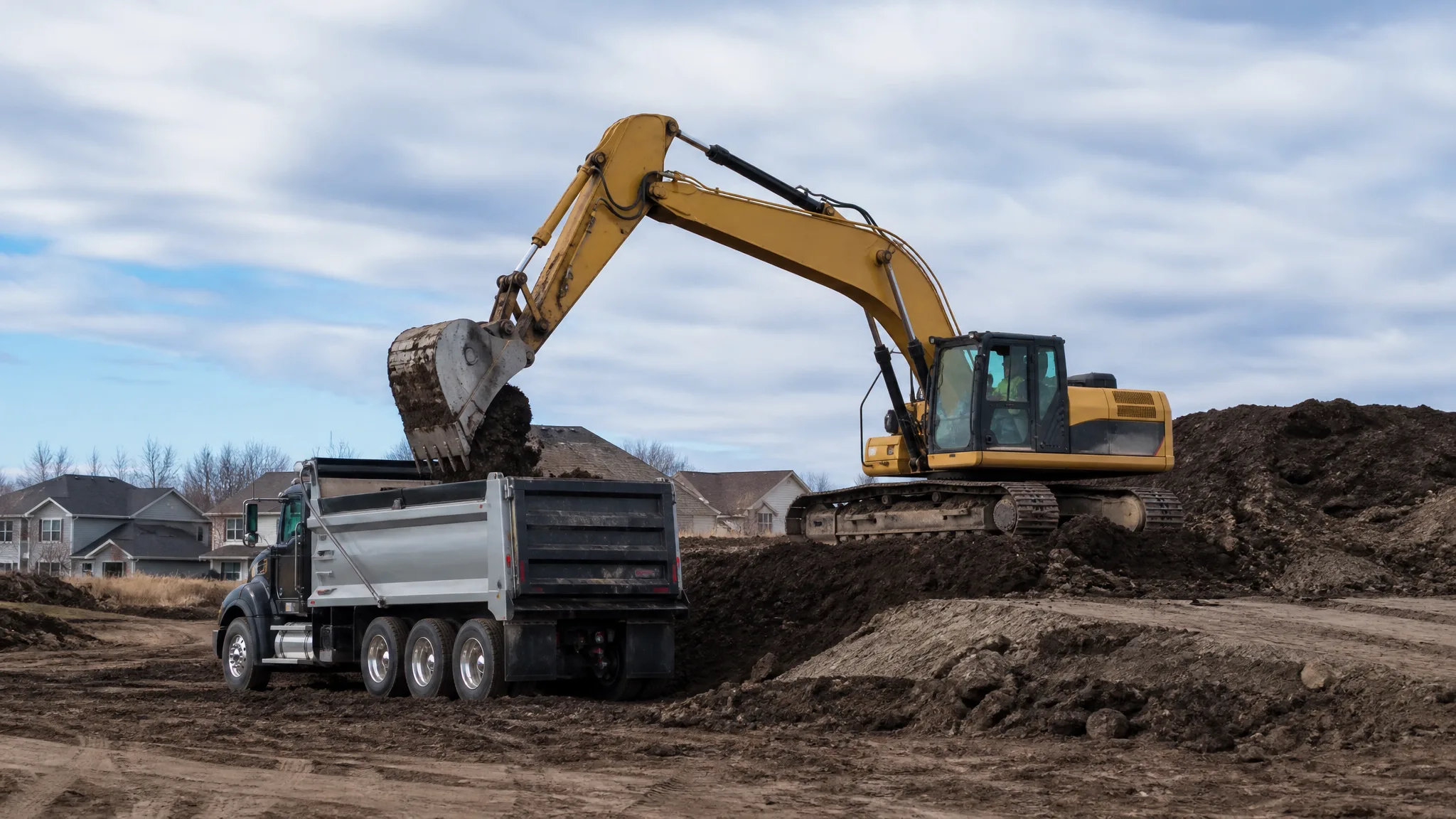
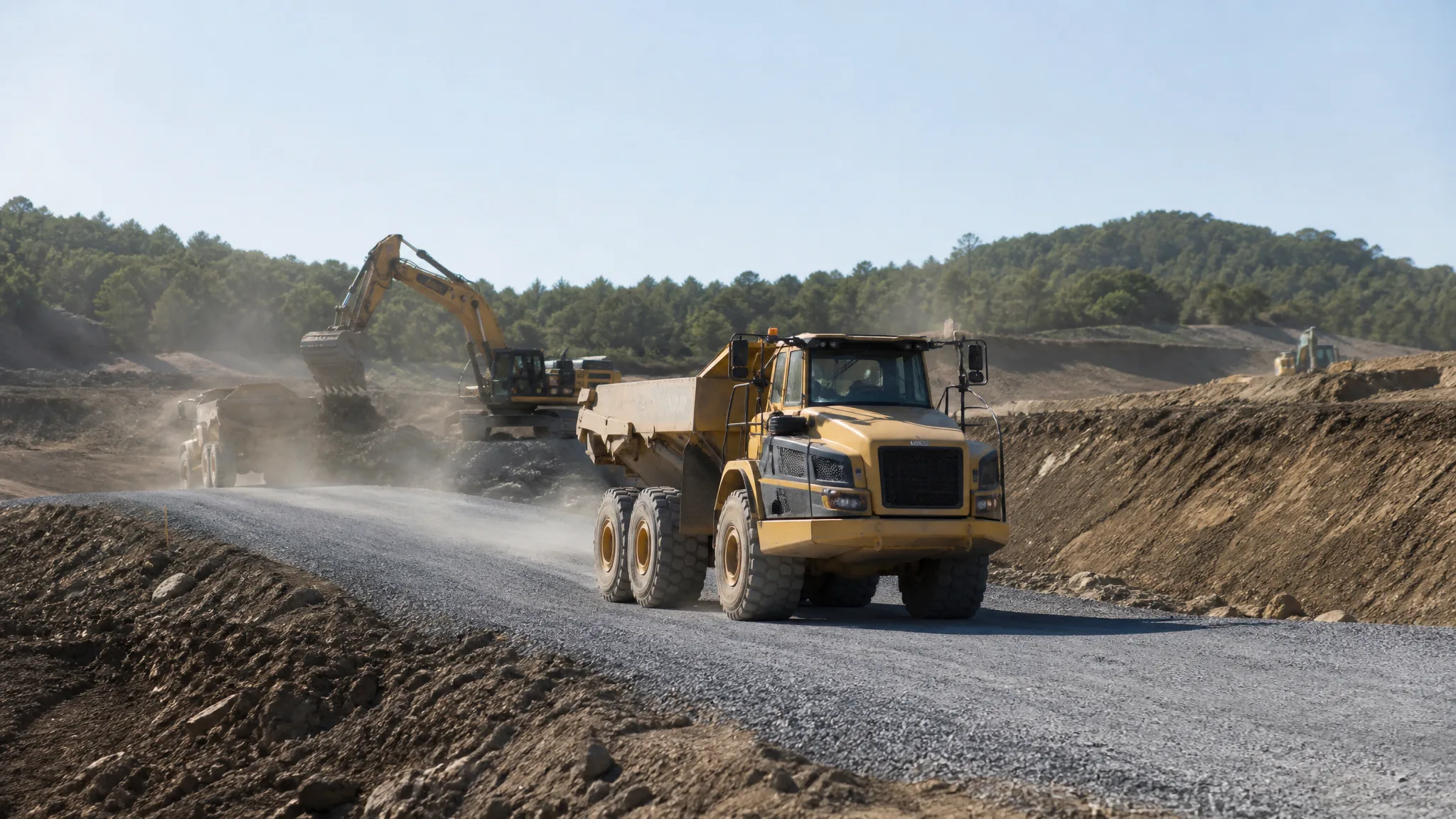
Run the numbers on a typical project and the pile gets large fast. A 32-by-16-foot pool at an average 5 feet deep, with a 1.5-foot over-dig, becomes an excavation box of about 35 by 19 by 6.5 feet — roughly 160 cubic yards of in-place (bank) soil. At about 22 percent swell, that is close to 195 loose cubic yards, which is somewhere in the range of 17 to 20 tandem dump-truck loads at roughly 10 to 12 cubic yards per truck.
Two practical points follow. First, some of that spoil can often be reused on site for grading, berms, or fill rather than hauled off, which cuts both disposal cost and truck traffic. Second, heavy wet clay can hit a truck's weight limit before the bed is full by volume, which can mean more trips than the cubic-yard math alone suggests. For the arithmetic behind these figures, see our guide to calculating excavated soil volume and truckloads and how many yards a dump truck holds. Spoil placement on site also matters — see managing spoil piles on a construction site.
Equipment and Access: Getting a Machine Into the Backyard
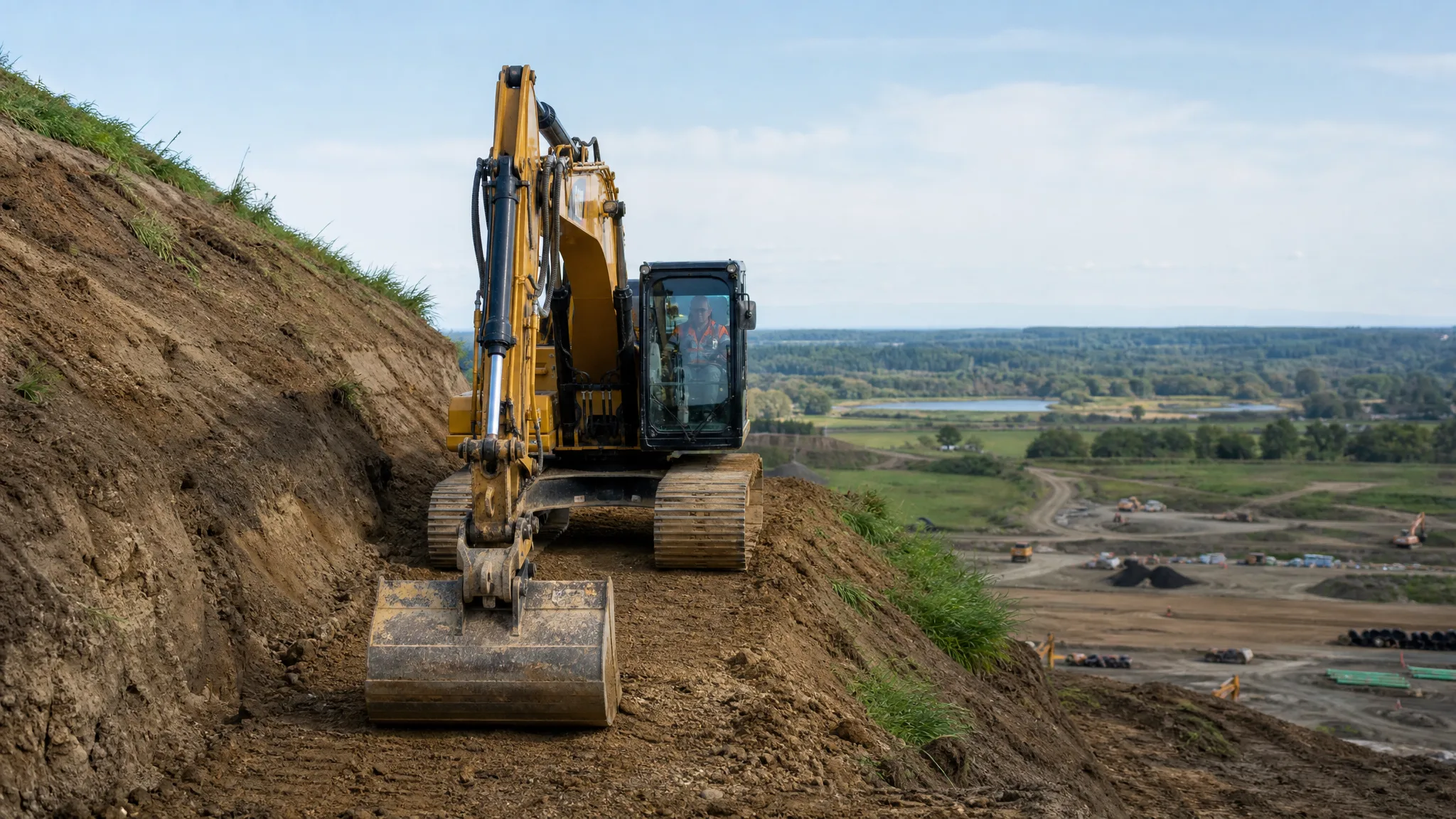
The dig itself usually involves a combination of excavators, backhoes, skid steers, and dump trucks. On an open lot, a full-size excavator makes fast work of the bulk cut. On the small urban and suburban lots that dominate residential work, access is the limiting factor, and the equipment list shrinks.
Tight gates, low overhead lines and branches, fences, and soft lawns all constrain what can reach the pool site. A compact excavator may be the only machine that fits, and some sections may need to be hand-dug or finished with a smaller attachment. Access should be walked and measured during the quote, not discovered on the morning the equipment arrives. For a sense of the size classes involved, see Cat excavator sizes, our comparison of the mini excavator vs. skid steer, and how to choose the right excavation equipment for your home project.
Once on site, a standard in-ground pool dig generally takes about one to three days. Complex shapes, sloped terrain, rock, or heavy hand work stretch that timeline considerably.
Gunite, Fiberglass, and Vinyl: How the Shell Changes the Dig
The pool type changes how tightly the excavation must match the design. A gunite or shotcrete pool is formed in place, so the cavity is dug to the designed shape and the shell is sprayed over steel against the soil. A fiberglass shell is manufactured off site and set into the hole, so the excavation must match the shell's dimensions closely — there is little room to adjust a shell that does not fit. A vinyl-liner pool is dug and fitted with a panel or wall system, then the liner goes over it.
The practical takeaway for whoever is running the machine is the same in every case: dig to the staked design, respect the depth transitions between the shallow and deep ends, and leave a clean, level base. Final hand-shaping and level checks are not optional finishing touches — they are what keep the shell sitting correctly and help prevent the cracking and settling that show up later when a base is uneven.
Groundwater, Rock, and Other Costly Surprises
Even a well-assessed site can produce surprises once the bucket is in the ground. Two of the most common are groundwater and rock.
A high water table or a wet-weather dig can flood the cavity and soften the base and the excavation walls. Clay soils make this worse because they hold water and create hydrostatic pressure against the completed pool shell. Contractors manage this with sump pumps, wellpoint systems, perimeter drains, and shaped working surfaces that shed water. Our guide to dewatering an excavation covers the methods in detail.
Rock is the other budget buster. Hard rock may require a hydraulic breaker, and in extreme cases controlled blasting, which adds significant equipment cost, labor, and time. Neither rock nor groundwater can always be predicted from the surface, which is why soil evaluation and a realistic contingency matter during bidding.
Safety Around an Open Pool Excavation
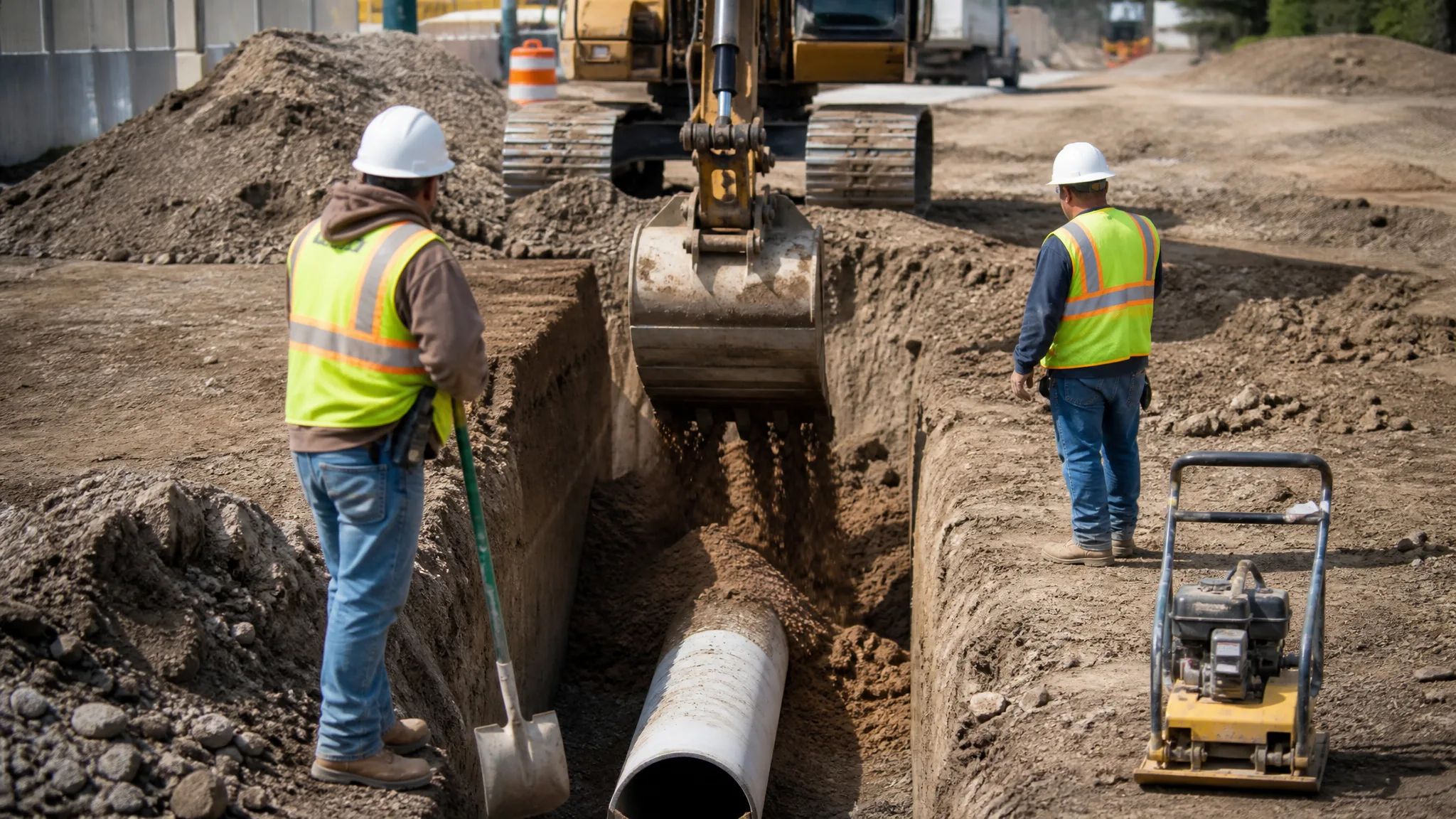
A pool dig routinely passes the 5-foot depth that triggers OSHA's protective-system requirement for employees in an excavation. Under 29 CFR 1926.652, every employee in an excavation 5 feet or deeper must be protected from cave-ins by an adequate protective system — sloping, benching, shoring, or shielding — unless the excavation is made entirely in stable rock. Pool walls are often cut to a stable battered slope, which is a form of protection, but that decision belongs to a competent person who classifies the soil and inspects the excavation daily and after rain.
Good crews also keep spoil and equipment back from the edge, provide a safe means of exit, keep the cavity clear of standing water, and fence the open hole at the end of each day. For more on the rules, see when trench protection is required and beyond the basics with excavation safety.
Backfill, Compaction, and the Grade Around the Pool
Excavation does not end when the hole is shaped. After the shell, plumbing, and base are complete, the space between the pool and the undisturbed soil has to be backfilled and compacted in lifts, not dumped in one loose pass. Loose fill settles over time and can stress the shell, crack the deck, and pull the surrounding grade out of level. Fill placed in lifts and compacted to a defined density is what keeps the coping and deck stable.
Drainage matters at this stage too. The finished grade around a pool needs to shed water away from the shell and any deck, the same way it must drain away from a foundation. See how much slope a yard needs for drainage and creating effective drainage systems during excavation for the slope basics.
What Drives Pool Excavation Cost
Excavation pricing is driven by site conditions more than by pool size alone. The main factors are soil type and stability, site access and the size of machine that will fit, the amount of soil to remove and how easily it can be hauled off, the pool's size and shape, and how level the site is to begin with. Sloping lots can require stepped excavation or retaining work to create a level base.
On top of the dig itself, expect line items for spoil disposal, any rock removal or dewatering, and the permits and inspections the local jurisdiction requires. As always, get an itemized bid rather than a single number so you can see what is included and what is a contingency. Our residential excavation guide for homeowners and cost management and budgeting guide are useful companions when you compare quotes.
Working With the Excavation Contractor
The best pool project starts with good information. Have the design finalized before excavation, confirm the permit status, and make sure the site has a fresh utility locate before anyone digs — see calling 811 before you dig. Walk the access route with the contractor, talk through spoil handling, and ask how they plan to handle rock or groundwater if they show up.
A pool excavation done right is quick, clean, and quiet. A pool excavation done on guesswork is the opposite. Plan the dig like the structural work it is, and the rest of the pool has a solid foundation to build on.