Excavating for a Septic System


Most excavation work is about moving dirt efficiently — cut this hill, fill that low spot, haul off the surplus. Digging for a septic system is the opposite. The soil you are excavating around is the treatment plant, and if you compact it, smear it, or strip it, the system can fail years before it should. A conventional septic system is simply a buried tank plus a drain field of trenches, but the excavation work around them has to be done with a level of care that bulk earthwork never demands.
Why septic excavation is different
In a conventional system, wastewater leaves the house, solids settle in the septic tank, and the liquid effluent flows out to a drain field, where it slowly filters through unsaturated soil. That soil does the actual treatment — bacteria and filtration remove pathogens and nutrients before the water returns to the groundwater. About a quarter of U.S. households rely on septic systems, and roughly one in ten fails, according to Census-based estimates cited in extension research.
The practical lesson for anyone digging: the native soil under the drain field is the most important material on the job. Heavy equipment compacting the field footprint, trench walls smeared smooth by a bucket, or topsoil stripped off the whole area can all destroy the soil's ability to accept and treat effluent. Septic excavation is precision work with a finish grade that matters far more than how many yards you move per hour.
Before the digging: permits, soil evaluation, and design
You cannot simply pick a spot and dig. A permit from the local or state health department is required in nearly every jurisdiction, and it is issued against a site and soil evaluation performed by a certified professional — commonly called a perc test, though modern evaluations rely more on soil texture, color, and depth than the old water-timing test alone. The evaluator digs test holes, reads the soil, and approves a drain field design sized to both the house and the ground.
That design, not habit, sets the trench depths, lengths, and location. It is worth understanding before you estimate the job, because it also tells you whether a conventional system is even possible. High-clay soils drain too slowly, shallow bedrock or a high water table leaves too little treatment depth, and gray, mottled soil signals seasonal saturation — all conditions that force an alternative design such as a mound or a pretreatment system, which is a completely different excavation. Skim our guide to assessing excavation requirements and risks before bidding soil-dependent work like this. And before any of it starts, the buried utilities on the property should be located and mapped, because septic trenches frequently cross paths with water lines, electric service, and old abandoned systems nobody remembers are there.
The two digs: tank hole and drain field
A conventional septic installation is really two excavations connected by a sewer line. First is the tank hole — a single, relatively deep excavation sized to the tank. Second is the drain field — a set of shallow, narrow trenches that typically run parallel to each other, connected to the tank outlet through a distribution box that splits the flow evenly between them.
The house sewer line must also be trenched from the foundation to the tank inlet, which usually means coordinating with whoever is doing the foundation and plumbing work. Most residential drain fields consist of three to five trenches up to about 100 feet long, though the exact count and length come from the design, not a rule of thumb.
Reading the soil like the evaluator does
Before the first bucket swings, walk the proposed field and look at the ground the way the evaluator did. Well-drained soil suitable for a drain field shows uniform brown-to-red colors. Gray soil, or gray mottles within the soil, indicates standing water during the wet season — a red flag that the field will not accept effluent when it matters most.
Texture matters too. Cohesive clay holds water and percolates slowly; coarse sand percolates fast but does little filtering. The right drain field soil is somewhere between — loamy ground that absorbs at a steady rate and supports the bacteria that treat the wastewater. If you are trenching into layered or questionable ground, our article on trenching techniques for different soil types covers how each soil behaves once you start cutting.
Typical drain field trenches: depth, width, and materials
Because local codes govern every dimension, treat these as typical ranges rather than specs. Drain field trenches are commonly about 18 to 24 inches deep — some codes allow up to about 3 feet — and 18 to 36 inches wide. The trench bottom is filled with a bed of washed stone, typically 12 to 18 inches deep, and a 4-inch perforated distribution pipe is laid through it, with more stone above the pipe and roughly a foot of soil cover on top. Many specs call for washed gravel or crushed stone in the 3/4- to 1-1/2-inch range, clean enough to keep voids open.
Two details separate a good install from a failed one. The trench bottoms must be at the grade the design calls for so effluent spreads evenly instead of pooling at the low end, and the trenches must stay out of the way of trees, driveways, and anything that will drive over or root into them later.
Digging the tank hole
The tank hole is the deepest part of the job. The hole is dug a little larger than the tank — usually a foot or two of working room around it — and to a depth that lets the tank inlet align with the house sewer line while the outlet still gravity-flows toward the drain field. Tanks are commonly set so their access openings end up at or near finished grade, often with risers, so the lid is never buried beyond reach.
Because tank holes frequently exceed 5 feet deep, they trigger the same excavation safety rules as any other deep hole: cave-in protection, a safe way in and out, and spoil kept well back from the edge. Our guide to when trench protection is required spells out exactly when a hole this size needs sloping, shoring, or a box. Concrete tanks weigh thousands of pounds, so they are lifted and lowered with an excavator or crane — never rolled or dropped in — and the initial backfill should be clean soil worked in carefully, free of boulders that could crack the tank. Understanding select fill versus native soil helps here, because what goes back against the tank matters as much as what came out.
Trenching the drain field the right way
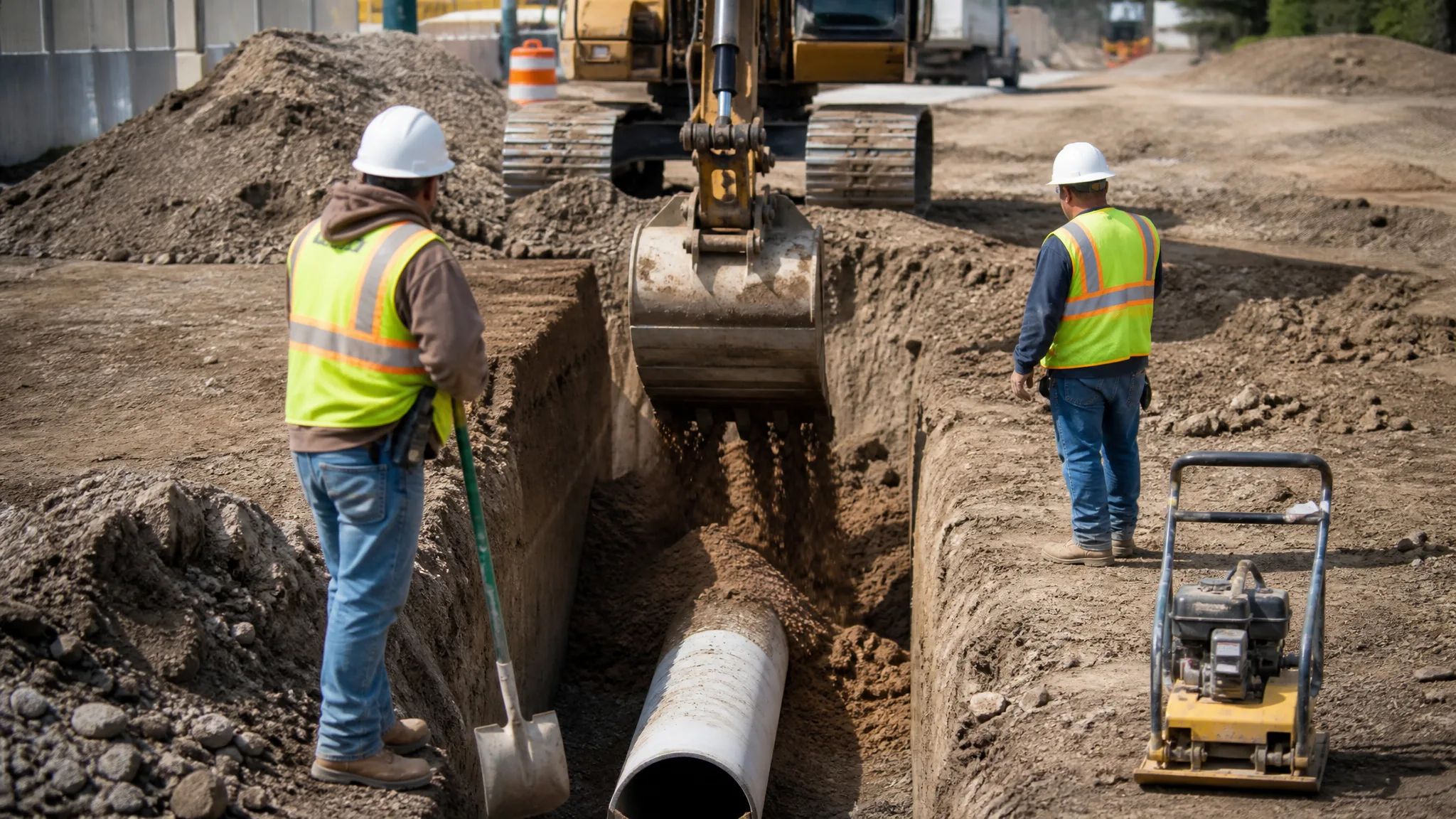
The drain field trenches should be excavated when the ground is dry enough to work cleanly — wet soil smears, and a smeared trench wall seals the very surface the effluent must pass through. Cut each trench to the designed bottom grade rather than digging deep and filling back up; over-excavated trenches filled with loose soil settle and can crush the pipe or channel flow.
Sequence matters. Dig the trenches, place the stone bed, lay the perforated pipe at the design level, cover it with stone, and finish with soil — and keep heavy equipment off the open field as much as possible. Running a loaded excavator or dump truck across the proposed drain field compacts the soil under the trenches, and compaction is exactly what a drain field cannot tolerate. When the ground is wet, that damage gets worse fast.
Choosing the right machine
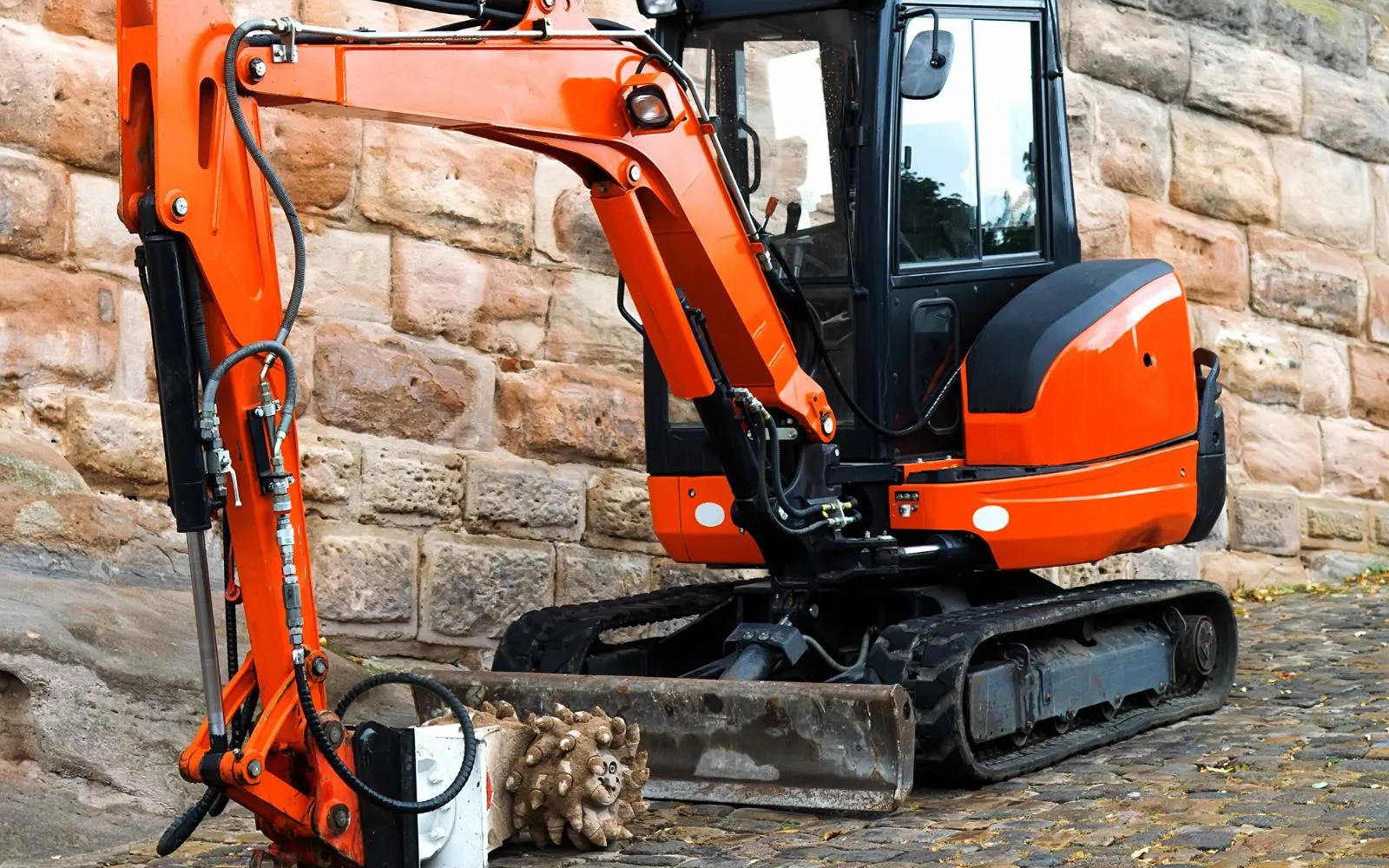
Machine size follows the work. A compact excavator with a narrow bucket in the 12- to 24-inch range is the workhorse for drain field trenches, because it cuts a clean, narrow slot without over-excavating. The same machine can often handle the tank hole on smaller systems, though a mid-size excavator makes the deep, wide tank dig faster and gives the lifting capacity to set a concrete tank safely. A backhoe is the classic alternative for both tasks, and a skid steer earns its keep moving spoil and stone.
For homeowners coordinating an install, the practical question is usually whether the excavation contractor or the septic installer provides the machines — get it in writing, because it is a common source of change orders. If you are renting equipment for a DIY-friendly site evaluation or a tank replacement, our guides to choosing the right excavation equipment for your home project and the essentials of residential excavation for homeowners cover what each machine can realistically do.
Spoil, access, and erosion control
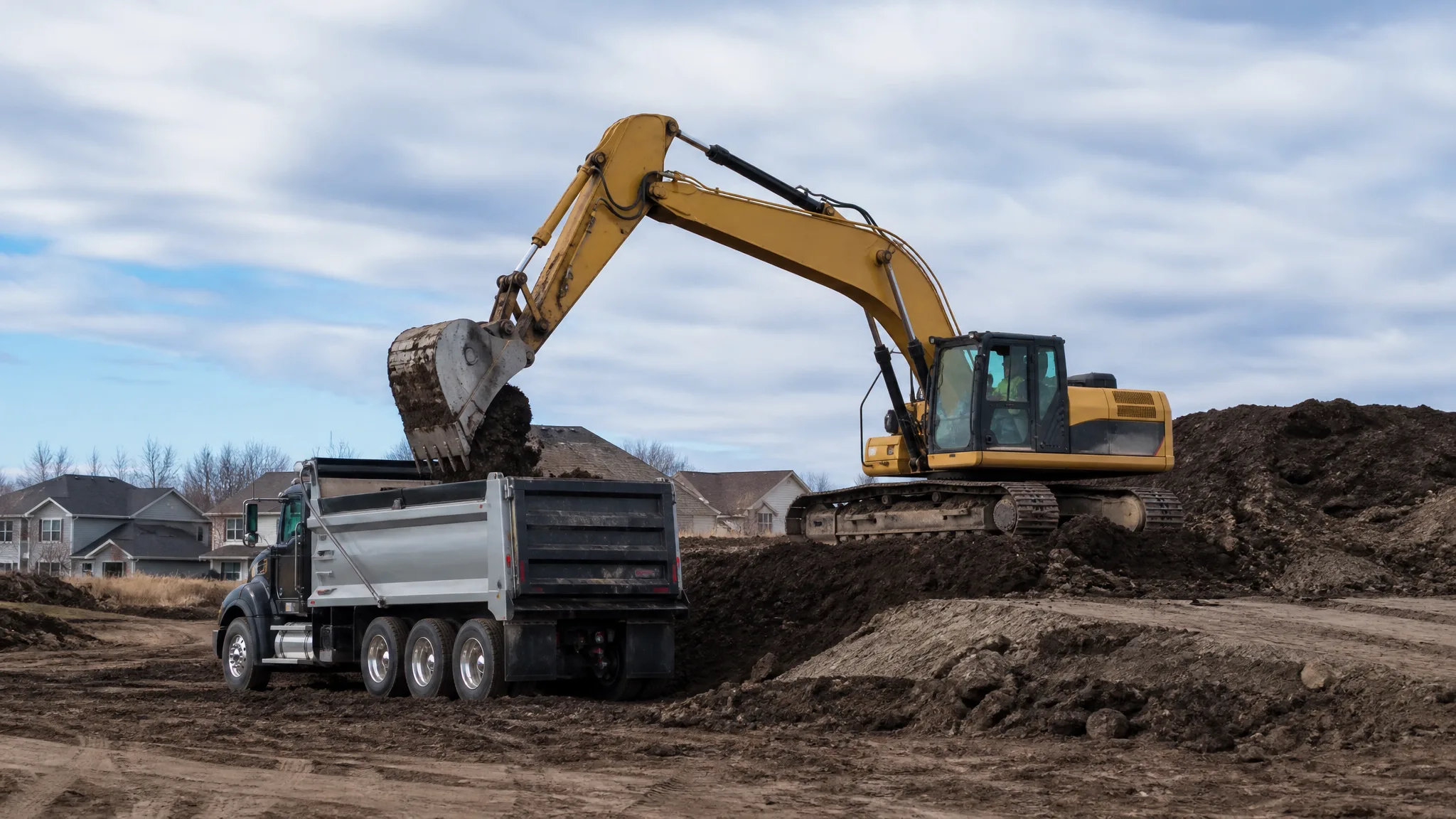
Septic jobs generate spoil from the tank hole, the field trenches, and the sewer line — and most of it is needed again for backfill, so it should be stockpiled where it will not be in the way. Keep topsoil separate from subsoil so the field can be finished with the good dirt on top. If workers will enter trenches at any point, OSHA's rules apply: spoil at least 2 feet back from the edge, ladders within 25 feet in trenches 4 feet deep or more, and protection in trenches 5 feet or deeper. Our articles on how far spoil piles and equipment must be kept and managing spoil piles on a construction site cover the details.
Access is the other planning item. The tank has to be delivered — often on a truck with a boom — and the stone has to get to the field. Plan the delivery route so heavy trucks never cross the drain field footprint, and stage the stone where the excavator can reach it without tracking across the trenches. If the job runs into wet weather, protect the open trenches and stockpiles from runoff before it becomes a mud problem; diverting surface water around the excavation is a drainage exercise, not an afterthought.
After the backfill: protecting the system for decades
The excavation work ends at final grade, but the system's survival depends on what happens to that ground afterward. Never drive, park, or build over the tank or the drain field — heavy vehicles crush pipes and compact the soil, and structures block access for the maintenance the system legally requires. Plant grass over the field, keep trees and shrubs away so roots stay out of the lines, and point downspouts and runoff away from the field so it never gets more water than it was designed to treat.
Finally, keep the record. Photograph the layout before the dirt goes back, note where the tank and every trench line run, and store that sketch where the next owner — or the next excavator — will find it. A septic tank should be pumped every 7 to 10 years, and every future service call starts with someone knowing exactly where the system is buried. That simple as-built record is the cheapest insurance on the whole job.