Differing Site Conditions and Change Orders

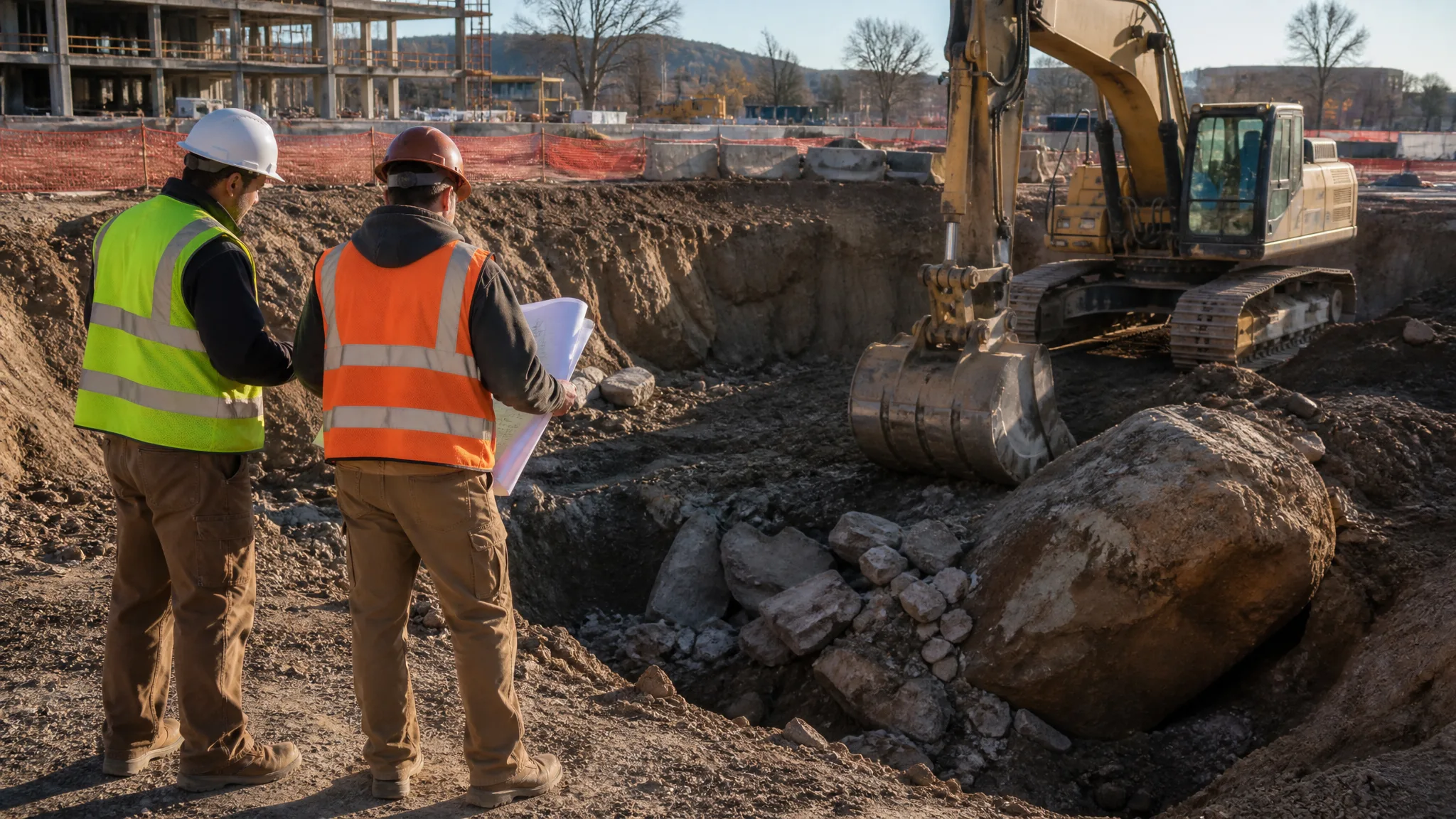
Every excavator operator knows the moment: the bucket comes up full of something the drawings never mentioned. Rock where the borings showed sand. A buried foundation, a slab, a septic tank, a nest of old utility lines. Water that will not stop coming. The field problem is usually solvable in an afternoon. The business problem — getting paid for it — is where excavation contractors lose real money, because the entitlement rarely survives a sloppy record.
What a Differing Site Condition Actually Is
A differing site condition is a physical condition at the site that materially differs from what the contract documents indicated, or from what the work would ordinarily involve. It is a contract administration issue governed by whatever clause is in the signed agreement — not by what feels unfair.
On federal work the clause is FAR 52.236-2, Differing Site Conditions. It requires the contractor to give written notice promptly and before the conditions are disturbed, and provides that if conditions do materially differ and cause an increase or decrease in cost or time, an equitable adjustment is made and the contract modified in writing. Private work uses whatever the parties negotiated, commonly AIA A201, which addresses the same issue in Section 3.7.4 as “concealed or unknown conditions.”
The critical limitation: the clause establishes a process for evaluating a discovery, not a guarantee of adjustment. Whether you get one depends on the signed contract, the site information available, and the facts documented in the field.
Type I vs. Type II: Two Different Tests
The industry splits these into two categories, even though A201 itself does not use those labels. They compare the field condition against two completely different benchmarks.
- Type I compares the actual condition to what the contract documents indicated. The evidence is the drawings, specifications, geotechnical report, boring logs, surveys, addenda, and any provision explaining how bidders were allowed to rely on that information.
- Type II applies where the documents said nothing. It asks whether an unknown physical condition is of an unusual nature and differs materially from what is ordinarily encountered and generally recognized as inherent in that kind of work. The evidence is local geology, comparable projects, and industry knowledge.
The distinction decides what you have to prove. A bidder's private assumption is not a contract indication — if the drawings were silent and the contractor simply expected easy digging, that is not Type I. Equally, an unusual condition still has to be unusual for that type of work to qualify as Type II.
Notice Comes Before Everything Else
Both clauses put notice ahead of the work. FAR 52.236-2 requires written notice promptly and before the conditions are disturbed, and states that no request for equitable adjustment will be allowed without it. It also bars requests made after final payment.
That sequence trips up good contractors constantly. The crew hits rock on a Friday, the superintendent calls the owner's rep, everybody agrees it is a problem, and the work continues so the schedule does not slip. By Monday the rock is gone and the record consists of a phone call nobody wrote down.
The practical rules are short. Give the notice in writing, to the recipients the contract names, before you move the material. Do not wait until you have complete cost information — initial notice is not a priced claim. And confirm in writing any verbal direction you receive, because a field conversation is not a change order.
Document the Condition Before You Disturb It
The condition is the evidence, and excavation destroys evidence by design. Photograph and video the exposed face with something for scale, note station or grid location and elevation, and describe it in the daily report the same day. Sketches, witness names, weather, and the equipment and labor on site all matter later.
Then resist the urge to investigate on your own. Sampling, testing, or digging further to find the extent can alter or destroy the condition before the owner's representative has seen it. Ask for direction and confirm in writing who authorized the work and that you expect to be paid. Where the condition creates an immediate hazard — unstable walls, a damaged utility, gas — safety comes first and the paperwork follows, which is why what to do if you hit a utility line is worth knowing cold.
Photograph the pre-existing condition too. A dated set of photos of the site before mobilization is the cheapest insurance in the file.
Rock Is the Classic Excavation Dispute
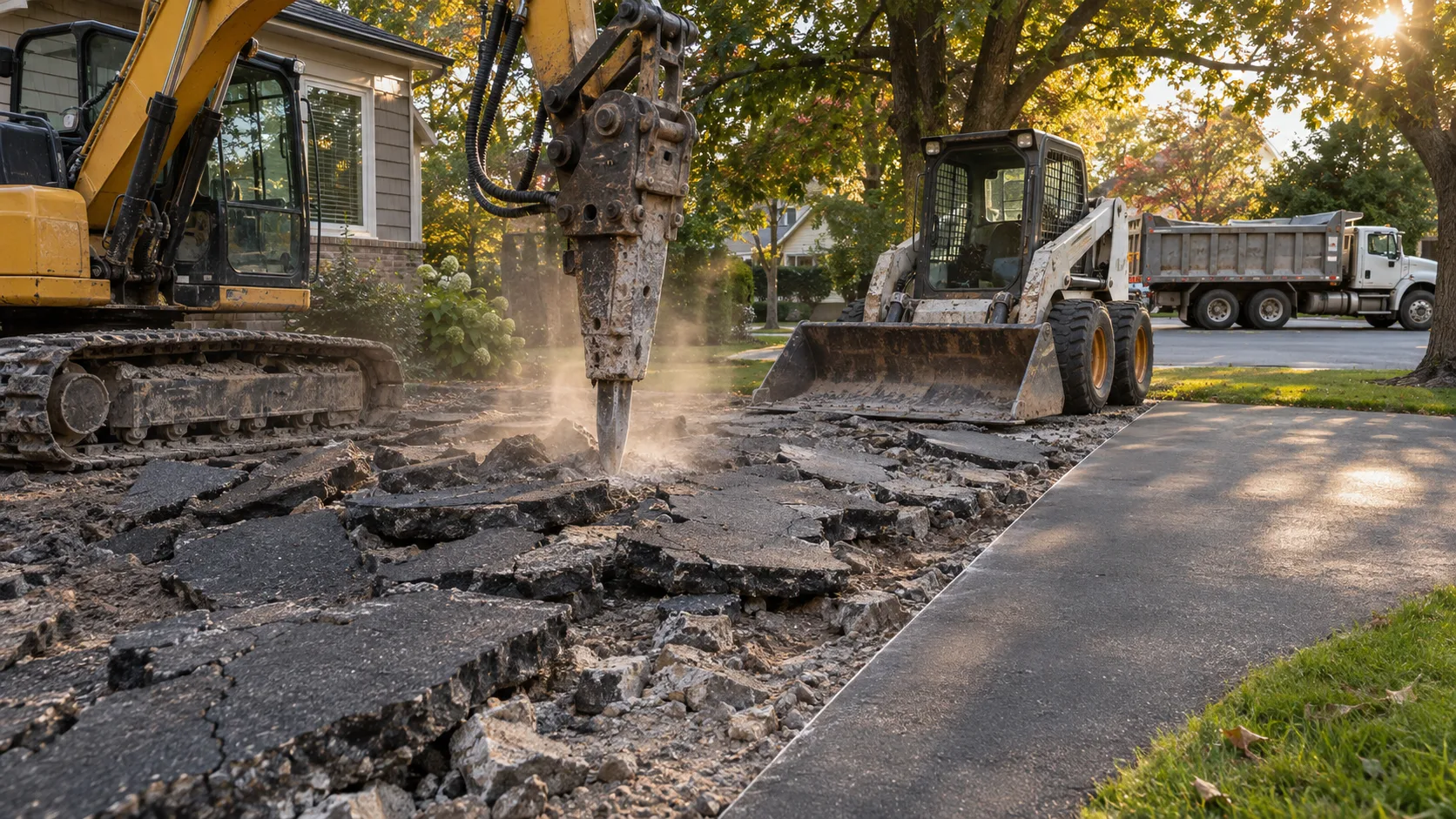
Rock generates more argument than any other subsurface condition, largely because “rock” is a contract term, not a geological one. Most specifications define it by how it must be removed — material that cannot be excavated without systematic drilling, blasting, or hydraulic breaking — and some set a size threshold for boulders. Some contracts pay rock as a separate unit-price item measured within pay limits; others bury the risk in the lump sum.
That definition drives everything. With a rock pay item, the job is establishing quantity within the pay limits, which puts a premium on survey sections before and after removal. With no rock item and no differing site conditions clause, the risk was priced into somebody's bid — probably not well.
The methods side is covered in rock excavation methods, and the quantities side in excavation takeoff methods. What matters commercially is that you can show the material existed, where it was, and how much of it there was.
Water, Soft Ground, and Buried Debris
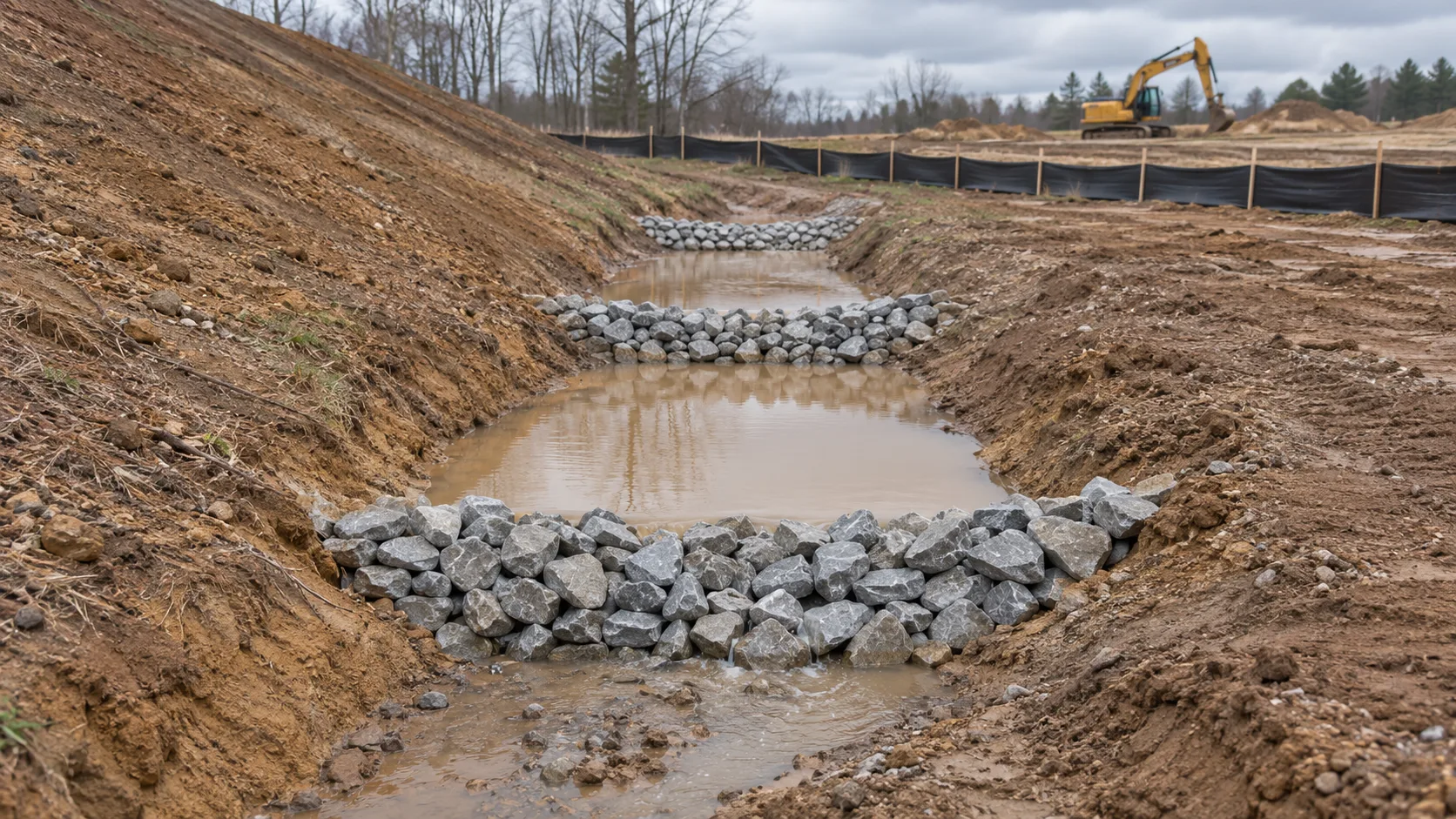
Groundwater is the quiet one. A cut the geotechnical report described as dry that fills with water changes the method, the slope, the equipment, and the schedule at once. Dewatering and pumps become extra work, and the spoil may become unsuitable material that cannot be used as fill.
Soft, organic, or unstable soil is similar: the designed subgrade cannot be achieved, and the fix is undercut and replace — import, haul-off, and compaction nobody bid. Buried debris is a Type I condition when the drawings showed clean soil, and a disposal problem on top of an excavation problem. The lines nobody can see are also why calling 811 before you dig is not optional.
All three share one trait: they are far easier to prove with a geotechnical report and boring logs in hand. If the owner provided borings that misdescribed the site, that is your Type I case. If the owner provided nothing, the Type II argument gets harder and the pre-bid site visit gets more valuable.
Track Cost and Time Separately
A cost increase does not automatically prove a time extension, and a delay does not establish every claimed cost. Keep them in separate records. On the cost side, open a dedicated cost code for the condition and track labor hours, equipment hours, materials, subcontractor activity, and credits — investigation, protection, standby, changed work, and rework kept apart.
On the time side, identify the affected activity, its available float, the sequencing options you had, the mitigation you attempted, and any effect on a contract milestone. Showing that you mitigated instead of absorbing is what separates a credible delay claim from an invoice.
This is the same machinery that makes excavation job costing work, which is why contractors who already run cost codes recover change orders faster than contractors reconstructing the story a month later.
Pricing the Change: Unit Price, Lump Sum, or Force Account
Once entitlement is established, price is a separate negotiation. Where the work matches an existing bid item, the contract unit price usually governs, with quantity adjustments as measured quantity moves away from bid quantity. Where it does not match, a lump sum gets negotiated from labor, equipment, material, and markup.
When the parties cannot agree on price and the work has to proceed, many public owners pay on a force account basis: actual labor hours, equipment hours at an established rate, and materials, all recorded daily on signed tickets. That works only if the daily record is complete and signed at the time — unsigned hours accumulated at month end are worth very little.
Equipment hours should reflect hours worked, not hours on site, and standby time needs its own treatment agreed in advance. The published rate card — whether the owner's, a state DOT's, or a rental guide — often decides the number regardless of what the machine actually costs you, which is worth knowing before you argue. For how unit rates get built in the first place, see excavation cost per cubic yard.
What Kills a Change Order
- Continuing the operation until the physical evidence is covered, mixed, or hauled away.
- Investigating, sampling, or testing before the owner's representative has seen the condition.
- Waiting for full cost information before giving the initial notice.
- Relying on an informal conversation where the contract requires formal written notice to named recipients.
- Describing the condition as “unexpected” without tying it to what the documents indicated or to what is ordinarily encountered.
- Lumping all extra cost into one number with no separation between the condition, the delay, and the rework.
- Missing the contractual notice window, or filing after final payment.
Every item on that list is a documentation failure, not a technical one. The excavation was probably done correctly.
Cutting Exposure Before the Bid
The cheapest change order is the one you never needed. Read the geotechnical report with the excavation in mind, not just the foundation design. Visit the site before bidding and look for filled ground, old structures, and evidence of previous grading. Ask questions during the bid period and get the answers in an addendum — a clarification that lives only in an email is weaker than one in the contract documents.
Then check what the contract says about subsurface risk. A differing site conditions clause, a rock pay item, a unit price for unsuitable material, and a clear notice provision are worth more than a slightly higher bid. Where the clause is missing or heavily qualified, the contingency in your number is the only protection you have — and it needs to be real.
None of this is legal advice — contract language controls, and disputes go where the contract sends them. But the pattern holds across public and private work: the contractor who gave written notice before disturbing the condition and kept contemporaneous records gets paid, and the contractor who did the right thing quietly does not. The excavation contracts guide is the place to start before mobilization.