Dust Control on a Construction Site


Dust is the most visible byproduct of earthwork, and in most cases the easiest one to control. Grading, excavating, hauling, and stockpiling all break fine soil particles loose, and on a dry day a working site can blanket the neighborhood in haze that draws complaints, citations, and eventually a stop-work order. The fix is not complicated: keep the surface damp, keep the exposed area small, and keep traffic speeds down.
Why Dust Costs Contractors Money
Dust is a health hazard before it is anything else. The fraction of quartz dust small enough to reach the deep lung is respirable crystalline silica, and OSHA regulates it in construction under 29 CFR 1926.1153. The standard sets a permissible exposure limit of 50 micrograms per cubic meter as an 8-hour time-weighted average, with an action level at half that.
Beyond worker health, dust is a neighbor and enforcement problem. Air agencies treat construction activity as a fugitive dust source, stormwater permits require good housekeeping, and visible dust crossing a property line is the kind of thing that gets photographed and reported. Cities and counties can require a dust mitigation plan before work starts, particularly on larger sites near occupied buildings.
There is a machine cost as well. Air filters, radiators, and cooling packages load up with fines, cab filters clog, and visibility drops on haul roads — a real safety issue when dump trucks and ground crews share a route.
What the Silica Standard Actually Requires
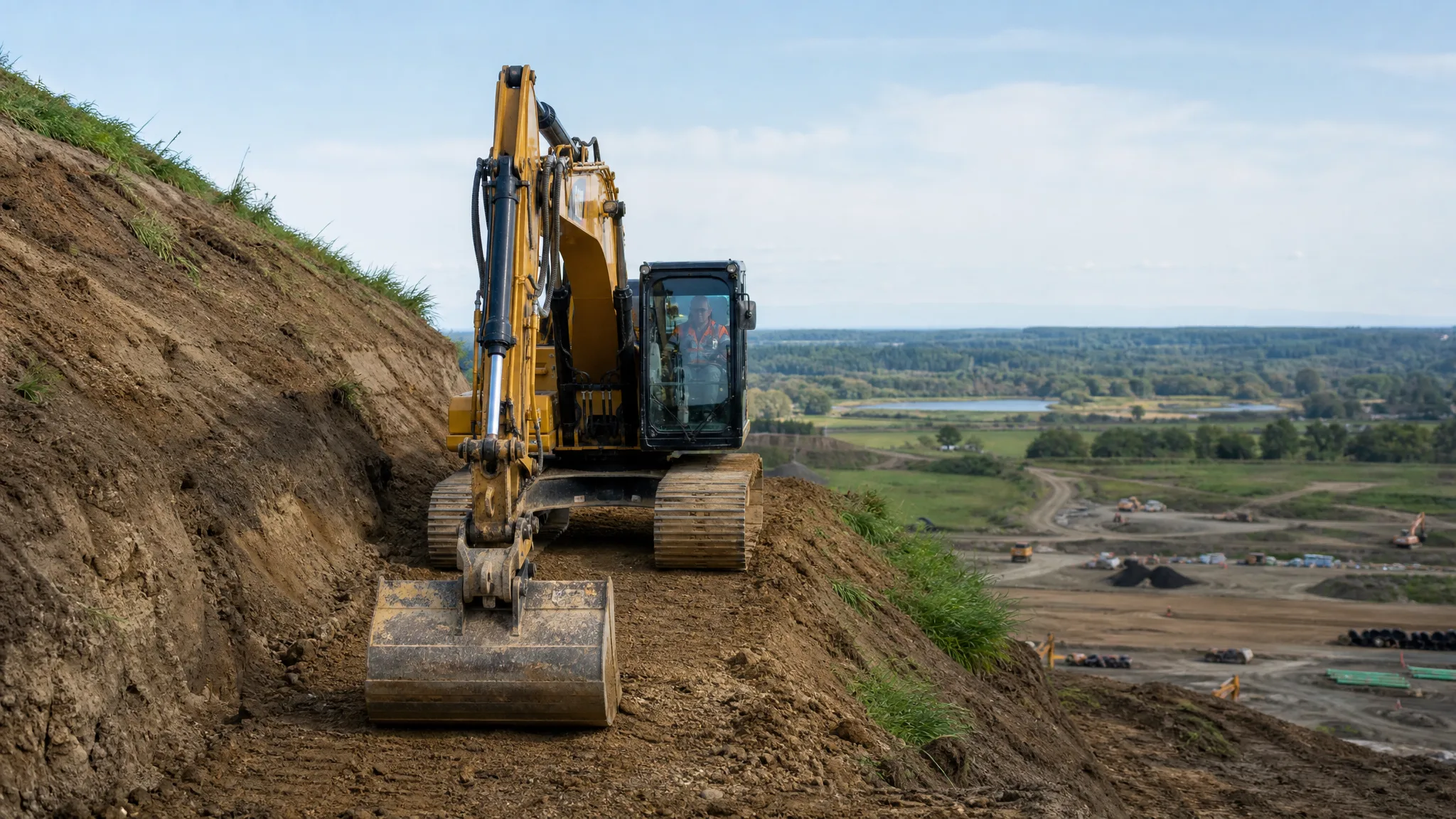
For ordinary earthwork, OSHA's Table 1 gives two acceptable paths. Item (xviii) covers heavy equipment used for grading and excavating while the machine is not abrading or fracturing silica-containing material: apply water and/or dust suppressants as necessary to minimize dust emissions, or work from within an enclosed cab when the equipment operator is the only employee engaged in the task. That wording is practical. A single operator in a sealed, filtered cab digging common soil is already in compliance.
Tasks that do break or fracture rock and concrete — hoe-ramming, rock ripping, demolition of silica-containing material — fall under item (xvii) instead. There the operator must run the machine from an enclosed cab, and when employees are working outside the cab on the same task, water and/or dust suppressants have to be applied as necessary to minimize emissions.
Wet methods carry their own requirement: OSHA says to apply water at flow rates sufficient to minimize the release of visible dust. A light dampening pass that still leaves a visible plume does not meet that bar. Enclosed cabs are specified in detail too — positive pressure from a continuous fresh air supply, door seals and closing mechanisms that work properly, gaskets and seals in good condition, intake air filtered at 95 percent efficiency in the 0.3 to 10.0 micron range, and working heat and air conditioning.
Housekeeping is part of the standard. Dry sweeping or dry brushing of dust that could contribute to exposure is prohibited unless wet sweeping, HEPA-filtered vacuuming, or another method that minimizes exposure is not feasible.
Water Is Still the Workhorse
For most sites, water is the cheapest and most flexible control. EPA's stormwater best-management-practice fact sheet on dust control notes that watering a surface until it is moist is effective at most sites, and especially on haul roads and other traffic routes where other methods are impractical.
Application rate and frequency are site-specific, and that is where crews get it wrong. Watering is not a once-a-morning ritual; it is driven by evaporation, wind, humidity, and how much traffic the surface is taking. A haul road that was damp at 7 a.m. can be raising dust by noon in summer. The practical rule is simple: if dust is visible leaving the ground behind a truck or a machine, the surface needs water now.
A water truck also needs a plan behind it. Know where the fill point is, whether the source is metered or permitted, and how long the truck can be off the haul road before it has to return. If water is being pulled from a hydrant, pond, or well, confirm it is allowed — some jurisdictions restrict withdrawal, and discharge from a site is a separate stormwater issue.
Haul Roads and Traffic Control
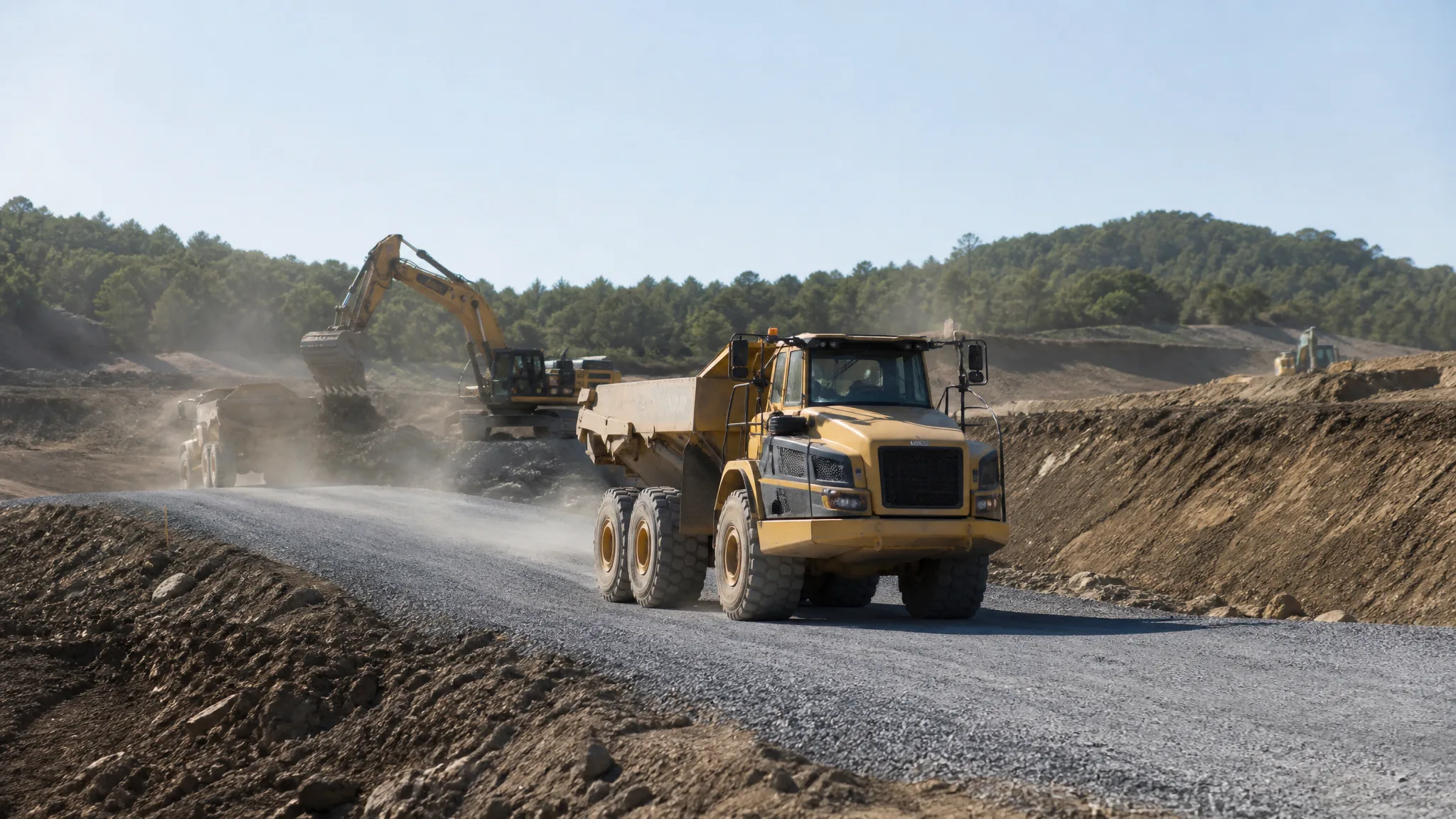
Haul roads generate more dust per hour than almost any other surface on a site because they carry the most traffic. Three things cut it: lower speed, better surfacing, and steady watering.
Speed is the cheapest lever there is. Guidance from state air programs commonly sets site speed limits at 10 mph or less on unpaved surfaces, and it is not unusual to see limits in the 10 to 15 mph range on longer roads. Doubling speed roughly multiplies the dust generated by a large factor, so the limit exists for a reason.
Surfacing helps too. A properly built gravel road with a defined crown and a graded stone layer holds moisture and holds shape; a rutted, dusty track sheds a plume with every pass. Wet cleaning of paved streets at the site exit — sweeping or vacuum-assisted cleaning rather than a dry broom — keeps the problem from becoming a public road problem. A stabilized construction entrance and track-out control pads work alongside dust control rather than replacing it.
Phase the Work and Shrink the Exposed Area
The less bare soil you have open at any one time, the less dust you can make. Phasing grading and earthwork so that only the area actively being worked is stripped and disturbed is standard practice on both air-quality and stormwater grounds.
Anything that will sit inactive gets stabilized. The default tools are vegetation, mulch, hydroseed, rolled erosion control products, or temporary cover — and multi-acre sites operating under a stormwater construction permit typically have a defined window (commonly around 14 days, per the applicable permit and SWPPP) before disturbed areas must be stabilized or protected. Because that number is permit- and state-specific, read your own SWPPP rather than assuming a figure.
The same principle covers stockpiles of soil and aggregate: keep them moist, cover or seal the ones that will sit, and place them out of the prevailing wind where site layout allows. Temporary sediment controls such as silt fence and inlet protection are separate obligations, but they protect the same water you are trying not to load with sediment.
When Water Is Not Enough: Dust Suppressants
Water evaporates, which is its weakness. Where a surface has to hold up for weeks or months — long access roads, staging areas, haul loops — contractors turn to chemical suppressants. The main families are hygroscopic salts such as calcium chloride and magnesium chloride, lignosulfonate products derived from wood processing, polymer emulsions, and vegetable-oil-based binders.
Each has trade-offs. Hygroscopic salts pull moisture from the air but can be corrosive to equipment and metal structures and can wash into stormwater. Lignosulfonates and organic binders are usually less aggressive but need reapplication and can be slippery when wet. Polymer and oil-based products vary widely by manufacturer. Follow the manufacturer's application rate, check whether your permit or air agency requires approval before use, and keep the application documented. Never treat a suppressant as a substitute for erosion and sediment controls.
Cutting, Breaking, and Demolition Dust
Dust from concrete and masonry work is a different animal because the material is high in crystalline silica. Cutting should use equipment with an integrated water delivery system feeding the blade continuously, or a shroud with a dust collection system and a high-efficiency filter, depending on the task and where it is done.
Jackhammers and chipping tools follow the same logic — a continuous water stream or spray at the point of impact, or a shroud with dust collection. Cleaning up around the work means wet sweeping or a HEPA-filtered vacuum, never a dry broom or compressed air. On demolition, the sequence matters as much as the equipment: water the structure and debris as it comes down, wet the material before loading, and keep haul trucks covered.
Stockpiles, Spoil Piles, and Wind
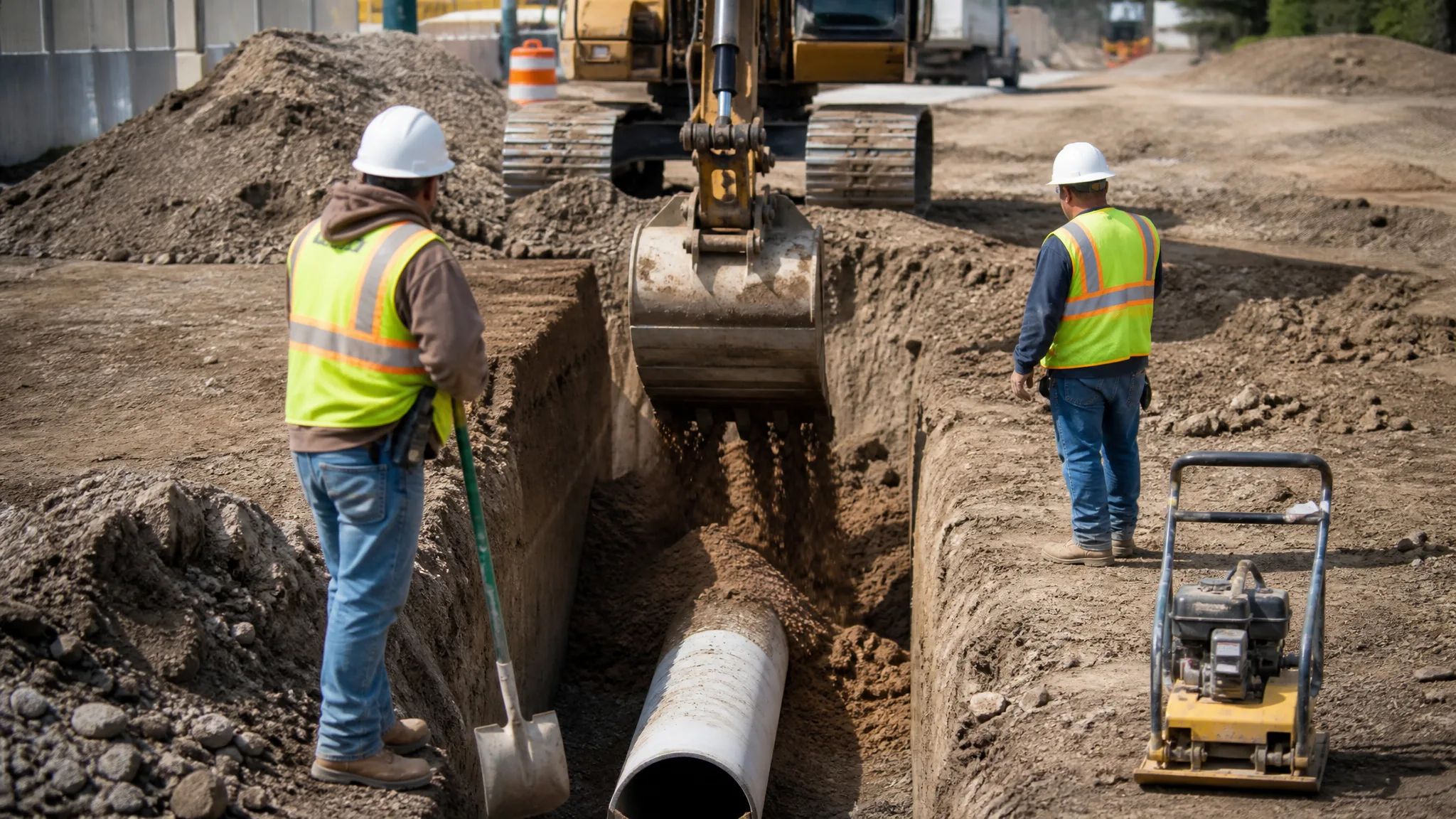
Every pile of dirt on a site is a dust source waiting for a dry, windy afternoon. Spoil piles handled well are already safer for trench and excavation crews — kept back from the edge, sloped stably, and crowned so they drain. From a dust standpoint, the same piles should be kept moist, worked from one face rather than scattered, and covered or stabilized if they will sit through a dry season.
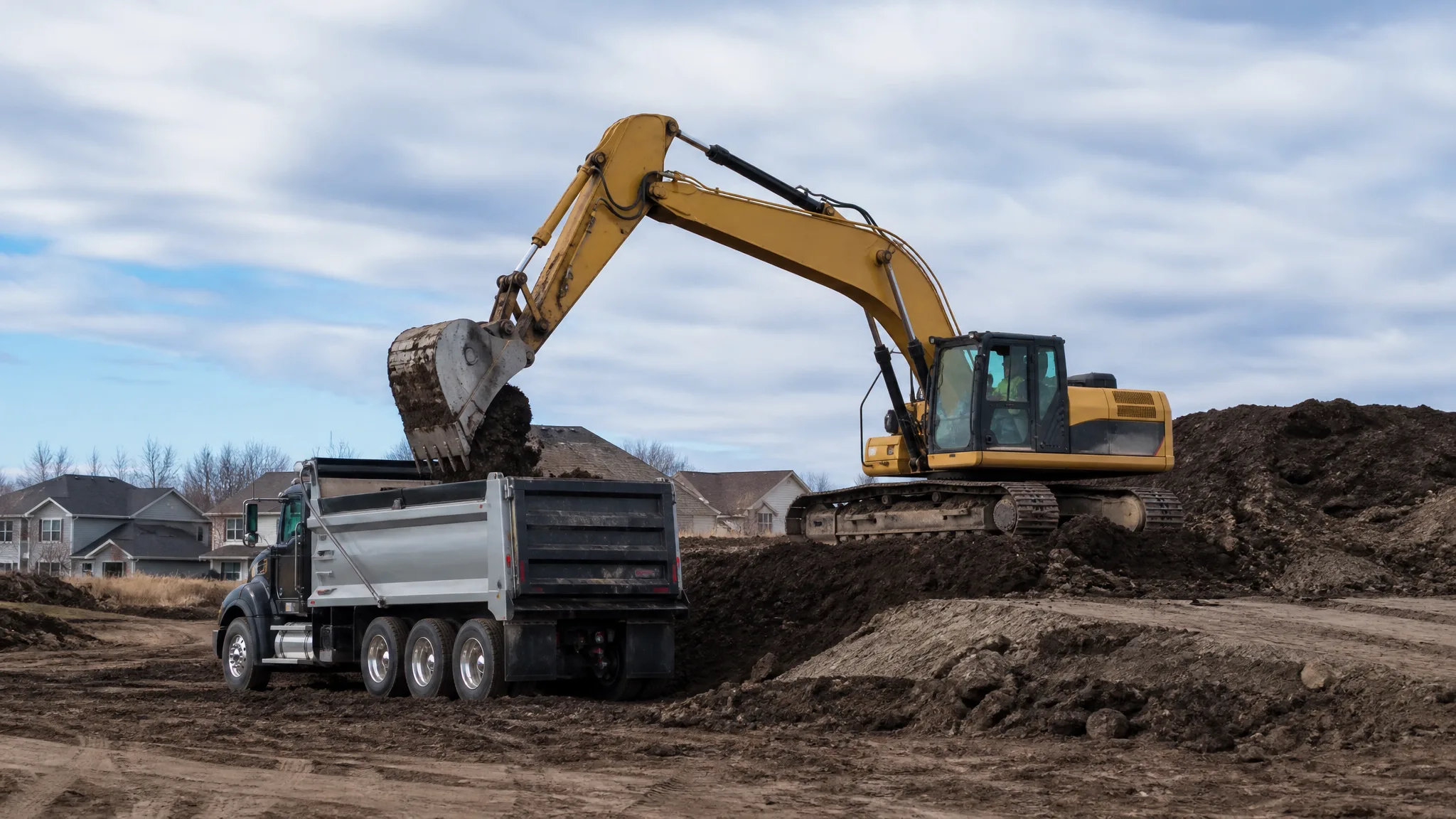
Drop height matters more than most operators expect. Dumping a bucket from full height into a truck bed or onto a pile throws fines into the air. Lowering the bucket, slowing the dump, and letting material slide rather than fall measurably cuts the plume with no extra cost.
Mud Is the Other Half of the Problem
Dust control fails when over-watering turns a site into a mud pit, and the consequences are worse than dust. Saturated subgrade cannot be compacted to specification, equipment sinks or ruts the surface, and tracked mud leaves the site on tires and tracks — which is its own permit violation.
So water is a balancing act, not a maximum. Apply enough to hold the surface together and stop visible dust, then stop. Watch for the field signs that fill is too wet to work: pumping under the roller, rutting, mud balls, and a shiny glazed surface. If a haul road is turning to grease, reduce frequency and increase the surface quality instead of adding more water. Track-out pads, stone entrances, and a proper drainage plan around the working area all buy margin.
Planning Dust Control Into the Bid
Dust control is a cost line like any other, and the time to price it is during takeoff. Estimate water truck hours per day, the number of days the site will be dry and active, the source and cost of water, any suppressant applications, street sweeping at the exit, and the stabilization measures required for phasing.
Sites that skip this step absorb the cost later as lost production while a water truck plays catch-up, or as a compliance fix after a complaint. Putting it in the bid turns an unpredictable nuisance into a known number, and it gives the estimator something to point at when a client asks why the earthwork line includes something other than dirt.
The field routine that makes all of this work is mundane: check wind and forecast in the morning, water before the first truck rolls, set and post the speed limit, keep the active footprint tight, cover and stabilize what is idle, and shut the water off before the ground turns to soup. None of it is complicated. It just has to be someone's job.