Building a Gravel Driveway


Ask a dozen landowners how their gravel driveway turned out and you will hear two very different stories. One built it in layers, compacted each one, and is still grading the same crown years later. The other watched a single big pile of gravel sink, rut, and wash into the yard within a few seasons. The difference was never luck — it was whether the driveway was built as a structural section or just dumped on the ground. A gravel driveway is really a stack of layers, each with a job to do, and this guide covers how contractors build one that holds up.
Why Some Gravel Driveways Last and Others Do Not
A driveway has four jobs at once: it has to carry vehicle loads down to the soil without overstressing it, shed water before it pools, resist rutting and stone migration under repeated tire passes, and still offer a smooth, drivable surface. No single gravel product does all four well. Coarse stone bridges weak ground and spreads loads, clean open-graded stone drains, dense-graded crushed stone locks up under compaction, and a tight surface course keeps tires from tearing the driveway apart.
That is why a properly built gravel driveway is laid in layers — each material doing the job it is best at. Driveways built as one undifferentiated pile of gravel fail in the first few years, almost always from the bottom up: the subgrade was never prepared, water got trapped in the section, or the surface stone worked down into soft soil until the whole drive rutted. For a fuller comparison of the surface material itself, see our guide to whether crushed concrete is a good driveway base.
Layout First: Route, Width, and Water
Before any dirt moves, lay out the drive and think about drainage as part of the design, not an afterthought. A single-car drive is typically 10 to 12 feet wide, and a two-car drive 16 to 20 feet or more; add a turnout or pull-off on long drives so vehicles can pass. On sloping ground, running the drive across the slope or with a gentle grade beats fighting a steep, water-gathering chute.
Water is the enemy of every unpaved surface, so plan where runoff will go before you build. Ditches on the uphill side, culverts where the drive crosses drainage, and a driveway alignment that sheds water rather than collecting it will save more gravel than any material choice. If the drive meets a public road, check with the local road authority about approach permits and culvert requirements before you start.
Prepare the Subgrade: Everything Sits on This
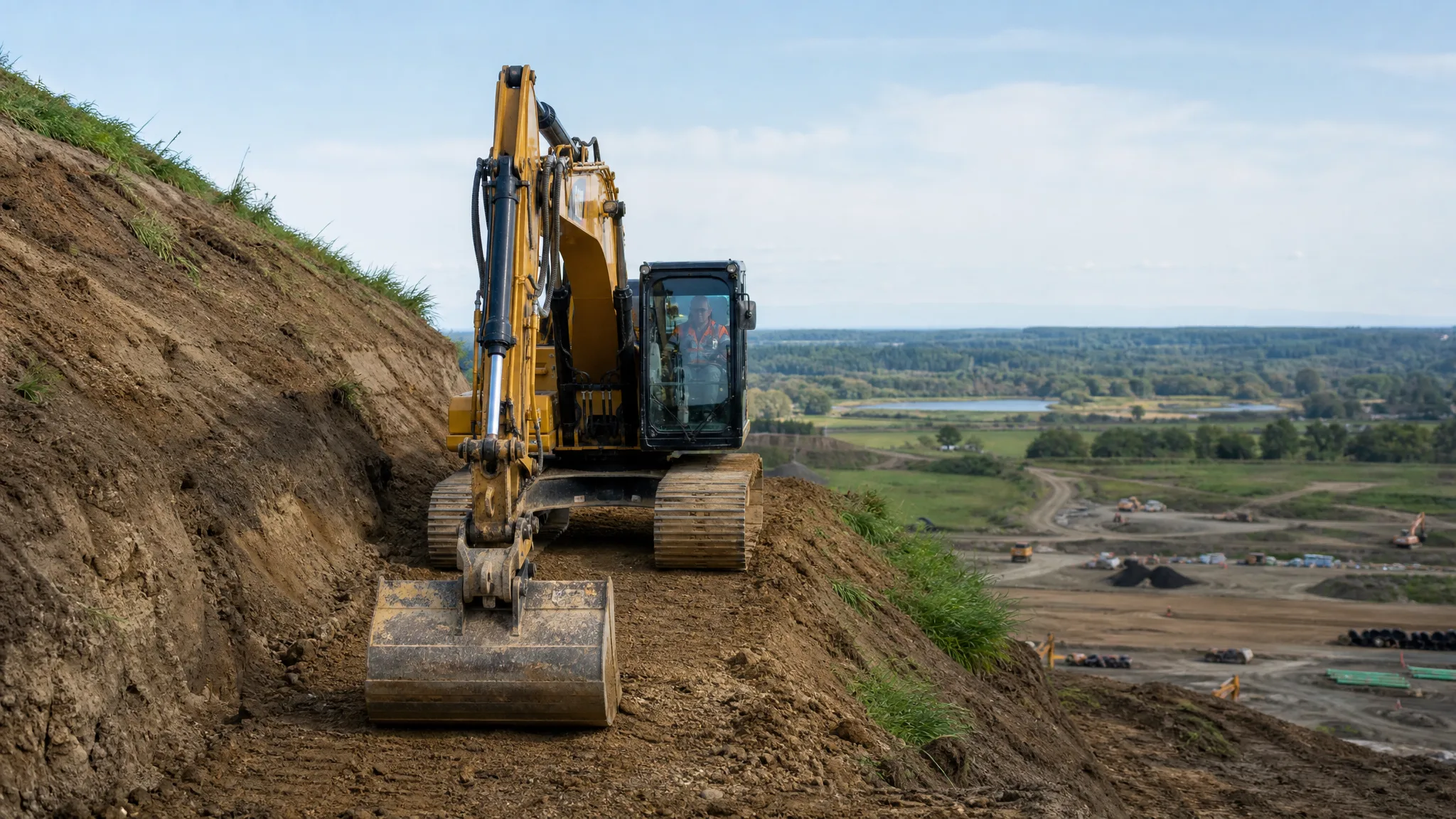
The subgrade — the natural soil under the driveway — is the most underestimated part of the job. A perfect stone section over an unstable subgrade fails, while a modest section over a well-prepared subgrade can perform for decades. Preparation starts with stripping topsoil, vegetation, and organic material down to firm mineral soil; leaving topsoil under a driveway guarantees uneven settlement as it decomposes.
Soft spots should be dug out and replaced with stone or structural fill, then the whole subgrade should be compacted and proof-rolled with a loaded truck to expose any areas that pump or rut under load. On specified projects, subgrade is typically compacted to at least 95 percent of standard Proctor density (ASTM D698). Treat the subgrade like the foundation it is — the same logic that keeps building pads from failing applies at driveway scale. For more on the prep work, see our guides to topsoil stripping, proof rolling, and grading and site preparation.
Geotextile Fabric: When the Ground Needs a Separator
On wet, silty, or clay-heavy subgrades, a layer of non-woven geotextile fabric between the soil and the stone does two things: it stops fines from pumping up into the gravel and clogging the drainage, and it keeps the stone from punching down into soft pockets. The fabric does not replace aggregate depth or compaction — it protects them. A non-woven, needle-punched geotextile in the 6 to 8 ounce per square yard range, meeting AASHTO M288 Class 2, is the residential driveway standard; heavier or woven fabrics are used where the ground is very weak.
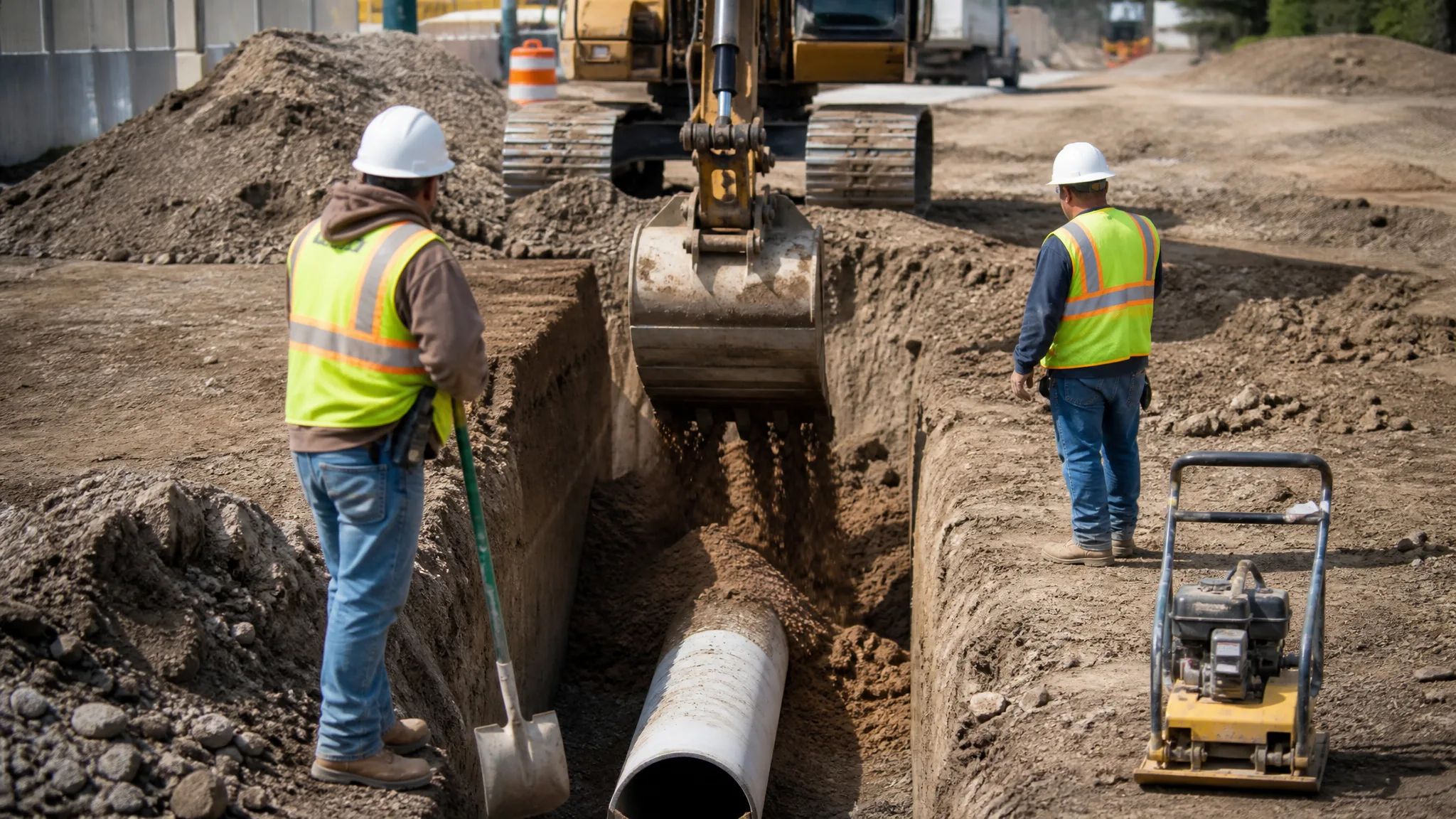
Installation is simple but specific: lay the fabric flat on the prepared subgrade with no folds, overlap adjacent rolls by 12 to 18 inches, and do not drive on the fabric — place at least 6 inches of stone before any compaction or traffic. On dry, firm, free-draining subgrades the fabric is optional; on wet ground it is the cheapest insurance on the job. Which fill suits your site is covered in our select fill vs. native soil guide.
The Base Course: Big Stone First
The bottom structural layer is open-graded coarse stone — commonly AASHTO #3 (about 2-inch top size) or #5 (about 1.5-inch top size) — with little or no fines, so water drains through it instead of pooling. Over weak subgrade this layer typically runs 4 to 6 inches thick; driveways carrying heavy loads like RVs, loaded dump trucks, or equipment can need 8 to 12 inches. On firm, dry subgrade the coarse lift is often skipped entirely.
Because open-graded stone has no fines, it does not compact in the traditional sense — the big rocks interlock and seat under the weight of the layers above. A few passes with a vibratory plate or roller seats it, and traffic finishes the job. Recycled concrete aggregate works well in this role, which is why it shows up so often in driveway base construction.
The Intermediate Layer: #57 or #67 Stone
Over the coarse base goes an intermediate layer of AASHTO #57 (about 1-inch top size) or #67 (about 3/4-inch top size) stone, typically 3 to 4 inches thick. This layer bridges the big stones below, keeps the drainage path open through the section, and gives the surface course a stable platform — without it, the finer surface stone works its way down into the voids of the coarse layer.
Like the structural lift, this clean, open-graded stone is rolled or vibrated to seat it into a smooth platform rather than compacted to a dense mat. The goal at this stage is a firm, even surface at roughly the final grade of the driveway, ready for the wearing course on top.
The Surface Course: Crusher Run on Top
The surface is where the driveway meets tires, and it should be a dense-graded material — crusher run, dense-graded aggregate, or the regional equivalent — spread 1 to 2 inches thick and compacted. Crusher run contains a blend of stone sizes from coarse down to stone dust, and when it is compacted at the right moisture, the fines bind the whole matrix into a tight, locked surface that sheds water and resists rutting.
This is the layer that takes the abuse, so it is also the layer that gets replenished. Avoid smooth, round stone of any kind on a driveway surface — pea gravel and river stone roll under tires, rut, and migrate off the drive. If appearance matters, some owners top the crusher run with a thin decorative layer, but the structural surface is the crusher run itself.
Crown It and Compact Each Lift
An unpaved surface has to shed water fast, which means the driveway needs shape — a crown in the middle or a slope to one side so rain runs off instead of soaking in and softening the section. A common target is roughly a quarter to a half inch of fall per foot from the center to the edge, about a 2 to 4 percent cross-slope, and the subgrade should be shaped the same way before the stone goes on, because every layer follows the one below it. For the full geometry of crowned surfaces, see our guide to building roads with proper slope.
Compaction discipline is simple: spread each layer at a thickness the equipment can actually densify, compact it before adding the next, and pay attention to moisture. Dense-graded stone compacts best near its optimum moisture — too dry and it will not lock up, too wet and it pumps — the same moisture window that governs all soil compaction. When in doubt about conditions, our guide to how wet is too wet to compact soil covers the field signs.
How Much Stone Will You Need?
Figure the volume in cubic yards before ordering: multiply the length, width, and compacted depth in feet, then divide by 27. A 12-foot-wide, 150-foot-long drive at 8 inches of total stone works out to roughly 45 cubic yards of compacted material — and the delivered amount needs to be higher than that, because loose stone settles and compacts. Most contractors plan an allowance on top of the calculated volume and confirm tons per cubic yard with the supplier, since crushed stone products typically run in the neighborhood of 1.4 tons per cubic yard.
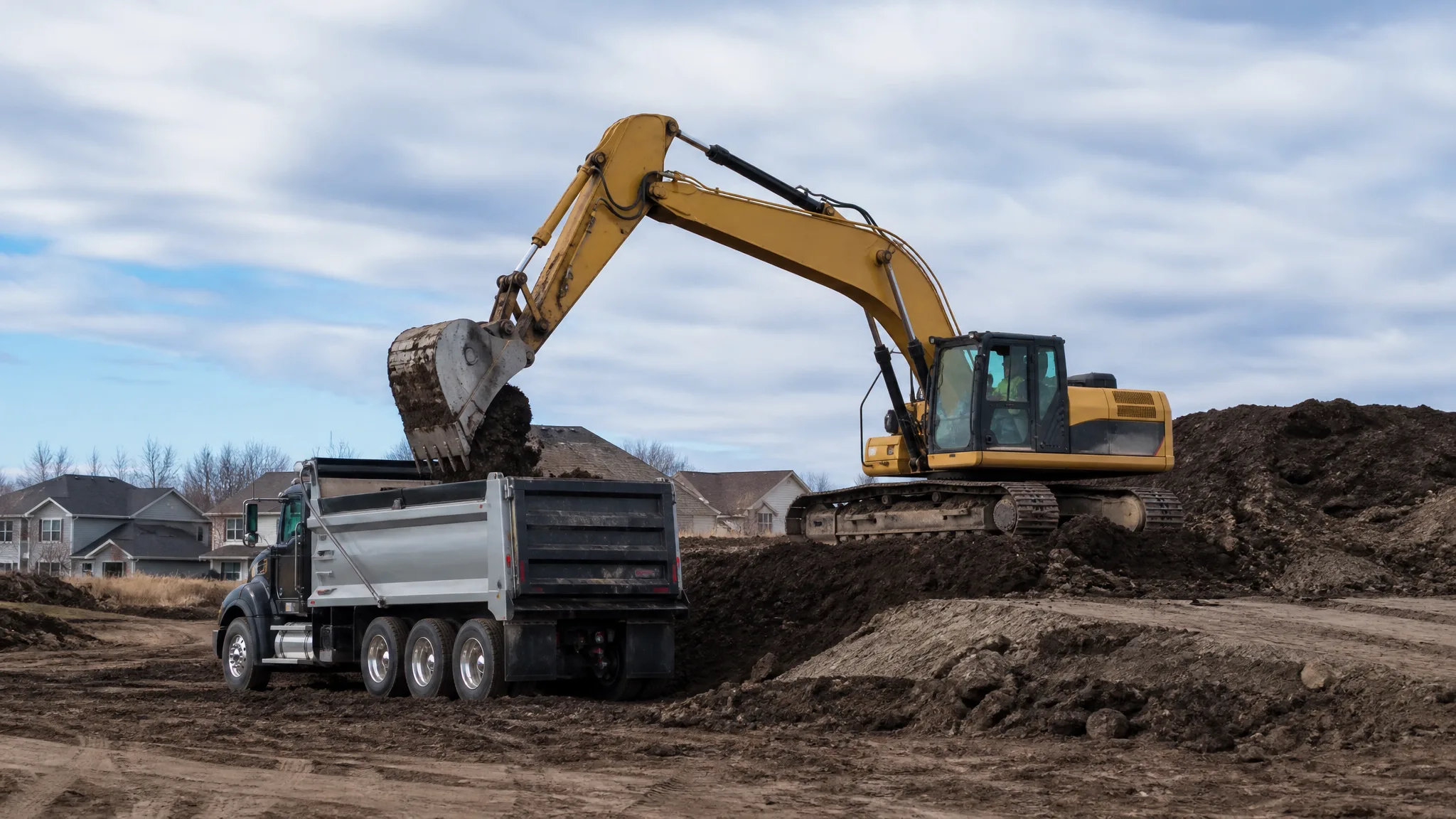
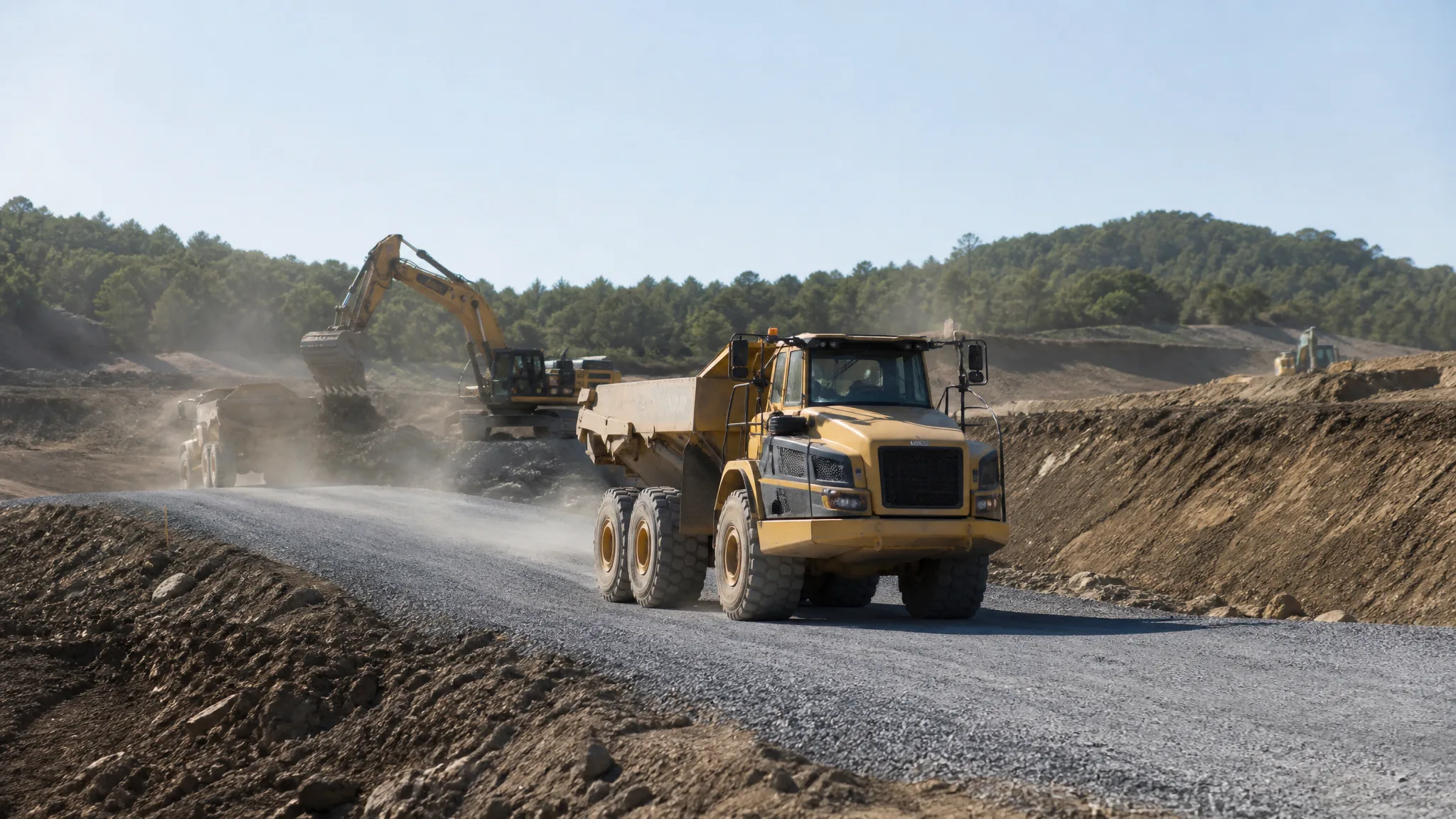
Dump trucks deliver by the cubic yard, so it pays to know what a truck actually holds and how soil swell and compaction change the math. Our guides to calculating soil volume and truckloads and dump truck capacities walk through the numbers.
Keeping It Gravel: Maintenance That Matters
A gravel driveway is not finished the day it is built — it is finished the day it stops being maintained. Plan on grading the surface once or twice a year to re-establish the crown and smooth out washboarding, filling ruts and low spots with crusher run before they deepen, and keeping ditches and culverts clear so water never sits in the section. Top-dressing the surface course every few years replaces the stone that migrates off the drive and keeps the fines working.
Most of this is straightforward work for a skid steer, a box blade, or a small grader — and a good excuse to learn proper grading technique. Build the driveway in layers, keep the water off it, and touch up the surface every year, and a gravel drive that cost a fraction of asphalt will still be carrying trucks a decade from now.